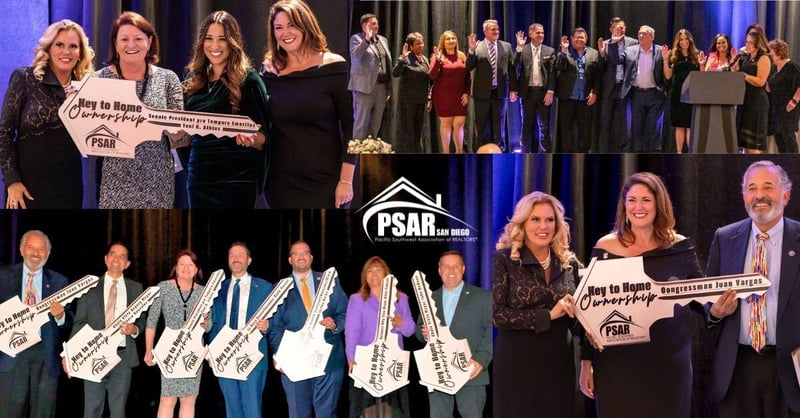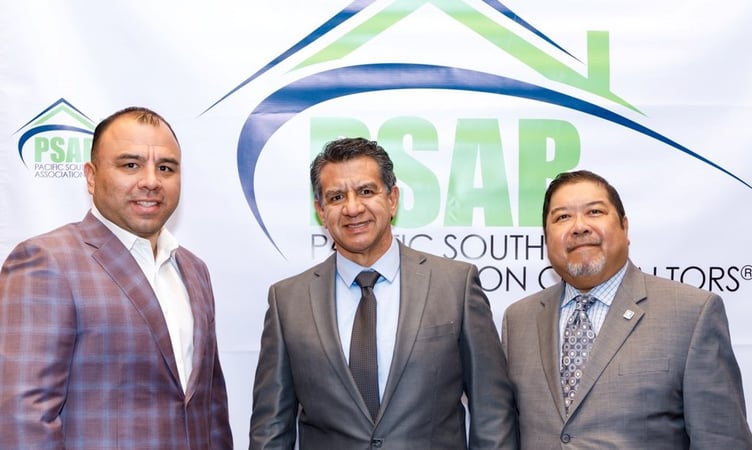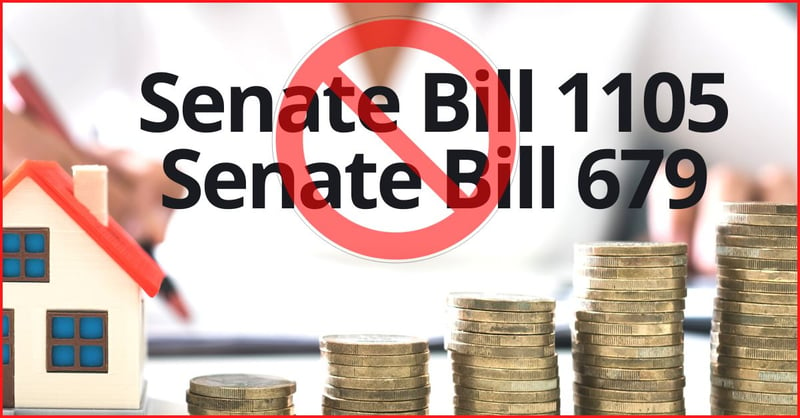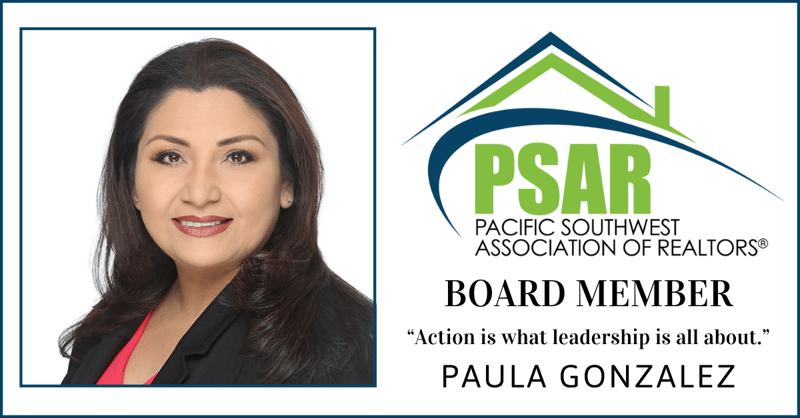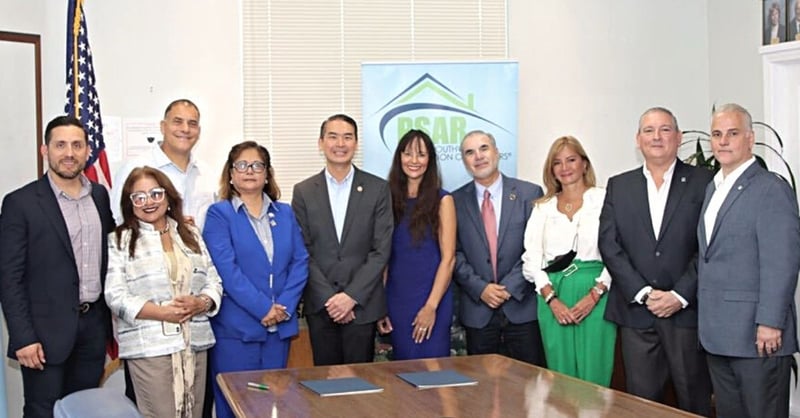
PSAR announces endorsement of the following candidates

Posted by PSAR Government Affairs on May 18, 2026 4:08:41 PM

blog banner_endorsements-260515
PSAR endorses the 'No on Measure A'” Campaign in the City of San Diego.

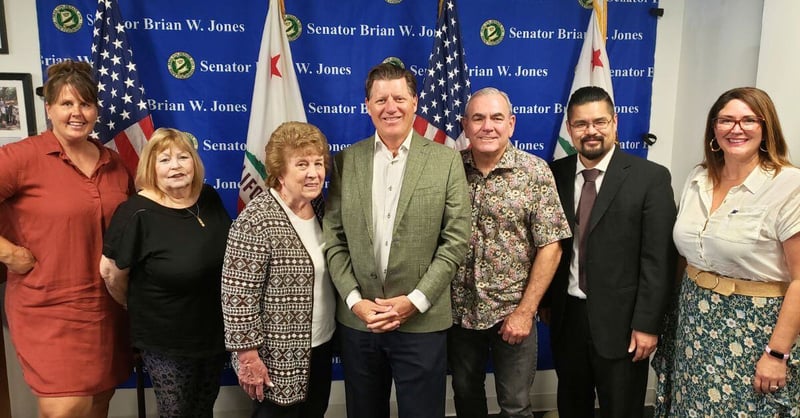
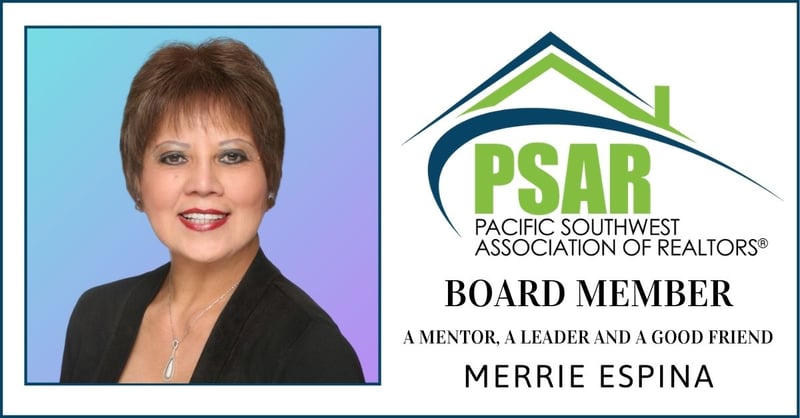
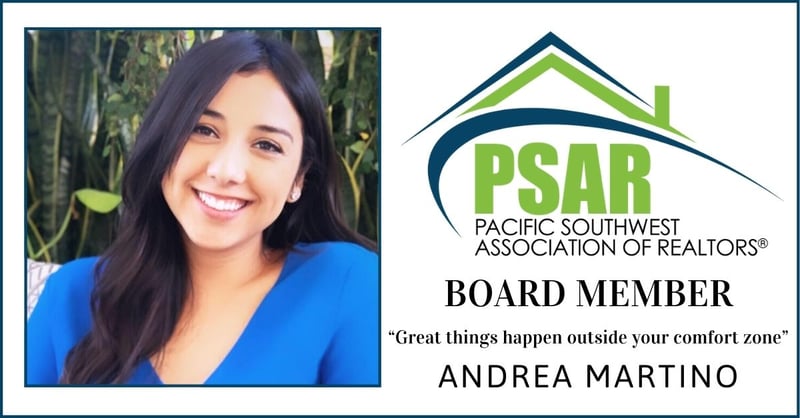
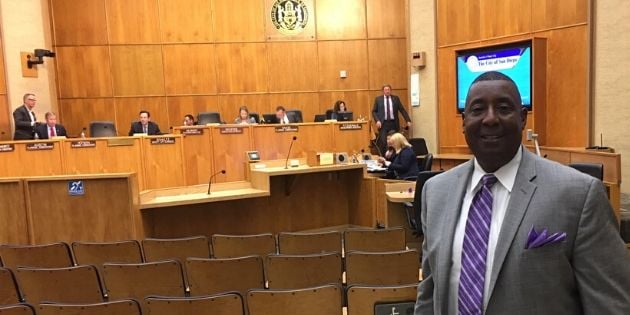
PSAR announces that the following candidates have earned its endorsement for the June 2nd primary elections. At PSAR, our mission is to champion homeownership and protect private property rights across our communities, and the actions of our local governments have an undeniable impact on both. When asked to consider candidates for endorsement, our association conducts a thorough, non-partisan evaluation to identify the candidates who can best fight for our industry.

These endorsements are focused on the issues that impact our industry. We believe these individuals are the best equipped to further the causes that keep our market strong and protect the clients we serve.


The Pacific Southwest Association of REALTORS® (PSAR), a 4,000-member trade group for San Diego-area REALTORS®, offers educational training, advocacy, and other services and resources to its REALTOR® members. Founded in 1928, PSAR has played a significant role in shaping the history, growth, and development of greater San Diego County. The Association maintains a leadership role in the industry, empowering REALTORS® by leveraging our collective strength so they may serve homebuyers and sellers and the greater community.

Topics: Government Affairs

Vote No on Measure A: City of San Diego

Posted by PSAR Government Affairs on Feb 26, 2026 5:33:35 PM

San Diego City Council is moving rapidly to place a punitive tax on"non-primary residential units left vacant for more than 182 days" on the June 2026 ballot. While the news often portrays this as a "second home tax" targeting wealthy speculators, the reality buried in the ordinance is far more alarming: this is a universal audit mandate that affects EVERY homeowner in San Diego.


THe Vacancy Audit is Coming

The "Guilty Until Proven Innocent" Reality

The language of the ordinance applies to all residential family dwellings—including condominiums, townhomes, and duplexes. Because the City must identify which homes are "vacant" for more than 183 days, the administrative burden falls on every homeowner to prove they don’t owe the tax

Under this "guilty until proven innocent" framework:

  • Annual Substantiation: You are required to proactively prove to the City Treasurer every year that your home was occupied.
  • Government Surveillance: The City Treasurer is granted the power to inspect your private records at "all reasonable times" and apply "auditing procedures" to verify your residency.
  • 10-Year Record Keeping: You are legally mandated to retain all records necessary to prove your residency for a full decade.
  • Rebuttable Presumption: If the City decides to assess a tax against you, its estimate is legally presumed to be correct. The burden is entirely on you, the homeowner, to prove them wrong.

What It Will Cost You

This isn't just a fee; it is a massive financial penalty designed to increase every year.

  • The Price Tag: $8,000 in 2027, rising to $10,000 per year in 2028.
  • Automatic Inflation: Starting in 2029, the tax will increase automatically every year based on the Consumer Price Index.
  • The Delinquency Trap: If you fail to prove your exemption by April 1st, you are automatically delinquent, triggering an immediate 10% penalty on top of the tax.

Who Gets Hurt?

The current draft lacks critical common-sense exemptions, putting families in impossible situations:

  • Sellers in Escrow: There is no exemption for a home that is vacant simply because it is on the market or in the process of being sold.
  • Military Families: Service members deployed overseas must navigate complex annual paperwork to prove a "Qualifying Military Service Period" or face the tax.
  • The Elderly & Ill: Residents who must temporarily relocate for long-term medical care or rehabilitation must file "Owner in Care" documentation to avoid being taxed for being sick. Imagine being on your deathbed, considering filing complicated city bureaucratic paperwork.
  • Criminal Charges: Willfully failing to remit the tax or refusing to allow an audit is a misdemeanor, punishable by fines and up to six months in jail.

A Pattern of "Bait and Switch"

We’ve seen this before. When the City asked for the "trash fee" (Measure B), voters were promised one thing. Today, the reality is far different, with fees already significantly higher than what the ballot initiative originally stated.

This ordinance explicitly allows the City to deposit these funds into the General Fund for "general municipal services". It is a revenue grab that creates a permanent audit department to monitor where you sleep.


  1. Call or email your city council member using the contact information below. Express your opposition to this ordinance, and if possible, why.
  2. Click on the following link and scroll to item S501 S501: Consideration of an Empty Homes Tax Ballot Measure Proposal by Councilmember Sean Elo-Rivera. (Added 2/26/26), Click on

    Click Here to Submit a Comment

     
    1. Press the radio button next to: " "
    2. For Agenda Item Number (for Agenda items that are preceded by an S, please drop the S and simply insert the three-digit number in the field below) type 501
  3. Attend the meeting live at the City Administration Building, 202 C Street, San Diego, CA 92101. The meeting starts at 10:00 AM and continues at 2:00 PM. It is likely, although not certain, that this item will be heard in the afternoon.


Topics: Government Affairs

New protection for San Diego homeowners: ending the "permanent" public tour

Posted by Communications on Feb 17, 2026 4:53:15 PM

For years, one of the biggest frustrations for homeowners has been the lack of control over their property’s online presence. Once a house is sold, interior photos—showing everything from the primary bedroom to the home’s security layout—often remain searchable on the internet indefinitely.

Starting February 17, 2026, a new policy is finally putting the curtains back up. The Pacific Southwest Association of REALTORS® (PSAR) is proud to announce a technical solution that will automatically remove interior photos from public search sites once a property sale is finalized.


The power of our partnership with CRMLS

This significant shift in privacy is made possible by CRMLS, the nation’s largest and most recognized MLS. By updating their rules and infrastructure, CRMLS has paved the way for this automated solution. This change ensures that the data being shared with public-facing websites remains relevant to active listings, rather than becoming a permanent archive of a private residence.

As a PSAR member, you and your homeowners benefit directly from the industry-leading standards and technical innovation that CRMLS brings to the San Diego market.


CRMLS and PSAR


The problem: private homes, publicly searchable

Most homeowners assume that when they buy a house, the marketing photos disappear. However, due to how data is shared through IDX (Internet Data Exchange), those photos often stay live on thousands of real estate websites long after the new owners move in.

For residents, this is a legitimate security and privacy concern:

  • Home security: Interior photos can act as a blueprint for bad actors, identifying entry points and the location of valuables.
  • Family privacy: Families are often uncomfortable knowing anyone can virtually walk through their private living spaces via an old listing.
  • Online fraud: Scammers frequently use these persistent photos to create fake rental listings, leading to strangers showing up at a homeowner’s door.

A new standard for San Diego

"We believe that once a house is sold, it stops being a listing and starts being a home," says Claudia Zaker, President of the Pacific Southwest Association of REALTORS®.

Through the leadership of CRMLS and our local partnership, homeowners will now have their privacy protected automatically. Starting in the first quarter of 2026, the data feed used by PSAR members will remove photos as soon as a sale closes.

The result: Every interior photo will be scrubbed from the public data feed. Only the primary exterior shot will remain on record to ensure there is a "front door" photo for historical property records and appraisals, while keeping the inside of the home private.


What this means for PSAR members

This is a first-of-its-kind feature for San Diego, moving the responsibility of data privacy from the homeowner to the professionals. By being a REALTOR® with PSAR, you provide your homeowners with:

  • Automated privacy: They no longer have to spend hours requesting various websites to remove photos of bedrooms or living areas.
  • Increased security: A home's private layout is no longer a public map.
  • Digital closure: Once the sale is over, the public tour officially ends.

"PSAR and CRMLS are taking the lead in San Diego to ensure private data stays private," says Zaker. "We are proud to bring this level of digital protection to our community."


Background and technical rule change

For those interested in the specific regulatory language, Rule 19.2.4 - Display Content (IDX) has been revised. While the rule is now official, it will not be enforced until CRMLS completes the technological project of removing non-primary photos from the IDX payload and notifying all IDX vendors of these changes.

The revised rule now states:

Display Content. Participants and Subscribers shall not display confidential information fields, as determined by the MLS in the MLS’s sole discretion, such as that information intended for Buyer Brokers rather than consumers. Participants and Subscribers shall not display any photo or media other than the Primary Photo for any CRMLS Listing Record in a status of Closed/Leased, Expired, or Canceled.


Topics: Education, Announcements, Brokers/Managers, Government Affairs, CRMLS, Industry

Unlocking the Door: California Middle-Class Homeownership Act of 2026

Posted by Communications on Feb 5, 2026 7:15:11 AM

Homeownership Act of 2026

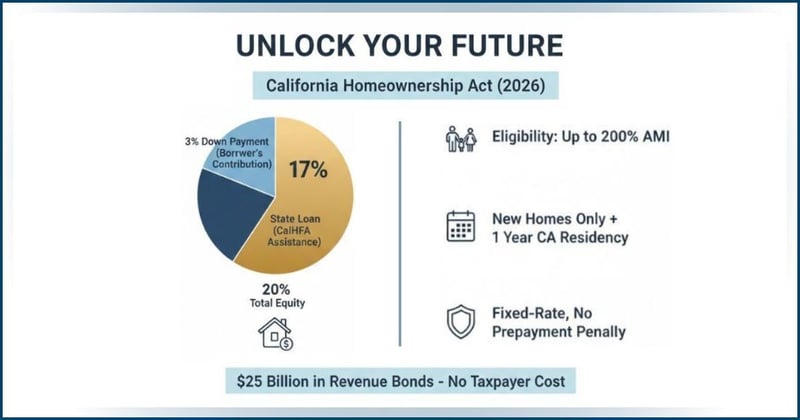
California’s housing market has long felt like a "closed-door" policy for the middle class. However, a significant new initiative, the California Middle-Class Homeownership and Family Home Construction Act of 2026 (#25-0013), is aiming for the November 2026 ballot to change that narrative.

Proposed as a self-sustaining program with no cost to taxpayers, this initiative seeks to bridge the massive gap between renting and owning through a $25 billion revenue bond program. Here is how this landmark proposal could reshape the Golden State’s landscape for buyers, sellers, and the economy at large.

1. A Lifeline for Home Buyers and Sellers
The initiative targets the "missing middle"—families who earn too much for traditional low-income assistance but are priced out of the current market.

  • For Buyers: The core of the Act is a second mortgage program administered by the California Housing Finance Agency (CalHFA).

    • Lower Entry Barriers: Borrowers only need a 3% down payment. The program provides a secondary loan covering up to 17% of the purchase price, effectively helping families reach a 20% equity stake immediately.

    • Inclusivity: It expands eligibility to those with "thin" credit files by requiring lenders to use cash flow underwriting (evaluating bank statements and rental history) if a traditional credit score falls short.

    • Affordability: Loans are required to be fixed-rate with no early payment penalties, protecting buyers from predatory lending.

  • For Sellers (Builders): By stimulating demand specifically for newly constructed homes, the Act provides a guaranteed pool of qualified buyers. The "Qualified Builder Option" allows developers to certify their projects, making them more attractive to lenders and prospective homeowners.

2. Fueling the California Economy

This isn't just a social program; it's an economic engine. By authorizing $25 billion in revenue bonds, the initiative injects massive liquidity into the construction sector without dipping into the state’s general fund.

  • Job Creation: The emphasis on "Family Home Construction" incentivizes the building of stand-alone homes, townhouses, and row houses. This creates a steady stream of high-paying construction jobs.

  • Social Impact Investment: The program encourages "social impact investment" through low-interest bonds that qualify for Community Reinvestment Act (CRA) credit, bringing private banking capital back into local California neighborhoods.

  • Market Stability: By increasing the supply of "Qualified New Homes"—including repurposed nonresidential buildings—the Act addresses the chronic inventory shortage that drives volatile price spikes.

3. Why REALTORS® Should Rally

For California REALTORS®, this initiative removes the two biggest hurdles to closing a sale: the down payment and inventory.

  • Expanded Client Base: With income eligibility up to 200% of the Area Median Income (AMI), a vast majority of working California families suddenly become viable clients.

  • Guaranteed Professional Involvement: In a win for the industry, the Act requires applicants to retain a licensed California real estate agent or broker to ensure consumer protection throughout the process.

  • Streamlined Disputes: The "Right to Repair" provisions and limits on attorney contingency fees (capped at 30%) are designed to resolve construction disputes quickly through mediation or repair rather than years of stalled litigation, keeping the market moving.

The Politics: Who is Behind the Move?

The initiative is championed by Robert M. Hertzberg, a prominent figure in California politics and former Majority Leader of the State Senate.

The Strategy:

  • The "No Taxpayer Cost" Angle: By using revenue bonds—where the loans are repaid by the homeowners, not the public—proponents are framing this as a fiscally responsible way to tackle the housing crisis.

  • Labor Alignment: The Act includes robust labor enforcement standards, allowing joint labor-management committees to sue for violations like improper worker classification. This is a strategic move to gain support from organized labor.

  • Legislative Flexibility: Uniquely, the Act allows the Legislature to amend the statute with a 60% vote to further its goals, ensuring the program can evolve without needing a new ballot measure every few years.

As the 2026 election approaches, expect this to be a centerpiece of the housing debate. It’s a bold attempt to prove that the California Dream of homeownership isn't dead—it just needs a better financing model.


The full text of the initiative can be read here.

Topics: Brokers/Managers, Government Affairs, Industry

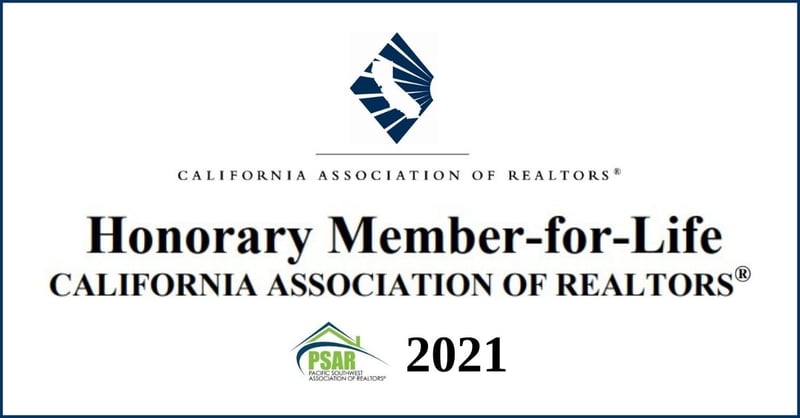
PSAR MEMBERS presented with C.A.R. Honorary Member-for-Life

Posted by Rick Griffin on Nov 6, 2025 9:56:44 AM

California Association of REALTORS®            Pacific Southwest Association of REALTORS®

Honorary Member-for-Life


PSAR is proud to recognize 36 members who have been honored as Honorary Members for Life by both the Pacific Southwest Association of REALTORS® and the California Association of REALTORS® (C.A.R.).

These distinguished members have each demonstrated over 25 years of dedication, integrity, and professionalism in real estate and have reached the age of 75 or older.

The 36 members include:

Violeta Barcas Greg Hall Hector Padilla
Rodger Barwick Young Hall Kathie Pelletier
Elba Beas Rick Hoffman Alfredo Perez
Rita Blackwood Jose King Sang Pham
Bob Carlseen Bonnie Kipperman Andrew Pheasant
Kenneth Colwell Christopher Lewis Pat Russiano
Mitchell Compton Randy Lipsey, Sr. Marilyn Schweer
Joseph Garzanelli Carlos Lopez Robert Smith
Lorenza Gastelum Manuel Lopez Carol Snyder
Alberto Gonzalez Mark Mendillo Gary Stous
Barbara Hahn Dale Nicholas Martin Weinstein
Paul Hahn Josefina Ortiz Gail Wilson

Congratulations to our honored members for their long-term commitment to excellence and their outstanding service to clients and the community.

As part of this recognition, the 2025 group of new honorary members will receive a waiver of PSAR and C.A.R. dues beginning in 2026. This waiver will continue for as long as they remain eligible REALTOR® members or until retirement from the profession.

Members who believe they may qualify for this honor are encouraged to contact PSAR. Please ensure your correct birthdate is entered in your membership record. An accurate birthdate is the trigger used to identify future receipients.

Applications are available on the C.A.R.website and using THIS FORM

For additional information, send an email to hmfl@car.org.

_______________________________________

PSAR's mission is to empower Realtors.

Since 1928, the Pacific Southwest Association of REALTORS® has played a significant role in shaping the history, growth, and development of the Real Estate industry in San Diego County. 

Topics: Education, Brokers/Managers, Leadership, Government Affairs, Market Information, Industry

DRE Warns Californians of Real Estate and Mortgage Scams

Posted by PSAR Communication on Nov 3, 2025 4:09:08 PM

California’s Department of Real Estate (DRE) is urging consumers to stay alert for an increase in real estate and mortgage scams targeting homebuyers, homeowners, and investors across the state.


Criminals are using increasingly sophisticated tactics, including email hacks, forged deeds, and mortgage fraud, to exploit the complexity of real estate transactions and California’s high property values. Even honest individuals can unknowingly become involved in these crimes if they fail to recognize warning signs.

The DRE outlines nine of the most common scams and provides clear steps to help consumers protect themselves. Homebuyers and property owners are encouraged to verify credentials, stay cautious during transactions, and report suspicious activity immediately.

San Diego County residents can also take an extra step to safeguard their property. The County Assessor/Recorder/County Clerk provides a free Owner Alert program that notifies property owners of any changes to property records.  It is an effective way to detect potential deed or title fraud early. Learn more and register here: Owner Alert

Read the full article from the DRE to learn how to protect yourself and your clients: Link to California DRE article


DRE  real estate fraud


Topics: Announcements, Brokers/Managers, Government Affairs, Industry

Navigating: AB 723 - New Photo Disclosure Rules

Posted by Communications on Oct 20, 2025 5:23:21 PM

A new law, Assembly Bill 723 (AB 723),  will soon change how real estate professionals advertise properties using digitally altered images. This bill, which adds Section 10140.8 to the Business and Professions Code, was a key focus for C.A.R. (Best Practices Here)

From the start, the California Association of Realtors (CAR) was deeply engaged on this issue. CAR opposed the initial bill, arguing that it was duplicative of existing false advertising laws and created "unnecessary liability and risks unintended consequences" for members.

CAR's advocacy focused on two key problem areas:

  1. Vague Definitions: The initial language risked penalizing agents for "routine, good-faith edits" like decluttering or minor corrections, which are standard industry practices. CAR pushed for a clear definition that targeted only material changes.

  2. Third-Party Liability: The bill could have made licensees liable for images scraped by or posted on third-party websites that they do not control.

CAR's voice was partially agreed with. The final version of the bill includes amendments that "attempt to address opposition concerns". Specifically, the law now clearly exempts common photo-editing techniques and limits an agent's compliance burden to websites they directly control.

Here is a clear breakdown of the new law as passed best practices for compliance.

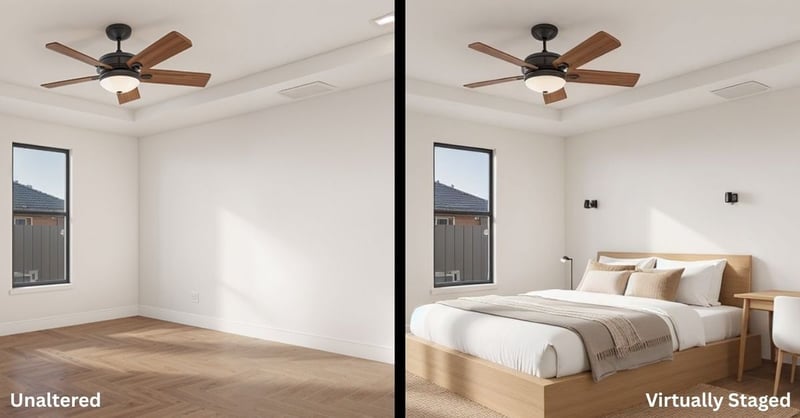
Photo - Virtually Unaltered   Photo - Virtually Staged

The Heart of the Law: What's "Altered" and What Isn't?

This law is not intended to penalize professional photography. Its goal is to stop deceptive alterations that mislead consumers about the physical reality of a property. The law itself, in BPC § 10140.8, creates a, two-part definition:

1. What IS an "Altered Image" (Disclosure Required)

A disclosure is required if an image is "altered through the use of photo editing software or artificial intelligence to add, remove, or change elements" of the real property.

This includes, but is not limited to, changes to:

  • Furniture, appliances, flooring, and walls

  • Fixtures, paint color, hardscape, and landscape

  • Elements "outside of, or visible from, the property," such as streetlights, utility poles, views through windows, and neighboring properties

  • This also includes "virtual staging" where furniture or other physical attributes are digitally added to a room.

2. What IS NOT an "Altered Image" (NO Disclosure Needed)

This is the key clarification CAR successfully lobbied for. You do not need a disclosure for "common photo editing adjustments" that "do not change the condition" or "representation" of the real property.

The law explicitly exempts:

  • Lighting

  • Sharpening

  • White balance

  • Color correction

  • Angle

  • Straightening

  • Cropping

  • Exposure

The Rule: You can make the photo look better (brighter, crisper, more true-to-life). You cannot make the property look different (new grass, no power lines, different-colored cabinets).

Disclosure Duties: How to Comply

If you use an image that meets the definition of "digitally altered," you must do the following:

1. For ALL Advertising (Print or Online): You must include a "reasonably conspicuous statement" on or next to the image disclosing that it has been altered.

2. For PRINT Advertising (Flyers, Mailers, etc.): In addition to the disclosure statement, you must also provide:

  • "a link to a publicly accessible internet website, URL, or QR code that includes, and clearly identifies, the original, unaltered image".

3. For ONLINE Advertising (MLS, Website, etc.): The law provides a more direct compliance path for websites "over which the real estate broker or salesperson... has control". You have two options:

  • Option A: Follow the print rule (disclosure statement + link/QR code).

  • Option B: Simply "include the unaltered version of the picture" in the posting itself.


Best Practices for Easy Compliance (Check with your Broker for Broker Specific Guidance)  CRMLS is currently evaluating this new law.

This law goes into effect on January 1st, 2026

Here is a straightforward action plan (Check with your Broker, for Broker specific rules:)

  • For Print Ads:

    • Create a single, public webpage or photo gallery (like on a brokerage site or a cloud service) with all the original photos for that listing.

    • Generate a single QR code that links to that gallery.

    • On any altered photo in a flyer, add the text: "Image has been digitally altered. Scan QR code for original photos."

  • For Online Ads (The Easiest Way):

    • When uploading to the MLS or a website that yor firm has control over, simply upload both versions of the photo.

    • Use the photo caption to label them clearly. This satisfies all requirements.

    • Altered Photo Caption: "Virtually Staged" or "Digitally Altered"

    • Original Photo Caption: "Original Photo - Unaltered"

By posting both labeled photos in the same gallery, you are being "reasonably conspicuous" and are "includ[ing] the unaltered version", placing you in full compliance.

Did you know?  PSAR MLS subscribers receive 30 FREE photo edits per month with REimagineHome.  Communicate your vision and bring more value to your listing. Watch a quick video overview, or get started with this helpful guide.


Why this was pushed for: Trust and Transparency

The Consumer Federation of California pushed for this law to protect consumers from being "misled" and to give them a "true picture" of the property.

They said "Today, with the advancement of technology these tricks are easier than ever. But consumers are far too often misled by such images, only to waste their valuable time and effort when they actually see the property in person. To many consumers this feels like a bait and switch tactic, and we would argue that in some cases this is an unfair business practice."

Find C.A.R. information regarding new laws for 2026 here.

Here are the topic headings listed on the “2026 New Laws” chart by California Association of REALTORS®. You can view full descriptions and links here: 

  • Advertising: Digitally-Altered Images

  • Closed-loop payment system: Broker-provided form of payment accepted by vendor or referral source

  • Data-broker: Broker prohibition on selling consumer personal information

  • Energy: Building decarbonization: Prepaid charge disclosure

  • Energy: Solar: Fire-resistant building materials; residential roofing permits

  • Fire safety: Detached accessory dwelling units: Home hardening & defensible space requirement

  • Housing element: Back-of-the-bill sale of certain homes built after wildfires — contractor disclosures and licensing

  • Liquefied petroleum gas (LPG): Ventura County ordinance: Required LPG leak-event inspector

  • Manufactured housing: Factory-built home network connection disclosure

  • Nudity: Sexually-explicit or pornographic images on rental listings prohibited

  • Privacy: Tenant property owner access agreements: Keys/pads access disclosure; use of biometric or facial recognition prohibited

  • Private works construction: Claim resolution process for contracts with owner by contractor/subcontractor

  • Real property transactions: County of Los Angeles – Wildfires: Unsolicited offers of purchase following disaster-declared homes

  • Real property transactions: Preapproved plans for single-family and multifamily housing — local agency program

  • Real-estate brokerage: Broker online advertising: Language preference for consumers; certain disclosures

  • Renters: Rent caps and anti-demolition protections for specified units in transit-oriented and housing-forward jurisdictions

  • Tax credits: Fire Safe Home Tax Credits Act (for home-hardening & vegetation management)


Disclaimer: This blog post provides general information about AB 723 and is not intended as legal advice. For specific legal guidance regarding your obligations under Business and Professions Code Section 10140.8, please consult with your brokerage's legal counsel.

Topics: Education, Brokers/Managers, Government Affairs, Technology, Industry

PSAR’s Education Employee Insurance Grant: Practical Assistance from REALTORS®

Posted by Communications on Oct 3, 2025 9:53:39 AM

free insurance for 1st time buyers

The Issue

Homeowners' insurance costs in California are climbing. In San Diego, many buyers are seeing double-digit renewal increases. For first-time buyers, these added costs can derail closings or, at a minimum, strain budgets. The impact is particularly acute for local education employees, whose salaries often lag the region’s cost of living.

FAQ at the bottom of this page.

     Grant Application    

The Solution

The Education Employee Insurance Grant provides up to $2,500 per eligible first-time homebuyer employed as an education employee in San Diego County. Funds offset homeowners' insurance during the first two years of ownership, reducing a key barrier to closing and early retention.

Why This Matters to REALTORS®

  • A reason to initiate new conversations within the education community
  • Addresses a real affordability hurdle that stalls transactions
  • Highlights the insurance crisis in California
  • An opportunity to build long-term loyalty by supporting clients beyond closing
  • Demonstrates REALTOR® leadership in mitigating a pain point for local homebuyers

How REALTORS® and Education Employees Participate

  • Who applies: California REALTOR® submits on the buyer’s behalf.  Only transactions with a California REALTOR® are eligible. 
  • Who Benefits: Education Employees include K–12 public school teachers, school administrators, classified employees, and staff of public charter, district, or county schools. 
  • When: Applications accepted for homes that closed on or after November 1st on November 1, 2025 – October 31, 2026, or until funds are fully dispersed
  • What’s needed: Closing statement, proof of education-employee employment, insurance declarations, and a first-time homebuyer affidavit.
  • Process: Submit the complete package to grants@psar.org. PSAR reviews within 10 business days and notifies the REALTOR® & Buyer of the decision. Checks will be mailed to the buyer's address as listed on the application.
  • REALTORS® are limited to two approved grants.

Helping education employees into homeownership strengthens ties with schools, families, and neighborhoods. This grant gives REALTORS® a clear, service-driven way to remove a rising cost barrier and deepen community connections.
                      

Flyer for clients

PDF Download Icon w flyer-2

Reel to market to clients (Download)

Reel to market to REALTORS (Download)


A portion of this program is funded by the C.A.R. Housing Affordability Fund.  To learn more about this fund,   or to donate, follow this link100% of your donation goes directly into solving the housing crisis in California. REALTORS are also encouraged to contribute during dues billing.

2014-HAF-Logo

Frequently asked questions

What is the Educator Insurance Grant?
Who qualifies as an “educator”?
Who can apply for the grant?
Who reviews and approves the applications?
Who can REALTORS® contact with questions?

Who can homebuyers contact with questions?
When is the application period?
When must the home have been sold?
What are the buyer’s eligibility requirements?
How much assistance is available?
 How does the process work?
How many grants can a REALTOR® submit?
How does this empower REALTORS®?
What documentation is required?
Why did PSAR choose to focus this grant program on educators?

More Information

REALTORS® For questions, visit www.psar.org/grants or email grants@psar.org.
Media inquiries: ceo@psar.org (copy support@psar.org)
Buyers, please ask your REALTOR®


Topics: Brokers/Managers, Government Affairs, Marketing, PSAR Benefits, Industry

Navigating the New FCC Rules: A Guide for Real Estate Professionals

Posted by Communications on Jan 22, 2025 8:00:00 AM

The image depicts a modern office setting where a group of real estate professionals are gathered around a sleek conference tableThe real estate industry thrives on communication, and reaching potential clients is crucial. But the digital age has brought with it a wave of unwanted calls and texts, leading to frustration and distrust. The Federal Communications Commission (FCC) has stepped in with new regulations to protect consumers, and these rules have significant implications for how real estate professionals connect with leads.  For detailed information from the FCC follow this link.

Understanding the Key Changes

  • One-to-One Consent is Paramount: Forget blanket opt-ins! The new rules demand that consumers provide individual, specific consent to each business that intends to contact them via robocalls or "robotexts." This consent must be "logically and topically associated" with the website where they provided it. For example, someone signing up for home valuation on your website can't be assumed to consent to calls about mortgage offers from your affiliated lender.

  • Lead Generation Under Scrutiny: Lead generation companies can no longer rely on broad consent obtained through third-party websites. They must ensure consumers explicitly consent to each business receiving their information.

  • Existing Leads Need a Check-Up: Don't assume your current contact list is good to go! Leads obtained before January 27, 2025, may not meet the new consent standards. Review your database and re-obtain consent where necessary.

  • Manual Outreach Remains Viable: While the new rules focus on automated communication, you can still make manual calls and send texts without prior consent. However, you must adhere to the Do-Not-Call Registry and avoid using pre-recorded or artificial voices.

  • Legal Challenges on the Horizon: The one-to-one consent rule is facing legal challenges, and its future may be influenced by court decisions. Stay informed about any updates or changes to the rule.

Actionable Steps for Real Estate Professionals

  1. Review and Revise Consent Forms: Ensure your website and other lead capture forms clearly state that the consumer is consenting to receive calls/texts specifically from your brokerage or agency.
  2. Obtain Express Written Consent: Always get written consent (electronic is acceptable) before initiating robocalls or "robotexts."
  3. Scrutinize Lead Generation Practices: Work only with lead generation companies that comply with the new FCC rules.
  4. Stay Updated on Do-Not-Call Regulations: Regularly check the Do-Not-Call Registry and promptly remove any listed numbers.
  5. Educate Your Team: Ensure all agents and staff understand the new rules and their implications.

Important Disclaimer:

This blog post is intended for educational purposes only and does not constitute legal advice. The FCC regulations are complex and subject to change. While we strive for accuracy, it is crucial to consult with an attorney for professional guidance on how to ensure your business practices are fully compliant. Final decisions regarding your business practices should be made after seeking legal counsel.

Topics: Education, Government Affairs, Market Information, Technology

Navigating Price Gouging Laws in California: A Guide For Real Estate

Posted by Communications on Jan 17, 2025 2:30:00 AM

Price Gouging Laws in California
In the aftermath of emergencies, the real estate industry in California faces unique challenges. Understanding the state's anti-price gouging laws is crucial whether you're a sales agent, broker, or property manager. These laws not only protect consumers during crises but also guide professionals in maintaining ethical standards.

On January 14th, 2025, due to complaints about owners, the DRE Released this advisory.

Here's what you need to know: 

The Essence of Price Gouging in Real Estate
Price gouging occurs when prices for housing, rentals, or other essential services are significantly increased to exploit an emergency. For real estate professionals, this typically relates to the pricing of rentals, homes for sale, and emergency lodging. The goal is to prevent undue strain on those affected by disasters, ensuring access to housing remains fair and equitable.

California’s Stance on Price Gouging
California law, specifically Penal Code Section 396, restricts increasing the price of housing and other essential services by more than 10% following an emergency declaration. This applies to sales, rentals, and services across the board, ensuring that real estate professionals are aligned with legal and ethical pricing standards during critical times.

Timing and Application of the Law
These protections activate immediately upon an emergency declaration by federal, state, or local authorities and are initially set for 30 days. For real estate-related services, like reconstruction and cleanup, the period extends to 180 days. Importantly, officials can extend these timeframes to meet ongoing needs, affecting how properties are marketed and managed.

Staying Informed on Declarations
Real estate professionals should closely monitor emergency declarations to comply with legal requirements. This includes staying updated through the Governor's website and local government channels. Awareness of state and local declarations is key to ensuring your practices align with current regulations. The following locations are under price gouging protections.

Who and What Is Covered?
The statute broadly applies to all entities within the real estate sector, including individuals and companies involved in selling, renting, or managing properties. It covers a wide range of necessities, notably including rental housing, hotels, and motels, ensuring that the industry's response to emergencies is comprehensive and compliant.

Addressing Cost Increases and Violations
If your costs increase due to supplier price hikes, the law allows the cost to be factored into pricing, provided it can be justified. However, compliance with the statute is closely monitored, and violations can lead to severe penalties, including fines and criminal charges. Ensuring transparency and fairness in pricing is crucial to avoid legal repercussions.

Role of Real Estate Professionals in Compliance
As gatekeepers of housing and essential services, real estate professionals have a pivotal role in upholding these laws. This involves adhering to pricing regulations and advising clients and the community on their rights and protections. Your guidance can help navigate the complexities of emergencies, ensuring access to housing remains fair and stable.

Conclusion
For real estate professionals in California, understanding and complying with anti-price gouging laws is essential. These regulations ensure that during emergencies, the industry acts with integrity, maintaining fair pricing and access to housing. By staying informed and adhering to these laws, you play a vital role in supporting communities during their most vulnerable times, reinforcing the ethical standards that define the real estate profession.

This link provides useful guidance for identifying if a state of emergency affecting price gouging in rental housing is in effect. Simply locate your rental property's county on the list and note the code (a letter in parentheses) next to it. Then, refer to the explanations at the bottom of the page to understand which price gouging laws apply to your situation


Important Disclosure
Please note that the information provided in this blog post is for general informational purposes only and does not constitute legal advice. Real estate laws and regulations can be complex and subject to change. While we strive to present accurate and up-to-date information, we cannot guarantee the completeness, reliability, or applicability of the content to your specific situation.

As a real estate professional, it's essential to understand your actions' legal implications, especially in emergencies and price-gouging laws. Therefore, we strongly recommend consulting with a qualified attorney or legal expert to obtain advice tailored to your specific circumstances. Doing so will ensure you navigate these challenges with the utmost compliance and integrity, safeguarding your professional practice and the communities you serve.


Topics: Brokers/Managers, Government Affairs, Property Management