Discover the why behind Professional Standars - Pro Standards Training

Posted by Paige Campbell on Mar 4, 2019 12:38:56 PM

professional  standardsProfessional Standards Training hosted by PSAR and NSDCAR. 

What will the participants gain?

  • Effectively navigate the Mediation, Arbitration and Ethics Disciplinary Processes. 
  • Understand Arbitration and Mediation.  
  • Learn how the Association enforces the NAR code of ethics.
  • Discover what the Grievance Committee looks for when reviewing complaints.
  • Understand procuring cause in a commission dispute.
  • The role of the Board of Directors in a review hearings

Details of the event: 
APRIL 4TH AND 5TH, 9 AM - 4 PM
PSAR CENTRAL | 4340 GENESEE AVE #203, SD, 92117
LUNCH PROVIDED FOR BOTH DAYS BY PSAR

**Attendees of both days are eligible to join the PSAR/NSDCAR Professional Standards Committee.

  • Hearing panels are selected from the Professional Standards Committee.
  • PSAR new Board Members are required to attend both days.
  • Returning Board Members are required to attend the Friday meeting every 2 years.
  • PSAR New and Existing Grievance Committee members must attend the first day of training.
  • New Professional Standards committee members must attend both days of training.   
  • Existing Professional Standards committee members must attend the Friday training every two years.

 REGISTER HERE 


Topics: Education

PSAR making a difference with granny flat regulations

Posted by Rick Griffin on Mar 1, 2019 5:00:17 PM

Granny flats

Congratulations to members of the PSAR Governmental Affairs Committee. Their recent efforts were rewarded this past week with two major victories before the La Mesa City Council on Feb. 26 and the San Diego County Board of Supervisors on Feb. 27.

On the dockets of both governmental bodies was the hot topic of Accessory Dwelling Units (ADUs) and Junior Accessory Dwelling Units (JADUs), commonly referred to as “granny flats.”

PSAR is in favor of property owners who want to expand the use of their property by building granny flats on lots with existing homes as a way to address the region’s housing supply and affordability crisis.

Granny flat units, typically smaller than standard homes, are second homes built on the same lot as an existing single-family house. Often, these secondary units are constructed by homeowners in backyards or above garages of single-family residences. They can be used for family members or rented out as a source of income for homeowners.

Granny flats also represent perhaps the easiest and quickest way to provide additional affordable housing options to local residents. When it comes to housing that will help all of San Diego, PSAR is in favor of making the ADU regulations more streamlined so homeowners can cut through the thick red tape of processing the construction of new, smaller rental units.

Current state regulations allow granny flats to be up to 1,200 square feet in size. They can be attached to, or built separate from, full-sized homes on the same parcel. They can include kitchens, bathrooms, living areas and private entrances. They cannot be sold as individual homes, but they can be rented out by homeowners or used to provide additional living space for family members, friends, students, the elderly, the disabled or in-home health care providers. Properties must meet all zoning requirements, such as setbacks that meet fire safety and building codes.

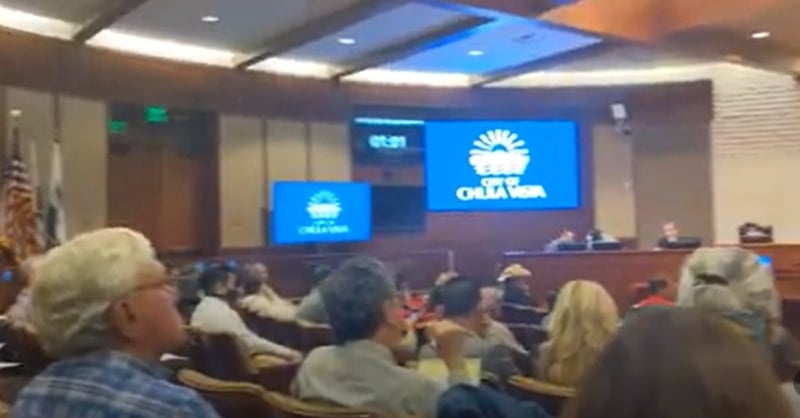
Speaking at the recent La Mesa City Council meeting on behalf of PSAR were Robert Calloway, 2019 PSAR President, Rebecca Pollack-Rude, co-chair of the PSAR Governmental Affairs Committee and Tracy Morgan Hollingworth, PSAR’s Government Affairs Director. Before a packed Council chamber, the La Mesa Council members were considering changes to simplify their secondary unit ordinance.

With the approval of PSAR, the La Mesa City Council unanimously adopted on first reading the following ADU guidelines (all of these were recommended by PSAR):

-- Allow ADUs to be built on any property with an existing single-family home or where a single-family home is permitted to be built.

-- Allow ADUs on properties with existing duplexes.

-- Preserve historical resources by requiring ADUs to be behind any historic properties.

-- Allow ADUs to be up to 1,200 square feet, regardless of the size of the primary.

-- No requirements to record covenants on property associated with ADUs.

-- No expensive dedication of right of way improvements for properties investing in ADUs.

-- Streamlined ministerial approval, including in overlays areas that usually require discretionary review.

Robert, Rebecca and Tracy told La Mesa City Council members that ADU development will encourage property owners who want to better utilize their homes in order to provide living quarters to students, seniors and others on fixed incomes who want a decent place to live.

La Mesa’s new set of regulations for granny flats will, in some cases, make the city’s rules more lenient than state requirements. A second reading for La Mesa’s ordinance will be heard March 5 before the new rules will take effect 30 days later.

A second victory this past week occurred at the February 27th Board of Supervisors meeting. The Supervisors were considering similar changes to conform to the state law in order to pave the way for more ADUs. The Board was considering a requirement for their ADU code to require owner occupancy for one of the buildings on a lot, which PSAR was recommending against.

Fortunately, the good news is that the Supervisors decided to remove the owner-occupancy requirement following testimony from PSAR’s Tracy Morgan Hollingworth.

Tracy said both La Mesa and County officials were grateful for PSAR’s assistance and guidance on their ADU policy decisions. In both instances, it was a victory to provide more housing at what could be an affordable price and provide seniors and families additional income to make ends meet from ADU unit rentals.

PSAR will work with both La Mesa and the County to help homeowners know how to process ADU units in local workshops so homeowners can bring their ideas to local government officials and see if their property can accommodate a new ADU.

 “I’m very proud that both government bodies went with our recommendations,” said Robert Calloway, PSAR President. “I don’t know of any other local real estate organization that gave their support to these local jurisdictions.”

“I am proud of be part of PSAR and the role we played with the ADU ordinances,” said Ditas Yamane, co-chair, Governmental Affairs Committee. “ADUs are smart growth tools for providing access to more affordable housing. They’re part of the solution in response to changing households. Removing ADU regulatory barriers is a benefit to our entire community. There is a housing crisis going on and we cannot look away.”

“There is not much build-able land in La Mesa and ADUs are  a good fit to help the housing crisis and keep San Diegans in San Diego and not moving out of the state,” said Rebecca Pollack-Rude, co-chair, Governmental Affairs Committee.  

PSAR members also have worked closely with the City of Chula Vista to reduce ADU fees and streamline their regulations. In January 2019, the County Board of Supervisors voted to waive fees for homeowners building accessory units on their property. Last May, the City of San Diego voted unanimously to slash ADU granny flat building fees by more than 60 percent.

Topics: Education, Industry

UNDERSTANDING CRITICAL CHANGES IN THE TAX CODE: Tax, CPA Seminar

Posted by Paige Campbell on Feb 28, 2019 5:37:16 PM

understanding changes in the tax code 

PSAR's Global Real Estate Council will be hosting a seminar reviewing the changes to the tax code covering How 2019 Changes will affect 2020 Taxes, Changes to the Standard Deduction, Tax-deferred exchanges, Phaseout of Child Tax Credit, Prop 60 and 90, and more.

This seminar will be instructed by Marizel Secuya-De Castro, CMA, CPA and Jordan Z. Marks, Esq, Assessor/Recorder/County Clerk. 

It will be held on Tuesday, March 26th from 10:15 AM - 11:30 AM at our Central Service Center located at 4340 Genesee Ave. #203, San Diego, 92117. 

   REGISTER HERE   


Topics: Education

Risk Management Advisory - REALTOR Broker Only Event

Posted by Paige Campbell on Feb 28, 2019 2:34:29 PM

Umbrella

Risk can be expensive for any real estate company. Attend this advisory to learn about issues other Brokers have faced so that you can avoid making the same mistakes. These meetings will be facilitated by Broker, Nikki Coppa.  Ms. Coppa currently serves on numerous leadership committees for both the C.A.R and NAR.

Topics:
New & Recurring Legal Claims to be aware of
Hottest C.A.R. Legal Hotline Questions

Upcoming Event on Thursday October 3rd, 2019:

Register


Topics: Education, Brokers/Managers

Home Sales in California Fall to Lowest Level in Over 10 years

Posted by Rick Griffin on Feb 22, 2019 2:23:31 PM
home sales in CA chart

California home sales fell to the lowest level in more than 10 years in January 2019, according to the latest housing market report for home sales and prices from the California Association of REALTORS® (C.A.R). Housing demand in the state remained subdued for the ninth consecutive month in January as economic and market uncertainties sent home sales to their lowest level since April 2008, said C.A.R.

Existing, single-family home sales statewide totaled 357,730 in January on a seasonally adjusted annualized rate, down 3.9 percent from the revised 372,260 in December and down 12.6 percent from January 2018 of 409,520. January marked the ninth consecutive month of decline and the sixth month in a row that sales were below 400,000, dipping to the lowest level since April 2008.

Sales in San Diego in January 2019 were down 17 percent from December and 10 percent lower from January 2018, according to C.A.R.

Closed escrow sales of existing, single-family detached homes in California totaled a seasonally adjusted annualized rate of 357,730 units in January, according to information collected by C.A.R. from more than 90 local REALTOR® associations and MLSs statewide. The statewide annualized sales figure represents what would be the total number of homes sold during 2019 if sales maintained the January pace throughout the year. It is adjusted to account for seasonal factors that typically influence home sales.

“California continued to move toward a more balanced market as we see buyers having greater negotiating power and sellers making concessions to get their homes sold as inventory grows,” said C.A.R. President Jared Martin. “While interest rates have dropped down to the lowest point in 10 months, potential buyers are putting their homeownership plans on hold as they wait out further price adjustments.”

C.A.R. said the statewide median home price declined to $538,690 in January 2019, which was down 3.4 percent from $557,600 in December and up 2.1 percent from a revised $527,780 in January 2018.  

In San Diego County in January 2019, the median home price was $610,000, which was 1.4 percent lower than the $618,500 figure for December 2018 and 3.4 percent higher than the $590,000 figure for January 2018.

“While we expected the federal government shutdown during most of January to temporarily interrupt closings because of a delay in loan approvals and income verifications, the impact on January’s home sales was minimal,” said C.A.R. Senior Vice President and Chief Economist Leslie Appleton-Young. “The decline in sales was more indicative of demand side issues and was broad and across all price categories and regions of the state. Moreover, growing inventory over the past few months has not translated into more sales.”

Other key points from C.A.R.’s January 2019 resale housing report included:

-- The median number of days it took to sell a California single-family home rose from 27 days in January 2018 to 37 days in January 2019, compared to 32 days in December 2018. Meanwhile, in San Diego County, the median number of days a home remained unsold on the market rose from 21 days in January 2018 to 28 days in January 2019, compared to 27 days in December 2018. 

-- Statewide active listings rose for the 10th consecutive month in January after nearly three straight years of declines, increasing 27 percent from the previous year. All major regions recorded an increase in active listings, with the Bay Area posting the highest increase at 57 percent, followed by Southern California (29.7 percent), Central Valley (19.5 percent) and the Central Coast (14.5 percent).

-- The Unsold Inventory Index (UII), which is a ratio of inventory over sales, increased year-to-year from 3.6 months in January 2018 to 4.6 months in January 2019. The index measures the number of months it would take to sell the supply of homes on the market at the current sales rate. The jump in the UII from a year ago can be attributed to the double-digit sales decline and the sharp increase in active listings.

-- Forty of the 51 counties reported by C.A.R. posted a sales decline in January with an average year-over-year sales decline of nearly 19 percent. Twenty-eight counties declined by double-digits on an annual basis, and 10 counties experienced an increase in sales from a year ago.

-- The 30-year, fixed-mortgage interest rate averaged 4.46 percent in January, up from 4.03 percent in January 2018, according to Freddie Mac. The five-year, adjustable mortgage interest rate also increased in January to an average of 3.91 percent from 3.47 from January 2018.

In other recent real estate and economic news, according to news reports:

-- A new LendingTree report found that 63 percent of homebuyers in San Diego County last year shopped around for a mortgage before settling on a home. The report also found that just 39 percent of the buyers had good or excellent credit, and the typical down payment was 12 percent of the purchase price. LendingTree ranked the 50 largest metropolitan areas in the U.S. based on an average of the city’s rank in three categories that contribute to the competitiveness of homebuyers in an area. Based on shopping for a mortgage, credit and the down payment percentage, Denver, Los Angeles, and Portland, Ore., have the most competitive buyers in the country. Buyers in these areas have higher than average credit scores and the ability to put down a larger down payment.

-- San Diego's Real Housing Price Index declined at the fifth fastest rate nationwide in November 2018 at 0.1 percent, according to First American Financial Corp. While the decline may seem marginal, the rate of that drop was exceeded only by San Jose (with a 0.7 percent decline), Boston (0.4 percent), Portland, Ore. (0.2 percent) and Pittsburgh (0.2 percent). Seattle tied San Diego with a 0.1 percent decline. 

-- According to S&P CoreLogic Case-Shiller, San Diego’s home prices rose 3.32 percent in 2018, the third slowest of the 20 cities covered by the index. National home prices were up 5.2 percent in a year, with Las Vegas leading the pack with a 12 percent gain.

-- According to a Zillow report, San Diego County experienced the third-highest year-over-year jump in housing inventory in the U.S. in January. Zillow said San Diego saw its year-over-year “for sale” inventory climb 31.9 percent in January to 9,810 units. Inventory has increased the most in five West Coast markets, giving home shoppers more options and ever-so-slowly tilting the market toward buyers, Zillow said. On an annual basis, inventory grew 42.9 percent in San Jose, 36.9 percent in Seattle, 29.1 percent in Los Angeles and 25 percent in San Francisco.

-- Also according to Zillow, a declining percentage of existing homes have been selling above the asking price nationally and San Diego County is no exception. Zillow found that just 17.4 percent of existing homes in San Diego County sold above their asking price in November 2018, and just 16.4 percent sold above their asking price in December 2018. An average of 29.9 percent of existing homes sold above their asking price in San Diego County in 2017, while that number dropped to 25.7 percent in 2018, Zillow said.

-- According to Redfin, San Diego County was the third least affordable housing market in the U.S. for millennials in 2018. While the median household income for a San Diego millennial was $78,433, the median priced home was only affordable to 24.3 percent of those households, Redfin found.

-- Also according to Redfin, home affordability is declining in San Diego despite more inventory. Redfin reported there were 10 percent more homes for sale in San Diego County in 2018 compared to 2017, but the number of affordable homes for sale fell 16 percent. The number of homes affordable to a San Diego household earning the median income in 2018 dropped to 22 percent. Redfin also said more users conducted online searches for San Diego homes than searches by local residents for homes outside the county in 2018.

-- Quinnipiac University's recent California-specific poll, conducted Jan. 30 to Feb. 4, recently found that 43 percent of the 912 Californians surveyed said they don’t make enough money to live in the state. Also, Quinnipiac found that well over half of younger California voters, 61 percent of the respondents 18 to 34 years old, say they can’t afford to live in the Golden State.

-- The U.S. unemployment rate has dropped to 3.7 percent, the lowest in nearly 50 years, according to the Bureau of Labor Statistics. Also, average earnings rose 8 cents, to $27.24 per hour in September 2018.

Topics: Education, Market Information, Industry

NAR Green Designation Course to take place in San Diego

Posted by Paige Campbell on Feb 21, 2019 3:44:38 PM

NAR's Green DesignationMore home buyers are demanding green and energy-saving features in their next homes.
Are you prepared to assist them? Gain a competitive advantage and learn how to become your clients’ go-to resource for
 
buying or selling a more efficient, money-saving, healthy home. 

Learn More or Register for the course HERE

A two-day course in San Diego on March 6th and 7th at the SDG&E Innovation Center. 
Day 1 Topic: The Resource-Efficient Home - Retrofits, Remodels, Renovations, and New Home Construction
Day 2 Topic: Representing Buyers and Sellers of Resource Efficient Homes

Details: 
Location: SDG&E Innovation Center 
When? March 6th and 7th, 2019 from 9 AM - 5PM
Contact Phone Number for Information: 619-544-1300
Cost: FREE for PSAR Members

Earning NAR's Green Designation 
Upon completion of the two required courses, you will have achieved GREEN candidate status, a one-year period during which you must fulfill the educational and experiential requirements to earn NAR's Green Designation awarded by the Green REsource Council.

Continuing Education Units approved by the California Bureau of Real Estate
Upon completion of the two required courses and successfully passing each exam with 80%, you will receive 16 Continuing Education Units approved by the California Bureau of Real Estate.

Prerequisites
Must be a licensed Realtor in the State of California in order to receive CalBRE Credit for attending these courses.

Fees and Registration
Thanks to the generous support of San Diego Gas & Electric® there is no registration fee for this training.

Requirements for the NAR Green Designation certification

  • Attendance - Participants must attend all two (2) training days. 
  • Submit a member application for NAR's Green Designation.
  • Maintain active and good membership status with the Green REsource Council and the National Association of REALTORS®.

Topics: Education

Does your client earn enough to afford a median-priced home?

Posted by Rick Griffin on Feb 15, 2019 1:49:06 PM

Housing affordability statistics Lower seasonal home prices allowed more Californians to afford a home purchase in the fourth quarter of 2018, compared to the previous quarter, but higher interest rates pushed affordability lower compared to the previous year, according to the California Association of REALTORS®’ (C.A.R.) “Housing Affordability Index” (HAI).

C.A.R. said 28 percent of California households could afford to purchase the existing $564,270 median-priced home in the fourth quarter of 2018, which was up from 27 percent in third quarter of 2018 but down from 29 percent a year ago.

In San Diego County, only 24 percent of local households could afford to purchase the $625,950 median-priced home in the 2018 fourth quarter, up from 23 percent in the 2018 third quarter but down from 26 percent a year ago. 

"Affordability has been challenging the past few years in San Diego County. We’re facing a soft market right now in San Diego as prices remain flat while some buyers are remaining on the sidelines,” said Robert Calloway, 2019 PSAR President. “However, the market fundamentals, such as job growth, income growth and household formation, are still strong. Mortgage rates are down slightly and buyers are looking for deals because the time on market has gone up which has increased the housing supply, but they're no longer fighting each other tooth and nail to get in the front door.”

C.A.R. said its index has been below 30 percent for six of the past eight quarters. California’s housing affordability index hit a peak of 56 percent in the first quarter of 2012.

C.A.R.’s HAI measures the percentage of all households that can afford to purchase a median-priced, single-family home in California. The index is considered the most fundamental measure of housing well-being for homebuyers in the state.

To afford to qualify to purchase the statewide median-priced, single-family home of $564,270 in the fourth quarter 2018, a household would need a minimum annual income of $122,340 to make the necessary monthly payments of $3,060. The monthly payment, including taxes and insurance on a 30-year, fixed-rate loan, assumes a 20 percent down payment and an effective composite mortgage interest rate of 4.95 percent. The effective composite interest rate was 4.77 percent in third-quarter 2018 and 4.17 percent in fourth-quarter 2017. 

In San Diego County, C.A. R. said a minimum annual income of $135,710 would be needed to make monthly payments of $3,390 on a 4.95 percent interest rate mortgage loan.

“One of the biggest things with the affordability of homes here in San Diego is typically household income levels, but we’re in a more favorable position when compared to other markets like the Bay Area and the Silicon Valley,” said Calloway. “Too many builders have focused on luxury homes, and there hasn't been enough construction of affordable starter homes. Fortunately, recent inventory increases and the slowdown in house price appreciation is good news for home buyers.”

C.A.R. also said housing affordability for condominiums and townhomes edged up in fourth-quarter 2018 compared to the previous quarter with 37 percent of California households earning the minimum income to qualify for the purchase of a $460,000 median-priced condominium/townhome, up from 36 percent in the third quarter. An annual income of $99,730 was required to make monthly payments of $2,490. Thirty-eight percent of households could afford to buy a condominium-townhome a year ago.

Compared with California, more than half of the nation’s households (54 percent) could afford to purchase a $257,600 median-priced home, which required a minimum annual income of $55,850 to make monthly payments of $1,400.

Other key points from C.A.R.’s fourth-quarter 2018 Housing Affordability report included:

-- Housing affordability improved from fourth-quarter 2017 in 10 tracked counties and declined in 30 counties. Affordability in eight counties remained flat.

-- All but one county in the Southern California region posted a decrease in affordability compared to a year ago. Affordability declined in Los Angeles, Orange, Riverside, San Bernardino and San Diego counties. Only Ventura County recorded an improvement.

-- During the fourth quarter of 2018, the most affordable counties in California were Lassen (66 percent), Kern (53 percent) and Kings and Siskiyou (both at 50 percent). The minimum annual income needed to qualify for a home in these counties was $52,030 or less.

-- Mono (12 percent), Santa Cruz (12 percent), San Mateo (15 percent), San Francisco (15 percent) and Santa Clara (18 percent) counties were the least affordable areas in the state. San Francisco and San Mateo counties had the highest minimum qualifying incomes in the state. An annual income of $326,290 was needed to purchase a home in San Francisco County, and an annual income of $329,300 was required in San Mateo County.

Topics: Market Information, Industry

How to take better photos with your digital camera or cell phone

Posted by Paige Campbell on Feb 14, 2019 11:51:33 AM

take better photosEmpower yourself with the ability to take your own listing photos! 

A beginner level course which will provide you a camera comparison, the basics of how to make the most of your camera or cell phone, how to group and properly size photos easy upload.

This class is sponsored by PSAR's Tech Committee and instructed by Tony Amat with Nelson Photo! 


Please be sure to bring all of your gadgets to include cameras, cell phones, laptops, or any other device you typically use. 

Class Details:

Wednesday, February 27, 2019
PSAR East County Service Center: 1150 Broadway, El Cajon, 92021 
11:30 AM - 1:00 PM

Cost: 
FREE for PSAR and NSDCAR Members, $5.00 for non-members.

                 Tony Amant - Nelson Photo    
                                                                     
   Tony Amat with Nelson Photo                                                              


Topics: Education, Technology

NAR required that  our Realtor members take Code of Ethics Training

Posted by Paige Campbell on Feb 12, 2019 12:09:09 PM

CODE OF ETHICS TRAINING

PSAR's mission is to empower our members and we didn't feel that shutting down your business would be very empowering so we have been holding off.  NAR required that PSAR Terminate our Realtor members who did not take Code of Ethics Training on December 31st.  By keeping you active, PSAR is risking our agreement with NAR which puts all our members at risk.

PSAR is now forced to terminate your Realtor services.  You will lose access to Zipforms and all of your Realtor Benefits.  After March 1st, NAR will require all members who are terminated to join as a NEW member and pay the $100 new member fee in addition to still needing to complete the training. 

You are really important to us.  Our mission is to empowering you and shutting down your service is contrary to our mission. 

To avoid termination please do one of the following immediately:
1. Call us to provide proof that you have taken the mandatory COE training.
2. Log on to NAR's website and take the FREE Training  

*
PSAR does not have access to see your NAR login credentials, please use the "Forgot Password" function if you have created an account before or "New User Registration" if you never have created an account with NAR. To obtain your NRDS number for either of these functions please use the "Find your NRDS ID" function here.
 
NAR Member Support, 1-800-874-6500 OR ContactNAR@realtors.org

Code of Ethics Free Online


More on the details and changes to Code of Ethics effective 2018: 

REALTORS® are required to complete ethics training of not less than 2 hours, 30 min. of instructional time within a two-year cycle. The training must meet specific learning objectives and criteria established by the National Association of REALTORS®.

A REALTOR® who has completed the required ethics training within a two-year cycle in one association shall not be required to complete any further ethics training for that same training cycle if the REALTOR® becomes or is a member of another association. In addition, a member may take courses to satisfy this ethics training requirement through any association or outside training facility where the member can provide satisfactory documentation of completion.

IMPORTANT:  Starting in 2017, the NAR ethics requirement becomes biennial, and members will need to obtain ethics training during the reporting periods during which they are not renewing their California real estate licenses.

OPTION 1 (Free): Take the Ethics course online through the National Association of REALTORS here. Login Required.  The helpline number for the site is 800-874-6500.

NOTE: When you have successfully completed the online course, you will receive a confirmation by e-mail from www.realtor.org. Please forward the completion confirmation to PSAR at education@psar.org. Note that completion of this Ethics course will not meet the BRE license renewal requirement.

Consequences for Not Completing the Mandated NAR Code of Ethics Requirement

Failure to meet the requirement is a violation of a membership duty and will result in suspension of membership for the first two months (January and February) of the year following the end of any two (2) year cycle or until the requirement is met, whichever occurs sooner. On March 1 of that year, the membership of a member who is still suspended as of that date will be automatically terminated.

Topics: Education

Housing Market Will Remain Soft in 2019, says C.A.R. Economist

Posted by Rick Griffin on Feb 8, 2019 5:03:38 PM
housing market graphPSAR members filled a packed room this week at the East County Service Center in El Cajon to look into the future and hear “2019 Housing Market Outlook,” a presentation from Oscar Wei, senior economist, California Association of REALTORS® (C.A.R.).

Wei told PSAR members that housing market conditions in California will continue soft in 2019 as prices remain flat and sales pull back throughout the year because buyers are expected to remain on the sidelines.

“The overall market will continue on a declining trend,” Wei said. “Many California consumers believe home prices will be flat or falling next year, and any growth will be at a very modest pace.”

Wei also said the interest rates, which recently dropped due to economic uncertainties, will eventually climb higher. In addition, if a second government shutdown occurs, similar to the recent 35-day partial shutdown which exacerbated partisan divisions, then the real estate market and U.S. economy could be negatively impacted.

According to Wei, current market fundamentals, including positive job growth, income growth and household formation, are still solid even though sales are down double-digits despite recent declines in interest rates. Meanwhile, price growth remains near its lowest levels since early 2012. Still, a window of opportunity is currently open for buyers, he said.

“Many buyers should buy now before interest rates climb higher in the near future,” said Wei. “Inventory levels are improving, yet a tight supply led to one third of sales closing above asking price in 2018. Fortunately, active listings increased for the ninth month in a row through November.

“The Fed has raised interest rates nine times since December 2015. If interest rates increase too fast, then economic growth will come to a halt.”

Wei also offered highlights from C.A.R.’s annual homebuyers survey, including:

  • Most recent buyers ended-up compromising in some way, either by paying a higher price for a smaller home than desired or living a farther distance from work or schools.
  • The reasons why most buyers delay buying sooner include saving for a down payment, waiting for finances to improve and prices to stabilize or difficulty qualifying for a mortgage.
  • 80 percent of recent buyers had been saving for buy for more than one year.
  • The net cash gain to sellers of roughly $200,000 has been the highest since 2006.

He said California cities are still not allowing construction of a sufficient supply of new homes: the California Department of Housing and Community Development projects that 180,000 new units are needed annually to keep up with demand.

Wei also discussed local market activity. In Chula Vista, 1,589 homes sold in 2017, compared to 1,407 in 2018, a decline of 11.5 percent. In El Cajon, 1,162 homes sold in 2017, compared to 1,133 in 2018, a decline of 2.5 percent. In San Diego County, 7,412 homes sold in 2017, compared to 6,774 in 2018, a drop of 8.6 percent.

The median price per city was as follows: Chula Vista -- $570,000 in 2017, $569,500 in 2018, a difference of 0.1 percent; El Cajon -- $530,000 in 2017, $575,000 in 2018, an increase of 8.5 percent; San Diego -- $640,000 in 2017, $695,000 in 2018, an improvement of 3.1 percent.

Wei concluded his remarks by saying seven out of 10 Americans still believe that owning a home is an important part of the American dream, and 45 percent of home shoppers plan to purchase within the next five years.

Below are a few links to go to for more statistical housing market resources.  These resources are for Realtor members and will require a CAR login. 

Data & Statistics                              https://www.car.org/marketdata/data

Housing Affordability Index       https://www.car.org/marketdata/data/haitraditional

Housing Matters Podcast             https://www.car.org/marketdata/podcast

Market Minute                                  https://www.car.org/marketdata/marketminute

County Market Updates               https://www.car.org/marketing/chartsandgraphs/marketupdate

Interactive Market Stats               https://www.car.org/marketdata/interactive

Market Snapshot                            https://www.car.org/marketing/chartsandgraphs/marketsnapshot

Housing Market Webinar             https://www.car.org/knowledge/multimedialibrary/webinars/market

Also, click here to view Oscar Wei's Presentation.

Topics: Market Information, Industry