AFFORDABILITY TO AFFECT 2020 HOUSING MARKET

Posted by Rick Griffin on Oct 11, 2019 4:45:10 PM

2020 HOUSING MARKETLow mortgage interest rates will support California’s housing market next year but economic uncertainty and affordability issues will mute sales growth, according to a recently released 2020 housing market forecast from the California Association of REALTORS® (C.A.R.).

In 2020, the state’s housing market will see a small uptick in existing single-family home sales of 0.8 percent next year to reach 393,500 units, up from the projected 2019 sales figure of 390,200. The 2019 figure is 3.1 percent lower compared to the pace of 402,800 homes sold in 2018.

In addition, the statewide median home price is forecast to increase 2.5 percent to $607,900 in 2020, following a projected 4.1 percent increase from last year to $593,200 in 2019.

“With interest rates expected to remain near three-year lows, buyers will have more purchasing power than in years past, but they may be reluctant to get off the sidelines because of economic and market uncertainties,” said C.A.R. President Jared Martin. “Additionally, an affordability crunch will cut into demand in some regions. These factors together will subdue sales growth next year.”

“California’s housing market will be challenged by changing migration patterns as buyers search for more affordable housing markets, particularly first-time buyers, who are the hardest hit, moving out of state,” said C.A.R. Senior Vice President and Chief Economist Leslie Appleton-Young. “With California’s job and population growth rates tapering, the state’s affordability crisis is having a negative impact on the state economically as we lose the workers we need most such as service, construction workers, and teachers.”

A 2019 C.A.R. study revealed that 30 percent of sellers who planned on repurchasing said that they will buy their next home a state other than California, which is the highest percentage level since 2005. Older generations were more likely to buy outside of California as well as 37 percent of baby boomers and silent generation.  But only 30 percent of millennial sellers planned to do the same. 

Additional recent 2020 housing market forecasts, according to news reports, include the following:

-- Home prices in San Diego will continue to rise in most neighborhoods but at a far slower rate than previously years, according to John Burns Real Estate Consulting in La Jolla. By year’s end, housing price will have dropped by 1 percent countywide, the firm said.

-- Redfin said the next recession, whenever it happens, is unlikely to have a large negative impact on the real estate market. However, Redfin said San Diego County has the fourth highest risk in the nation for a residential downturn in the event of a recession. San Diego has a 68.2 percent risk of a housing downturn if, or when, a recession happens. The three other metropolitan areas with higher risks include Riverside (72.8 percent probability of a housing downturn), followed by Phoenix (69.8 percent) and Miami (69.5 percent). Rochester, N.Y., Buffalo, NY, and Hartford, Conn. have the lowest risk of a housing downturn. Redfin measured a wide range of factors, including average home loan-to-value ratios, home price volatility, home price-to-income ratio, and the share of homeowners older than 65.

-- Economic expansion, already the longest on record, is expected to continue in 2020. The U.S. gross domestic product will grow by 1.6 percent in 2020, after a projected gain of 2.2 percent in 2019, according to C.A.R.

-- The state’s unemployment rate will tick up to 4.5 percent in 2020 from 2019’s 4.3 percent projected figure. A tight labor market will continue to make it hard to find skilled workers.

-- The average for 30-year, fixed mortgage interest rates will dip to 3.7 percent in 2020, down from 3.9 percent in 2019 and 4.5 percent in 2018 and will remain low by historical standards, said C.A.R.

-- The UCLA Anderson Forecast is predicting an economic slowdown nationwide in the second half of 2020, though not to recession levels. The report said the national economy will slow to 0.4 percent growth in the second half of 2020 due to trade tensions lowering corporate investments, but it should rebound to about 2.1 percent growth in 2021. San Diego and California will fare better than the rest of the nation because of job creation and diversity in the local economy.

-- CalMatters, a nonprofit, nonpartisan media venture, recently reported that California is home to roughly a quarter of the nation’s immigrants, 11 million, which is more than the entire population of Georgia. Half of the state’s immigrants were born in Latin America and four out of 10 are from Asia. The leading countries of origin: Mexico (4.1 million), China (969,000), the Philippines (857,000), Vietnam (524,000) and India (507,000). Among recent immigrants, Asia has surpassed Latin America. The future California will be a minority-majority state with a rising population of multi-racial people who are two races or more.

Topics: Marketing, Industry

PSAR Members gain access to Mexico's Leading MLS Via CRMLS Matrix.

Posted by Richard D'Ascoli on Oct 7, 2019 12:43:03 PM

CRMLS announced that Matrix Subscribers will gain access to data from Terminus Sistema Global, Mexico's leading MLS.  Starting on October 2nd, 2019, CRMLS Matrix users may access data from Mexico's Leading MLS via a reciprocal link in the Matrix Links page. Licensed agents in San Diego, with their Broker's permission may now join PSAR and gain access to Matrix regardless of what association they belong to.  Existing PSAR members may either change from Paragon to Matrix for no additional cost, or PSAR Paragon MLS subscribers can add Matrix as a second MLS for only $6 per month . The tool is new, but the number of listings is growing each day.

Here is how PSAR's CRMLS Matrix users can gain access to Mexican listings. Use the "Links" menu option in Matrix.

unnamed

NOW Real estate professionals on both sides of the border will have more access to listing data than ever, along with a greater capacity to share their listing information with their peers.

This "Links" menu item will provide access to a page that looks like this.

links

You are in!  The Terminus interface is powered by the familiar MLS system called Matrix.  

Terminus

According the press release, CRMLS CEO Art Carter stated "Some people worry that a data sharing agreement means that someone will come 'over the hill' and start selling your listings," said Carter. "Remember, only professionals licensed to sell real estate in California can do so. This agreement is about viewing data, growing connections, and making referrals. It does not suddenly give Mexico agents California real estate licenses or vice versa."

Click here to read the full CRMLS press release for additional details. Check with your Broker and attorney to ensure you are following all applicable laws.

Back in March of 2019 Terminus Sistema Global and the State Board of Real Estate for Baja California (CEPIBC) announce their partnership for the deployment of the MLS for their members. By partnering with Terminus Sistema Global, CEPIBC has been able to introduce the concept of an MLS to their 10 regional associations which include AMPI Mexicali,  API Mexicali,  AMPI Tijuana,  API Tijuana, ASAI Tijuana, AMPI Rosarito, API Rosarito, AMPI Ensenada, API Ensenada and AMPI San Felipe.


Topics: Announcements, CRMLS, Industry

Voice of Real Estate ~ MEDIAN HOME PRICE SETS ANOTHER RECORD IN AUGUST

Posted by Rick Griffin on Oct 4, 2019 6:00:00 PM

August home sales and price report from C.A.R.

San Diego County’s housing market in August 2019 saw a 2.2 percent decrease in sales in a month-to-month comparison with July 2019, but a 2.3 percent increase in sales in a year-over-year comparison with August 2018, according to a recent report from California Association of REALTORS® (C.A.R.).

Meanwhile, the median price of $650,000 for an existing, single-family home in San Diego County in August 2019 was the same amount for both July 2019 and July 2018. The median price a year ago in August 2018 was slightly higher at $660,000.

On a statewide basis in August mortgage interest rates at near-three-year lows contributed to a small year-over-year sales increase while the median home price reached a new high.August 2019 County Sales and Price Activity

Closed escrow sales of existing, single-family detached homes in California totaled a seasonally adjusted annualized rate of 406,100 units in August, according to information collected from more than 90 local REALTOR® associations and MLSs statewide. The statewide annualized sales figure represents what would be the total number of homes sold during 2019 if sales maintained the August pace throughout the year. It is adjusted to account for seasonal factors that typically influence home sales.

Statewide home sales in August of 406,100 were down 1.3 percent from the 411,630 level in July 2019 and up 1.6 percent from the 399,600 home sales in August 2018. While cumulative sales through the first eight months of the year were down from last year, the pace of decline has improved significantly at -4.1 percent since the -12.5 percent recorded in January.

After a pullback in July, the statewide median price rose in August compared to the previous month and year. The median price in August was $617,410, up 1.5 percent from July and up 3.6 percent from $595,920 in August 2018, marking the fifth straight month that the median price remained above $600,000. The annual sales gain was the highest in the last 10 months.August 2019 County Unsold Inventory“Housing demand has exhibited signs of improvement in recent months as lower rates continued to reduce the cost of borrowing for home buyers,” said C.A.R. President Jared Martin. “However, buyers remain cautious, and many are reluctant to jump in because of the economic and market uncertainty that continue to linger, and that is keeping growth subdued despite significantly lower rates.” 

 “Low interest rates, which helped to reduce monthly mortgage payments, have provided much-needed support to improve housing affordability and elevate home sales over the past few months,” said C.A.R. Senior Vice President and Chief Economist Leslie Appleton-Young. “While lower rates have no doubt boosted buyers’ purchasing power, they have also been a contributing factor to higher home prices this year.”

Other key points from the August 2019 resale housing report included:

-- At the regional level, non-seasonally adjusted sales fell on both a monthly and an annual basis from a year ago in all major regions.

-- At the regional level, median home prices in Southern California, the Central Valley and Central Coast regions continued to inch up, while prices in the Bay Area declined slightly from a year ago. In Southern California, median home prices grew in every county except Orange County and San Diego, while six of nine Bay Area counties experienced year-over-year price growth.

-- After 15 straight months of year-over-year increases, active listing fell 8.9 percent from year ago, marking the first back-to-back decline since March 2018 and the largest since December 2017.

-- The Unsold Inventory Index (UII), which is a ratio of inventory over sales, was 3.2 months in August, unchanged from July and down from 3.3 months in August 2018. The index measures the number of months it would take to sell the supply of homes on the market at the current sales rate. 

-- Statewide, the median number of days it took to sell a California single-family home increased to 23 days in August 2019, compared with 21 days in July 2019 and August 2018 and 18 days in July 2018.

-- In San Diego County, it took over two weeks to sell an existing single-family home in August 2019. The median number of days a home remained unsold on the market stood at 17 days in August 2019, compared with 15 days in July 2019, 13 days in June 2019, 14 days in May 2019, 17 days in April 2019, 19 days in March 2019, 22 days in February 2019 and 18 days in August 2018.

-- The statewide sales-price-to-list-price ratio was 98.7 percent in August 2019, compared to 99.0 percent in August 2018. It was 99.0 percent in July 2019 and 99.6 percent in July 2018. Sales-to-list-price ratio is an indicator that reflects the negotiation power of home buyers and home sellers under current market conditions. The ratio is calculated by dividing the final sales price of a property by its last list price and is expressed as a percentage. A sales-to-list ratio with 100 percent or above suggests that the property sold for more than the list price, and a ratio below 100 percent indicates that the price sold below the asking price.

-- The 30-year, fixed-mortgage interest rate averaged 3.62 percent in August, down from 4.55 percent in August 2018, according to Freddie Mac. The five-year, adjustable mortgage interest rate was an average of 3.36 percent, compared to 3.47 percent in August 2018.

In other recent real estate and economic news, according to news reports:

-- According to real estate tracker Core Logic, San Diego County’s median home price in August was down annually for the first time in seven years, albeit a small reduction. The median price of $584,000 was down 0.1 percent from the same time last year at $584,500. The last time prices were down year-over-year was March 2012.

-- The latest S&P Case-Shiller report shows home price increases continued to slow across much of the nation. The price index reported a 3.2 percent annual gain in July, but the index remained the same from June. The index's 20-city composite posted a 2.0 percent year-over-year gain, which matched San Diego's level.

The 10-city composite's annual increase came in at 1.6 percent in July, down from 1.9 percent the previous month.

-- According to Redfin, people who purchased homes in 2012 have earned a total of $203 billion in home equity nationally. San Diego, despite being outpaced by numerous metros, has seen an exponential growth in home value and equity, as well. San Diego County has experienced a total of $6.14 billion in home equity value since 2012, said Redfin. The median home equity growth here amounted to a 277 percent increase, or $283,000, during the seven-year period. The median home value percent growth since 2012 was 60 percent, and the actual median home value dollar growth in San Diego during the period was $232,000.

-- In rental housing news, San Diego's apartment rents, which had been on an upward trajectory for many years, actually dipped somewhat in September, according to a report from Zumper. The rent for a one-bedroom unit in San Diego experienced a 2.2 percent year-over-year decline in September to about $1,800 a month. The region's rent for a two-bedroom unit declined about 4 percent year-over-year to $2,400 a month in September. Zumper said San Diego is the 9th most expensive city in the U.S. for apartment rentals. Meanwhile, CoStar reports the monthly average rent in the third quarter was $1,860 countywide, and rents are rising most rapidly in the East County.

-- According to the Bloomberg Economic Index, U.S. economic data is beating economists’ expectations, offering a rebuttal to recession fears fueled by the trade war and a manufacturing slump. Bloomberg’s index recently reached an 11-month high based on several indicators, including existing home sales and jobless claims.

-- CNBC reports that more than two-thirds of chief financial officers in North America expect President Trump will be reelected in 2020. About 65 percent of the CFOs surveyed said the economy will not experience a recession in 2020. And a majority of them said current interest rate levels are “appropriate.”

Topics: Marketing, Industry

Learn more about AB1482 - Join us at the Property Management Update

Posted by Kevin McElroy on Sep 29, 2019 6:00:00 PM
Property Management Update

Property Management Update

Get the latest facts on property management legislation including the recent AB1482 Rent Cap Bill.

Friday, October 18th

PSAR SOUTH | 9:00am - 11:00am
880 Canarios Court, Chula Vista 91910

          Register          

 Download Property Mgmt Update Flyer
Download the Event Flyer

Discussion Leaders
Brad Wilson - REALTOR®
Eric Sutton - REALTOR®
Molly Kirkland - SCRHA Public Affairs Director


Discussion Topics
AB 1482 Rent Cap Bill
Legislative Update: SCRHA
C.A.R. Updates
Rent Control
Just Cause Eviction
Information Sharing


The Sponsor is Bob Hillard with

Farmers Insurance Group

Breakfast will be served.


Topics: Education

CRMLS Training Schedule - October 2019

Posted by Kevin McElroy on Sep 22, 2019 5:00:00 PM

Blog_CRMLS_2019_October

PSAR | CENTRAL PSAR | EAST PSAR | SOUTH
4340 Genesee Ave., #203
San Diego, CA 92117
1150 Broadway, #100
El Cajon, CA 92021
880 Canarios Ct., #100
Chula Vista, CA 91910


Paragon: Searching 101

In this course, you will learn how to quickly find the listings you want to see using the CRMLS Paragon platform.
• Create and save basic property searches and detailed map searches
• Search by Features; including View, Pool, Terms, etc.
• Print and email reports

CENTRAL | October 10 @ 10 AM ............... REGISTER
EAST | October 16 @ 10 AM ............... REGISTER
SOUTH | October 29 @ 10 AM ............... REGISTER


Paragon: CRS Tax 101

Learn how CRS Tax can put powerful, accurate data at your fingertips. Search properties throughout California, with cutting-edge technology that provides agents and brokers the tools needed to identify, understand, and act based on that data.
• Set up your profile and personalized branding
• Create Basic or Map Searches; find properties in Default
• Create a CMA in two clicks

CENTRAL | October 10 @ 11 AM ............... REGISTER
EAST | October 16 @ 11 AM ............... REGISTER
SOUTH | October 29 @ 11 AM ............... REGISTER


LionDesk
LionDesk is a simple, integrated customer relationship management (CRM) tool designed for real estate professionals that helps you manage contacts.
• How to collect, route, and follow up on leads
• How to automate follow-up reminders
• How to send direct communication to clients, including emails & texts
• How to integrate with Cloud CMA, ShowingTime, and Remine
CENTRAL | October 10 @ 1 PM ............... REGISTER
EAST | October 16 @ 1 PM ............... REGISTER
SOUTH | October 29 @ 1 PM ............... REGISTER


Remine
Remine is a powerful tool combining visualization of in-depth property data with predictive analytics. Learn how to make the most of Remine’s over two billion property records, map visualizations, and tracking features.
• How Remine enriches the information you see in your MLS front end
• How to search for advanced data fields to improve your farming
• How to build your own property tracking databases in Remine
• How to make the most of Remine’s predictive analytics features
CENTRAL | October 10 @ 2 PM ............... REGISTER
EAST | October 16 @ 2 PM ............... REGISTER
SOUTH | October 29 @ 2 PM ............... REGISTER


Topics: Education

Rent Control Means a New Reality for REALTORS®

Posted by Robert Calloway on Sep 20, 2019 3:51:30 PM

Rent Control means a new realityI admit it. I was somewhat disappointed with the recent approval by Sacramento lawmakers of statewide rent control legislation. AB 1482 will limit yearly rent increases to 5 percent, plus inflation, beginning Jan. 1, 2020. The new law will effectively limit rent increases to around 7 to 8 percent a year in San Diego County, based on our local inflation rate. The new law is not only rent control, but it’s also anti-rent gouging.

Fortunately, single-family homes and condominiums will be exempted from the new law, but our state's housing affordability and availability crisis deserves a comprehensive approach that prioritizes building more homes for rent and ownership. This new law offers nothing in support of production or protection.

Throughout the debate, the California Association of REALTORS® (C.A.R.) advocated for a balanced solution that protected renters and respected the rights of property owners. While several of C.A.R.’s recommendations were included in AB 1482, the final bill did not do enough to support the increase of supply of affordable rental housing. Even legislators who voted yes did so acknowledging its shortcomings.

With its restrictive rent cap, AB 1482 will not incentivize production of rental housing or help more people find an affordable place to live. It will actually discourage new rental housing and make it more difficult for hard-working Californians to find an affordable place to live.

In a statement after the bill passed earlier this month, a C.A.R. representative said, “It was disappointing that the California Apartment Association and the California Business Roundtable did not stand with us. In fact, the Apartment Association opposed an earlier version of the bill with a higher rent cap and a shorter sunset date and then withdrew their opposition when the bill was amended to lower the rent cap and extend the sunset date, contrary to the interest of their members. Only C.A.R. advocated for small mom-and-pop investors by successfully obtaining an exemption for single-family homes and condominiums.”

Just last year, when more Californians than ever voted in a midterm election, their message was clear. They wanted a balanced solution to our affordability crisis. Voters in 56 of California's 58 counties rejected a statewide ballot measure that would have dramatically expanded rent control without respecting property rights. Clearly, AB 1482 is an end-run after the failure of last year’s statewide proposition for rent control.  

Still today, headline after headline remind us of the immediate need for more housing. In recent weeks, we learned the state has issued just 111,000 permits for new homes in 2019, 12 percent less than a year before. Even worse, apartment development is down 42 percent from last year. Today’s real estate market is complex and interconnected. Home ownership is on the decline and rents are ever increasing.

Californians are being forced to make tough decisions because of the housing crisis. In a recent survey, 53 percent said they were considering leaving the state due to high housing costs and an even greater share of young people said the same. That number bears repeating: more than half of Californians think leaving the state may be the best option for them if they want to find more affordable housing.

Rent should be only about 25 to 30 percent of a person's income, but for more than 30 percent of Californians it is approaching 40 to 50 percent of their income. California needs to remove barriers to additional housing, not create them. Unfortunately, that’s exactly what AB 1482 has done.

Now, with AB 1482 becoming law, our PSAR members are facing a new reality. Perhaps REALTORS® should consider focusing on identifying more investor-owned properties. In some cases, rent-controlled properties can still be a valuable addition to an investor’s portfolio.

For example, rent-controlled units can offer lower acquisition costs. After capital improvements, there can be potential for substantial upside. Rent-controlled properties can provide a consistent stream of revenue and be a great investment for those with a long-term, buy and hold strategy.

I don’t blame you for being skittish about rent-controlled properties. But, perhaps investors who want to sell might have a broker manage their properties for them. It’s an idea that might help both tenants and landlords, including the economically disadvantaged and most vulnerable who generally get hit the hardest by rent control.

Although we did not prevail, PSAR remains steadfast in its commitment to overcome California’s historic housing supply and affordability crisis.

The right response is a dramatic increase in the number of homes, especially apartments, across California. That’s the only way to close California’s chronic jobs-to-homes imbalance and keep the state economically viable. If we don’t build the homes that working families need, employers will pack up and take their jobs to states that will.


Topics: Marketing

Imperial beach stepping up open house sign enforcement

Posted by Richard D'Ascoli on Sep 20, 2019 10:16:27 AM

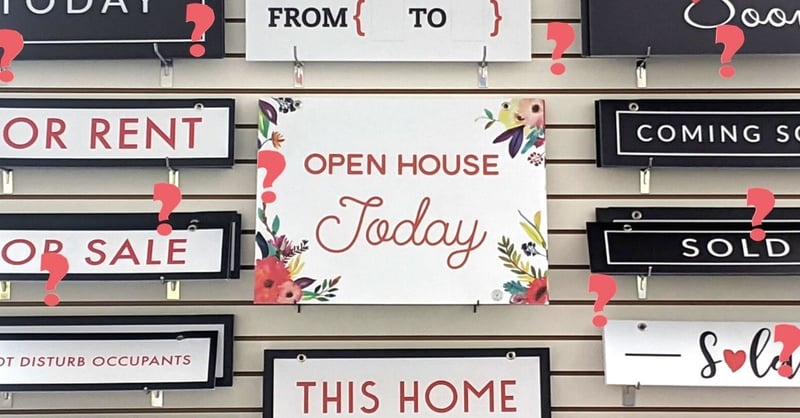
Imperial Beach House Sign EnforcementImperial Beach Code Enforcement is reminding San Diego County Realtors who are placing signs in the public right of way is against state law in all municipalities that don't have an exception.  California PENAL CODE SECTION 556-556.4 states: 

It is a misdemeanor for any person to place or maintain, or cause to be placed or maintained without lawful permission upon any property of the State, or of a city or of a county, any sign, picture, transparency, advertisement, or mechanical device which is used for the purpose of advertising or which advertises or brings to notice any person, article of merchandise, business or profession, or anything that is to be or has been sold, bartered, or given away.

The public right of way is "Real property or an interest in real property offered to and accepted by the City for public use."  Sidewalks are part of the public right-of-way.  While a couple of cities have limited specific exceptions to this rule, these exceptions usually involve city permits and payment.  Agents who place signs on sidewalks are likely violating state and local laws.

Imperial Beach will be fining agents $100 per sign when they place these signs on sidewalks.  

Here is a link to a letter from the IB Assistant Fire Marshal who is in charge of this.

Topics: Education, Announcements

Help clients understand ADU's

Posted by Kevin McElroy on Sep 19, 2019 5:00:00 PM

ADU workshop in La Mesa

SMALL HOMES, BIG IMPACT - ADU WOrkshop

Wednesday | October 9th | 6:00pm - 8:00pm

City of La Mesa Community Center | 4975 Memorial Drive, La Mesa, California 91942

      Register      

There will be free on-site parking. Light snacks and refreshments will be provided.


This free two-hour ADU Forum will create awareness of the new ADU
law in California and help homeowners learn everything there is to
know about building an ADU or JADU.

The ADU workshop will cover the following topics:
Accessory Dwelling Units Overview
     » ADU Legislative Updates
     » Current ADU Trends/Types of Units/Financing
     » Difference between ADU & Junior Accessory Dwelling Units (JADU’s)
     » City of La Mesa’s approved ordinance
     » Avoid Fraud: Hiring Contractors Do’s & Don’t’s

The ADU Forum is an opportunity to address your questions with the panelists well versed in ADU resources and compliance.

 Download ADU workshop flyer

Sponsored by
AARP Real Possibilities


Topics: Education

YPN Networking - which Strategic Shelter is right for you?

Posted by Kevin McElroy on Sep 18, 2019 4:58:06 PM

PSAR Young Professionals Network

Friday | September 20th | 8:30am-9:30am

Brew Coffee Spot | 6101 Lake Murray Blvd., La Mesa, CA 91941

YPN welcomes you to a 'Coffee and Learn' session with guest speaker, Abraham Cecena.
Abraham is a Financial Consultant for AXA Advisors.

The topic of his talk will be which Strategic Shelter is right for you
Solo(K) vs Safe Harbor.

We hope to see you there.
zipForms training flyer
FLYER

Topics: Education

Brokers Only, How will MLS rule updates impact your brokerage?

Posted by Kevin McElroy on Sep 16, 2019 1:00:00 PM

Brokers, join CRMLS’s Jeff Smetana (Director of Compliance and Licensing) and Megan Barber (Compliance Manager) on October 4th for breakfast in South County or Lunch in East County to learn about the brokers place in the compliance process.


Understanding "the why" behind MLS rules and recent changes to CRMLS.

MLS rules change avoid citations 


  • Subjects will include:
    • Compliance process
    • Citation process
    • Compliance resources
    • top violations overview
    • Q & A

Two Sessions for you to chose from:

October 4th, 2019
South County | 10:00am - 11:30am | 880 Canarios ct, Chula Vista, CA 9191

     Register South     

East County     | 12:30pm - 2:00pm   | 1150 Broadway, El Cajon, CA 92021

     Register East     

** Breakfast / Lunch will be served according to your session **

MLS Rules flyer
FLYER

Topics: Education, Brokers/Managers, CRMLS