PSAR Honors Toni Atkins and Juan Vargas for Championing Homeownership, Recognizes Local Leaders

Posted by Communications on Nov 22, 2024 4:55:30 PM

The Pacific Southwest Association of REALTORS® also installed its 2025 Board of Directors during the celebratory event.

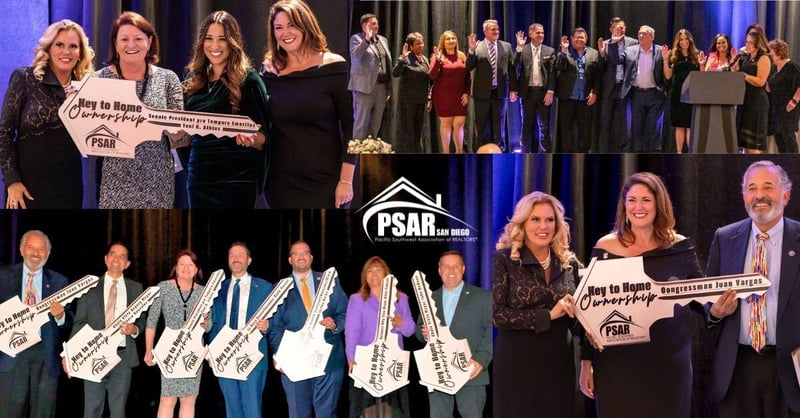
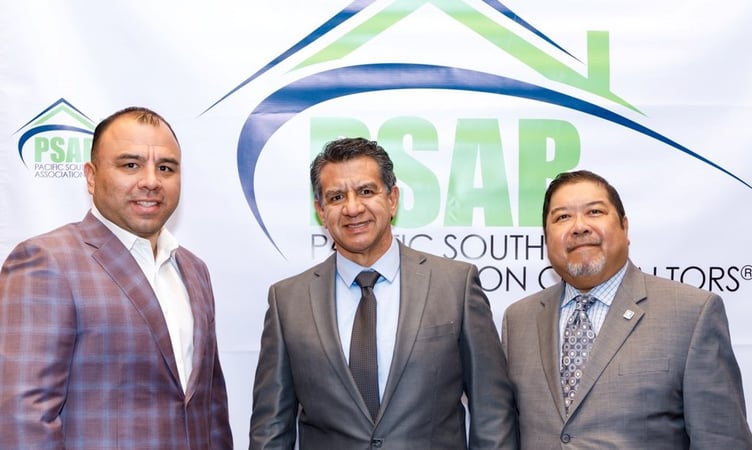
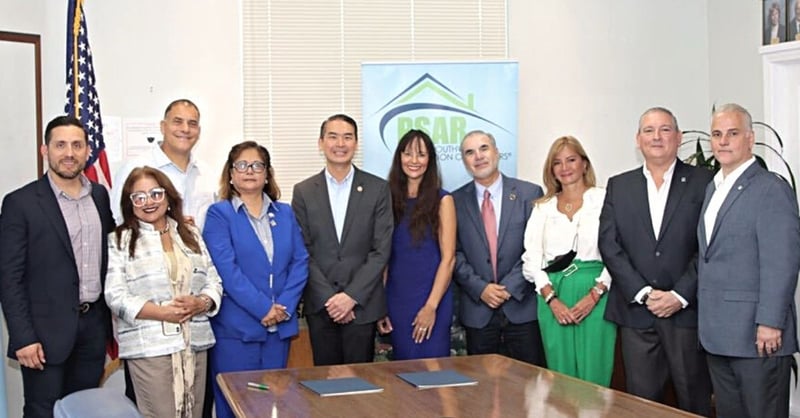
The Pacific Southwest Association of REALTORS® (PSAR) recently hosted a special event to honor the achievements of elected officials who have made significant strides in expanding housing accessibility and protecting property rights. The event recognized Senator Pro Tem Emeritus Toni G. Atkins and Congressman Juan Vargas for their leadership, along with several local leaders for their impactful contributions. The evening also celebrated the installation of PSAR’s 20254 Board of Directors.
 

Transforming Housing Policy in California:

LinkedPreview-PSAR68Senator Pro Tem Emeritus Toni Atkins received the PSAR Key to Homeownership Award for her pivotal role in shaping housing policy in California. Atkins championed Senate Bill 9, the California Housing Opportunity and More Efficiency (HOME) Act, which simplifies the process for homeowners to create duplexes or subdivide properties, increasing the housing supply and affordability.

"SB 9 is about giving homeowners more flexibility and creating opportunities for families to achieve the dream of homeownership," said Atkins during her remarks.

Atkins authored the California Dream for All program, a shared appreciation loan program that has helped thousands of families across California achieve the dream of homeownership. 

Atkins also strongly opposed Proposition 33, calling it "as deceptive as it is dangerous" and warning that it could "dramatically hinder new housing construction." Her leadership has been instrumental in addressing California’s housing crisis and advancing fair housing initiatives.


Advocating for Housing at the Federal Level: The Key's to Homeownership.

LinkedPreview-PSAR76Congressman Juan Vargas was also honored with the PSAR Key to Homeownership Award for his tireless efforts to support homeownership at the national level. As a member of the House Financial Services Committee, Vargas has championed fair lending practices and policies to expand access to affordable housing resources.

During his remarks, Vargas shared a personal story about how his parents used the growing equity in their home to provide for their family. "My mother and father taught us the value of homeownership—not just as a place to live, but as a tool for opportunity. They put ten children through college because of the equity they built in their home," Vargas shared.


Recognizing Local Leaders:

PSAR also honored several local officials for with The Key to Homeownership Award for their dedication to advancing access to homeownership and protecting property rights.  All of these elected officials opposed the anti-pro-housing bill Prop 33.:

elected officials with keys

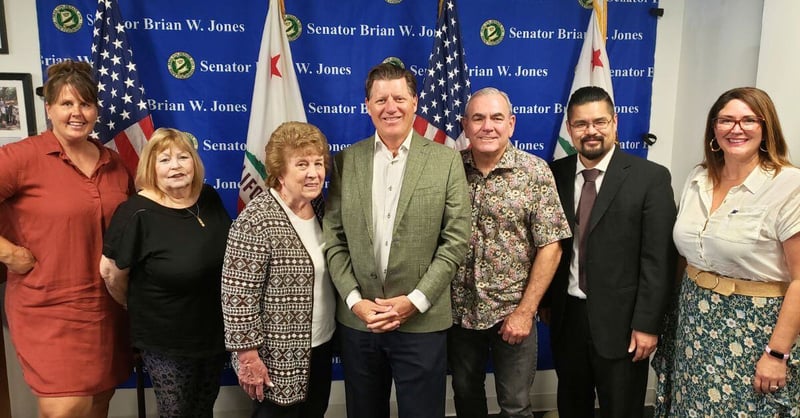
State Senator Brian Jones:  Introduced legislative packages addressing homelessness and housing availability.

Supervisor Joel Anderson: Supported efforts to fight homelessness, provide rental assistance, and provide workforce housing.  He also opposed barriers to housing caused by VMT Policies. 

Jordan Marks, San Diego County Assessor/Recorder/Clerk: Advocated for Proposition 13 protections, enhanced tax relief programs, and fought against real estate fraud.

John McCann, Chula Vista Mayor: Focused on public safety, economic growth, and homeowner education in Chula Vista.

Ron Morrison, National City Mayor: Opposed rent control measures that threaten property rights and prioritized homeownership opportunities.

Alonso Gonzalez, Chula Vista Deputy Mayor (And a PSAR Broker Member): Brought industry knowledge as a REALTOR® to advocate for equitable zoning and housing access.

Ditas Yamane, National City Vice Mayor: A former PSAR President who championed property rights and affordable homeownership.

Colin Parent, La Mesa Councilmember: Crafted policies like La Mesa’s ADU ordinance and affordable housing programs to expand housing options.


Celebrating PSAR Leadership:

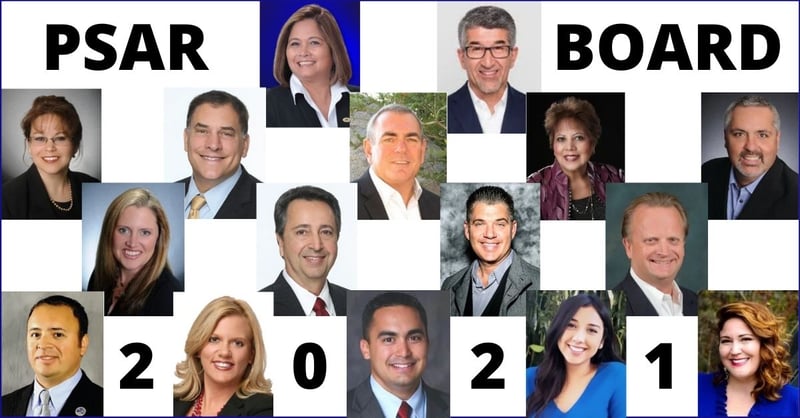
The evening concluded with the installation of PSAR’s 20254 Board of Directors. The new board, led by incoming President Yvonne Cromer, will guide the association in its mission to empower real estate professionals and advance housing opportunities throughout San Diego County.

2025 board sworn in

Thank you Don Anderson of Insight Photos and Brandon of Linked Preview for these great photos: 2025 Installation Dinner Photos
 
And Thank You     

Topics: Announcements, Events, Brokers/Managers

California Buyer-Broker Agreements: DRE Bulletin Adds to the Maze

Posted by Richard D'Ascoli on Nov 15, 2024 4:38:12 PM

California Buyer-Broker Agreements: DRE Bulletin Adds to the Maze

The real estate industry is facing significant changes to buyer-representation, and PSAR members need to stay informed. With the recent Sitzer-Burnett settlement, the passage of California’s AB 2992, and NOW a newly released California Department of Real Estate (DRE) bulletin, REALTORS® are navigating uncharted territory. These updates reflect an ongoing evolution in the industry, but inconsistencies between them may create challenges for REALTORS® working to remain compliant.

C.A.R. Legal is currently reviewing these documents in detail and will likely reach out to the DRE for clarification regarding the bulletin. REALTORS® can expect further guidance as these details are analyzed more thoroughly.

This blog is a first look at how these changes align—or don’t. While this is not a definitive legal analysis, it highlights important areas to consider.


Key Inconsistencies REALTORS® Need to Understand

1. Timing of Agreement Execution

  • Choose: Sitzer-Burnett Settlement: REALTORS® and MLS subscribers must secure a signed buyer-broker agreement before touring properties.

  • AB 2992: Allows the agreement to be signed as late as the execution of a purchase offer.

  • DRE Bulletin: Reflects AB 2992’s timing, which is less stringent than the settlement.
    Impact: REALTORS® may face conflicting guidance depending on whether they are complying with AB 2992, the settlement, or MLS rules.

2. Agreement Expiration

  • Choose: AB 2992: Limits agreements to a maximum of three months.

  • Sitzer-Burnett Settlement: Does not specify a duration but requires clear terms.

  • DRE Bulletin: Does not mention expiration limits.
    Impact: REALTORS® could face compliance issues if agreements extend beyond three months under California law, even if not restricted under the settlement.

3. Compensation Negotiation and Disclosure

  • Choose: Sitzer-Burnett Settlement: Caps compensation at the agreed amount and prohibits exceeding it from any source.

  • AB 2992: Allows buyers to negotiate seller concessions to cover agent fees but does not impose a cap.

  • DRE Bulletin: Discusses compensation but lacks clarity on handling caps or seller concessions.
    Impact: REALTORS® may inadvertently violate settlement terms by exceeding the agreed-upon compensation if following only state law or the bulletin.

4. Scope of Applicability

  • Choose: Sitzer-Burnett Settlement: Applies to all REALTORS® and covered MLS participants.

  • AB 2992: Broadens applicability to all California buyer’s agents, regardless of MLS or REALTOR® status.

  • DRE Bulletin: Suggests universal applicability but does not distinguish between REALTORS® and non-REALTORS®.
    Impact: REALTORS® operating outside MLS systems may face uncertainty about compliance standards.

5. Content of Agreements

  • Choose: AB 2992: Mandates detailed agreements specifying services, compensation, payment timing, and an expiration date.

  • Sitzer-Burnett Settlement: Requires clear compensation disclosure but does not specify other elements.

  • DRE Bulletin: Mentions transparency but omits critical details about mandatory agreement elements.
    Impact: REALTORS® risk non-compliance if agreements lack required elements under AB 2992.


First Look Recommendations for REALTORS®

  1. All Association members who are REALTORS(s) and all MLS members must abide by the terms of the settlement, even if AB2992 is less restrictive. Consult Your Broker: Brokers are a key resource in clarifying compliance with these changes

  2. Utilize the C.A.R. Legal Hotline: REALTORS® should seek professional guidance on navigating the complexities of overlapping requirements.

  3. Adopt a Conservative Approach:

    • Execute agreements before property tours, consistent with the settlement.

    • Ensure agreements meet AB 2992’s requirements, including the three-month expiration limit.

    • Disclose compensation clearly and avoid exceeding agreed-upon amounts.


What’s Next?

The DRE bulletin is brand new, and this is PSAR’s first analysis of its potential implications. While C.A.R. attorneys will undoubtedly provide a more detailed review, it’s critical for REALTORS® to begin understanding these changes now. Taking a proactive and cautious approach will help REALTORS® avoid missteps and serve clients effectively during this transitional period.

PSAR is here to support its members through these changes. Stay tuned for updates and additional resources as more information becomes available.

Topics: Brokers/Managers, Industry

Update regarding the DOJ Statement of Interest in the PIN Case.

Posted by Communications on Feb 16, 2024 10:16:19 PM

Katie Johnson NAR's General Council shared an update today regarding the Department of Justice's (DOJ) Statement of Interest in the ongoing lawsuit, Nosalek v. MLS PIN, which scrutinizes the practice of cooperative compensation between listing and buyer brokers.

MLS PIN, not fully owned by REALTOR® associations and not bound by NAR's guidelines, mandates that listing brokers offer compensation to buyer brokers. The DOJ challenges this tradition, suggesting that listing brokers and sellers should not offer compensation to buyer brokers, aiming to change longstanding practices in real estate transactions in the U.S.

Johnson argues that the DOJ's stance could harm consumers by making it more expensive for buyers to obtain representation and limit access to housing, noting the DOJ's lack of new analysis to back its claims. She emphasizes that such DOJ interventions overlook the potential negative impacts on homebuyers, including those buying for the first time or belonging to minority groups, and could disrupt the housing market.

Despite these challenges, NAR remains committed to defending free market competition and ensuring fair home ownership access. Johnson urges members to fully understand the DOJ's position, highlighting its implications for cooperative compensation practices and the broader real estate market. She asserts NAR's dedication to navigating these issues, aiming for outcomes that support property owners and real estate professionals across America.

Hee entire update may be found on the Realtor Hub Here.

Read the DOJ,'s Statement of Interest Here

Topics: Announcements, Brokers/Managers, Industry

Home Buyers and Sellers Profile Draws National Media

Posted by Communications on Nov 13, 2023 7:00:00 AM

blog banner_231112_ Profile of Home Buyers and Sellers

The National Association of REALTORS® released its 2023 Profile of Home Buyers and Sellers this morning, garnering coverage in a wide range of national media outlets, including CNN , Bloomberg and The Washington Post.

For most home buyers, the purchase of real estate is one of the largest financial transactions they will make. Buyers purchase a home not only for the desire to own a home of their own, but also because of changes in jobs, family situations, and the need for a smaller or larger living area. This annual survey was conducted by the NATIONAL ASSOCIATION OF REALTORS® of recent home buyers. Download Highlights (PDF 7 MB) | Get the Full Report(link is external) | News Release

Read additional highlights of the report in REALTOR® Magazine’s “12 Trends That Explain Your Clients’ Real Estate Journey.”

The annual report, which NAR has been conducting since 1981, covers demographics, preferences, and experiences of recent buyers and sellers across the United States. Data was collected from a nationally representative sample of home buyers who purchased a primary residence in the 12-month period between July 2022 and June 2023.

This year’s report shows that reliance on real estate professionals remains strong. Although 100% of respondents said they used the Internet in the home search process, a vast majority—89% of both buyers and sellers—said they worked with a real estate professional on their sale or purchase. Only 5% of sellers cited the “agent’s commission” as an important factor in choosing their agent: The reputation of the agent, whether the agent was “honest and trustworthy,” and knowledge of the neighborhood ranked as the most important factors.

Household annual income among buyers was 22% higher than last year, an indication that high sales prices and rising interest rates have eroded lower-income households’ ability to purchase a home. Among buyers who financed their purchase, the median down payment amount was also up. In this year’s report, it was 8% for first-time buyers, 19% for repeat buyers, and 15% for all buyers.

After several years of losing share in the homebuying market, first-time buyers are making headway. They made up 32% of the market, according to this year’s report—still below the historical rate of 38% but notably higher than last year’s rate of 26%.

As in past years, buyers and sellers report satisfaction with the service provided by their real estate professionals. Ninety percent of buyers said they would definitely (75%) or probably (15%) use their agent again or recommend their agent to others. Eighty-seven percent of sellers said they would definitely (73%) or probably (14%) recommend their agent for future services.

Highlights From the Profile of Home Buyers and Sellers

Topics: Brokers/Managers, Market Information, Industry

Comment now! Point of Sale Mandate Included in County Recommendations

Posted by PSAR Government Affairs on Jan 31, 2023 9:24:12 AM

No on Point of Sale


San Diego County staff recommends home energy audits during the home sales process.

This strategy is part of a  "Draft Playbook"  released by County staff.  The Playbook is described as a "menu of actions" that is intended as a resource for local governments who seek to take action on decarbonization.

PSAR opposes point-of-sale mandates.  Point of Sale mandates hurt buyers and sellers. They make homes more expensive to buy and since they target such a small number of homes, they do very little to address carbon reduction.

The County is accepting feedback on the Draft Playbook until Thursday, February 2.  Please leave a comment now explaining why point-of-sale or "time-of-sale" mandates are a bad idea.  It is most important to demonstrate how these mandates will impact your clients. 

To add a comment, click on the box below to open the County document, scroll to the section of the document you would like to comment on, and click the section.  A popup window will appear to allow you to leave a comment. 

You will find that point-o-sale mandates are described in the "Requirement" section of items 4.4.1 and item 5.5.1. Time-of-sale is also referred to in section 5.5.4.2.  Click on each of those sections and leave a comment.

For a list of reasons why point-of-sale mandates are a bad idea, you are welcome to refer to the letter from PSAR President Jason Lopez to the County, CLICK HERE to see the letter. You are encouraged to share those ideas in your comments. 

For questions or concerns, please email gad@psar.org

Click Here to Comment


Topics: Brokers/Managers, Government Affairs

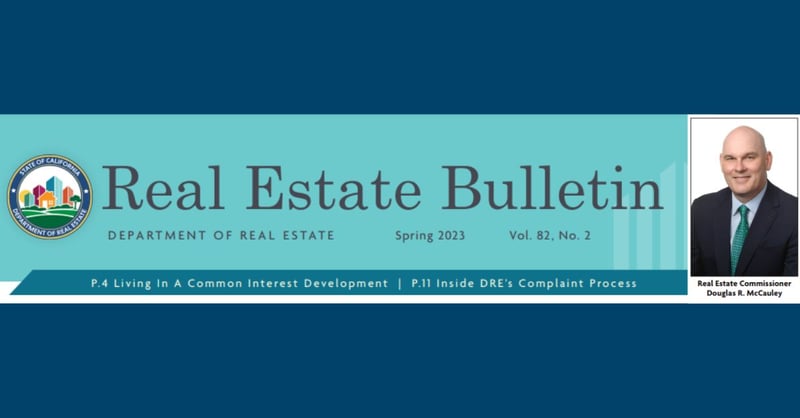
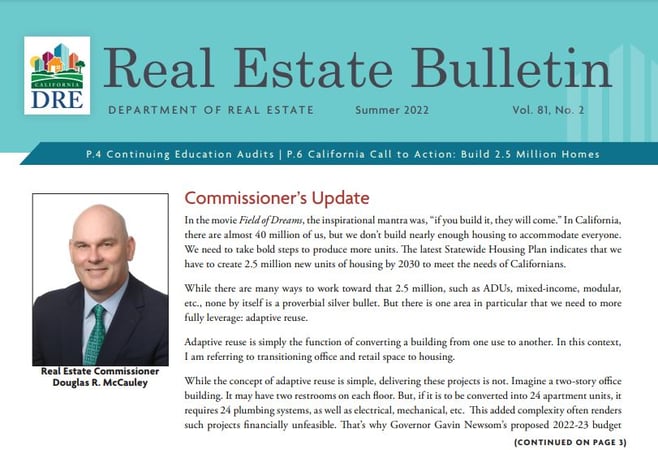
2022 Summer DRE Bulletin

Posted by PSAR Communication on Jul 26, 2022 1:16:58 PM

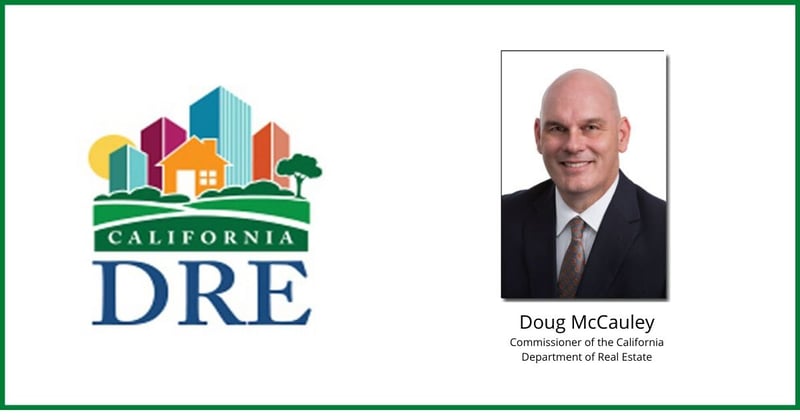
DRE Commissioner Douglas McCauley releaseS the Summer DRE Bulletin.

  • Comments on the housing shortage and adaptive reuse or converting a building from one use to another.
  • Senate Bill 263 (SB 263), amended the continuing education requirements for real estate licensees becomes effective January 1, 2023.
  • DRE Survey, Realtors, please comment.  The Commissioner is looking for feedback.
  • Continuing Education (CE) audits
  • Trust Fund Signatories. Can a property owner sign on a real estate broker’s trust account? Can a real estate broker sign on the property owner’s general account?
  • California’s Call to Action: Build 2.5 Million Homes in the Next Eight Years
  • California Mortgage Relief Program
  • Mortgage Loan Servicers and the Foreclosure Process
  • Advertising Guidelines and the Use of Former Surnames and Nicknames

READ The Entire Bulletin Here

dre bulletin summer 2022


Topics: Education, Announcements, Brokers/Managers

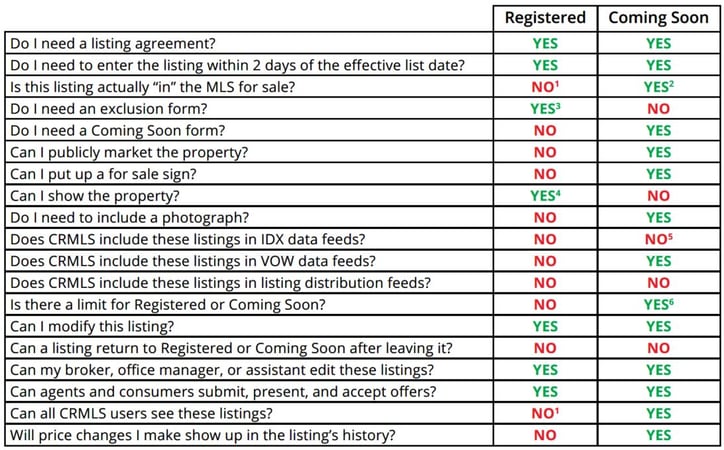
Registered vs. Coming Soon

Posted by PSAR Communication on Jul 14, 2022 12:35:04 PM


Registered vs Coming Soon

Click here to view the Registered FAQ and Click here to view the Coming Soon FAQ.

For an updated printable PDF of this checklist, go here.
Download the coming soon form to be signed by sellers here.

coming soon vs registered


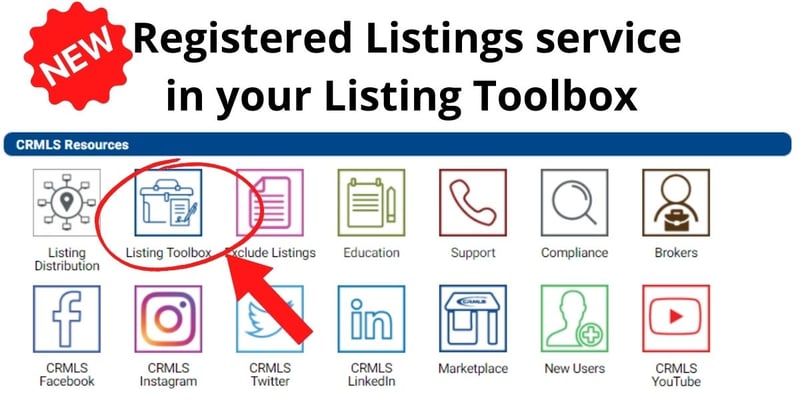
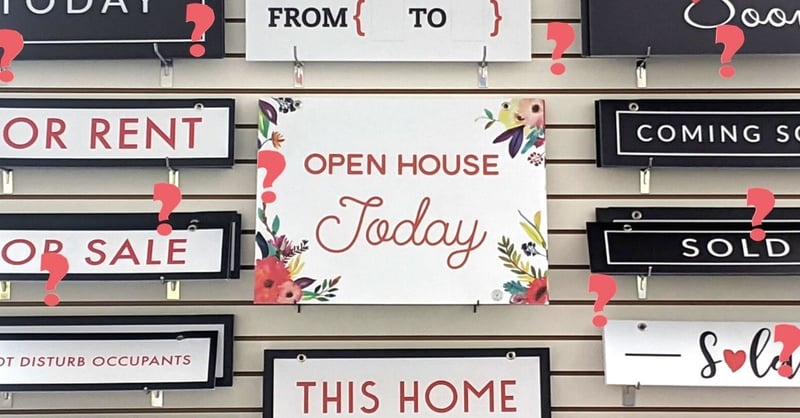
1 Registered listing contracts do not enter the MLS per the seller’s instructions, either temporarily or for the whole term
of the listing. They are not “in” the MLS. Only the listing agent, listing broker, and office manager, and Association/CRMLS staff can view Registered listings.

2 Agents may treat a Coming Soon listing like an Active listing that no one can show for 21 days and that does not go out via listing distribution feeds (Realtor.com, etc.). Click here to learn more about IDX and listing distribution.

3 If agents are using the C.A.R. form RLA dated 6/2020 and option 7.D.1 is complete, agents do not need an additional
exclusion form. Agents do not need to submit exclusion forms to CRMLS. However, they do need to keep the signed and completed form(s) on file with the brokerage and provide them if the CRMLS Compliance Department requests them.

4 Agents may only show Registered listings to clients of the listing brokerage firm. CRMLS defines a “client” as an individual or entity that has signed, within the previous year, a Disclosure Regarding Real Estate Agency Relationship form in Compliance with CA Civil Code section 2079.16 which identifies the Listing Broker.

5 Coming Soon listings in San Diego County will go out to IDX feeds for applicable brokers. Applicable brokers are those
who participate in CRMLS and have Coming Soon listings for properties in San Diego County, regardless of their MLS
system or Association or Board membership. This does not affect any CRMLS listings outside of San Diego County.

6Agents may only use the Coming Soon status for a maximum of 21 days from the date of entry. On day 22, the MLS system will move the listing into Active status. Please note: Agents may list New Construction Listings under the status of Coming Soon for longer than 21 days (until a notice of occupancy is issued), per Rule 7.18.4 of the CRMLS Rules and Regulations.

7. Information provided by CRMLS and current as of 7-14-2022.  Rules constantly change. Check the CRMLS knowledge base for updated rules and changes.  

Topics: Brokers/Managers, CRMLS, Paragon

PSAR Members Made Their Voices Heard

Posted by Communications on May 20, 2022 3:36:05 PM

PXL_20220518_032748639.MPb

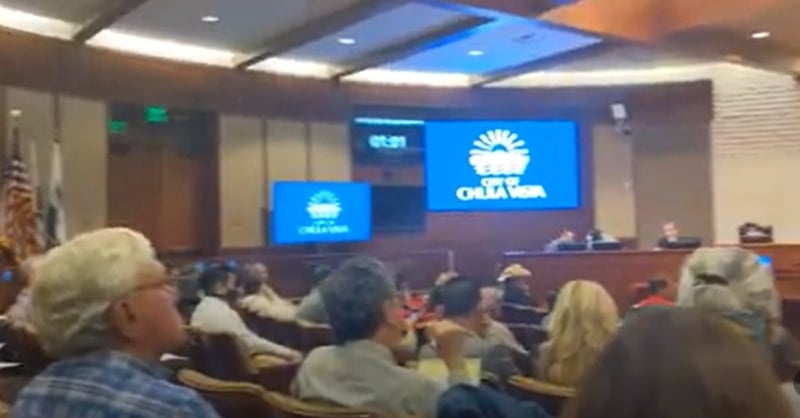
Members of the Pacific Southwest Association of REALTORS® (PSAR) made a powerful statement for property rights on behalf of housing providers while attending a recent Chula Vista City Council meeting where the subject of a new rent control ordinance was on the docket.

The City Council was considering an aggressive and overreaching ordinance that imposes additional regulations on housing providers. The controversial proposal, if passed, would negatively impact new housing creation by tightening restrictions on remodeling, owner move-ins and rental unit withdrawals, as well as expanding noticing and relocation assistance requirements.

Following over five hours of public comments, including testimony from many PSAR members, the City Council tabled a vote on the proposed ordinance, titled the “Residential Landlord and Tenant Provisions.” The Council stated that more data on the topic and potential language revisions are needed.

The actions taken by PSAR members were considered invaluable in the successful effort to prevent the Council from implementing an ordinance that would exacerbate the housing crisis. A revised version of the ordinance is expected to be considered by the City Council at a July 12 session.

Among the PSAR members who spoke at the May 17 city council meeting: Pat Russiano, Mike Campbell, Mark Scott, Nikki Coppa, Rich D'Ascoli, Yvonne Cromer, Robert Cromer, Mitch Thompson, George Ching, Eric Sutton, Peter Carlseen, Sam Calvano, Lupe Soto, Earl Jentz, Myllissa McCann and Josh Morales.

Richard D’Ascoli, PSAR CEO, stated in his testimony, “Most housing providers and owners are good people and most renters are good people. This extreme ordinance will punish every homeowner who may want to rent out a home and every renter who can’t find a place to rent.”

D’Ascoli cited a city staff report that included information from the Legal Aid Society of San Diego. According to the data, “no-fault” eviction disputes involve fewer than .27 percent of the 33,000 rental homes in Chula Vista annually, pointing to a much smaller issue.

The number of evictions totaled 13 in March, three in February, and seven in January. “Shouldn’t we help those 13 households rather than impact 33,000 rental units?” D’Ascoli asked. “Most housing providers are good actors, it’s the few we need to address. Let’s focus on them and not punish the entire city.”

D’Ascoli identified the long-term ramifications of the proposed ordinance: “Rent control and similar market restrictions will discourage the creation, maintenance, and upgrade of rental housing stock. This ordinance will discourage additional rehab and negatively impact the low-income renters the provisions were intended to serve. This ordinance also will reduce the value of properties in Chula Vista, compared to similar properties in other cities. Prudent property owners will choose to buy or build in areas with less cost and regulatory risk.

“Chula Vista will stagnate as the incentive to replacing aging, smaller complexes with upgraded, more dense buildings will no longer exist. Owners of single-family rental homes will either sell to national real estate investment trusts or they will sell to new owner-occupants. Available rental stock will decrease. Prices for renters will increase because supply will continue to be highly restricted. Also worrisome is the provision that anyone who violates any part of this law could be charged with a crime and sent to jail for up to six months.”

Other speakers from PSAR made the following points:

-- Burdensome regulations will result in less available housing, not more. This ordinance adds to the regulatory burden.
-- Provisions in the ordinance meant to prevent harassment of tenants would deter property owners from dealing with nuisance tenants.
-- Added renovation regulations would deter owners from upgrading rental properties, thus hurting tenants and surrounding neighborhoods.
-- The ordinance would create new, vague “anti-harassment” rules regulating landlord-tenant interaction, expanded notification requirements of up to 365 days, and higher relocation payments.
-- Landlords would be required to offer evicted renters, even if those renters caused property damage, the first right of refusal to move back in after a renovation.
-- The state of California recently enacted protections for tenants with AB 1482. That law provides sufficient regulation of landlord-tenant relationships.

Coalition partners with PSAR on the proposed Chula Vista ordinance included the Southern California Rental Housing Association (SCRHA) and the San Diego Association of REALTORS® (SDAR).

More Articles and News Coverage

Renters, Landlords at Odds Over Proposed No-Fault Eviction Proposal - Mitch Thompson shows new appliances as part of remodeling efforts. KPBS-TV, 05/17/2022.

Chula Vista City Council Postpones Eviction Moratorium Protection Vote - No decision after more than five hours of public comments and postponement until July 12. KPBS-TV, 05/18/2022.

Chula Vista City Council Considers Controversial Tenant Protection Ordinance - PSAR board member Jason Lopez explains the proposal is a solution looking for a problem. KUSI-TV, 05/18/2022.

Chula Vista Considers Ordinance Strengthening Protections for Tenants - PSAR 2022 President Max Zaker and PSAR member Mitch Thompson tell NBC 7 how the proposal would actually hurt tenants. KNSD-TV NBC 7 San Diego, 05/16/2022.

Chula Vista Council Hears from Over 50 Speakers - The meeting lasted for hours as landlords say the proposed ordinance would force them to sell their propertiesKGTV-TV 10News, 05/17/2022.

Decision Postponed on Controversial Renters' Protections - Quote from PSAR CEO Rich D'Ascoli: "...An ordinance that is overreaching..." KFMB-TV, CBS8, 05/18/2022.


Topics: Brokers/Managers, Government Affairs, Industry, Property Management

CHULA VISTA ORDINANCE WOULD MAKE THE HOUSING CRISIS WORSE

Posted by Communications on May 16, 2022 1:00:00 PM

There is a critical shortage of housing inventory. An excessive amount of red tape helped cause that shortage. Now, the City of Chula Vista is considering additional regulations on Housing Providers.

The proposed "Residential Landlord and Tenant Provisions" will impose the following:

  • Regulations that make substantial remodels, owner move-ins, and withdrawal from the rental market more difficult by adding stricter noticing requirements and relocation assistance requirements.
  • The creation of laws that allows for civil action and damages of $1,000-5,000 per violation per day.
  • The criminalization of any violation of the ordinance and the creation of fines in the thousands of dollars.

Mayor Mary Salas requested the creation of this ordinance in response to calls from tenant and rent control advocates. Unfortunately, the unintended consequences of this ordinance would end up harming tenants as well.

The unintended consequences of this ordinance will include the following:

  • The added difficulties of being a housing provider in Chula Vista will discourage the creation of much needed additional housing. This will hurt all of us, including those who would have a much harder time finding a place to rent. 
  • The added difficulties of undertaking substantial renovations would deter owners from upgrading unsightly buildings. This hurts the tenants who would live there and the livability of the surrounding communities. 
  • Provisions in the ordinance meant to prevent harassment of tenants would actually deter property owners from dealing with tenants who cause nuisances. This would hurt the tenants and all neighbors who live nearby and would have to deal with the nuisances.


It is well established that when you add regulation to something, you get less of it. We need more housing, not less. The State of California has recently enacted protections for tenants by enacting AB 1482. If there are problems for tenants, the City could focus on finding better ways to enforce existing laws, rather than adding more regulations that will negatively impact our already scarce housing supply.

Please send an eComment to the City stating your opposition to this misguided ordinance by clicking on the button below, and then clicking on the "Leave Comment" button:

TAKE ACTION


_______________________________________________________________________________


Not sure which Councilmember represents your neighborhood?  See below.

unnamed (2)-1


Topics: Brokers/Managers, Government Affairs, Market Information, Industry, Property Management

City of San Diego’s ‘No-Fault Eviction' Moratorium.

Posted by Communications on Apr 13, 2022 4:44:00 PM

Questions remain about the City of San Diego’s pending ‘No-Fault Eviction' Moratorium.

On April 4th, after almost six hours of public testimony which included comments from PSAR volunteers and members, the city council passed the ‘No-Fault Eviction' Moratorium ordinance. The ordinance must come back for a second reading a month after the first reading and will go into effect 30 days after final approval.


Thanks to the efforts of PSAR and our colleagues, the original ordinance was amended to include an end date or sunset on September 30, 2022 (or 60 days after the end of the local emergency) whichever is sooner.  Realtors are wondering about how this ordinance will impact property owners who want to sell.

  • No termination of tenancy is allowed for a substantial remodel unless mandated by the government or court order.
  • Owners who wish to move into their homes or move in family members will have to serve a 90-day notice to terminate the tenancy. An immediate family member is limited to a parent, child, grandparent, and grandchild.

Property owners who wish to terminate a tenancy in order to withdraw units from the rental market, this includes selling a home, must provide a 6-month notice.

The ordinance is likely to receive final approval next month and it will cause unintended consequences. Additionally, some of the language is vague and confusing. Once the ordinance is finalized, PSAR will schedule legal counsel to brief our members on its impact. PSAR will continue to review the ordinance and is prepared to challenge it again at the second reading.

Before working with a client to terminate a tenancy, it is important to speak with your broker and legal counsel. This ordinance will put many owners in difficult positions.

A copy of the proposed ordinance may be found here.

This web page item #200 has links to the PowerPoint and backup information for a deeper dive.

San Diego-1


Topics: Brokers/Managers, Government Affairs, Market Information, Industry