PSAR Announces Its 2023/24 Board of Directors and Officers

Posted by PSAR Communication on Jun 28, 2022 11:44:43 AM

PSAR 2023 Elections

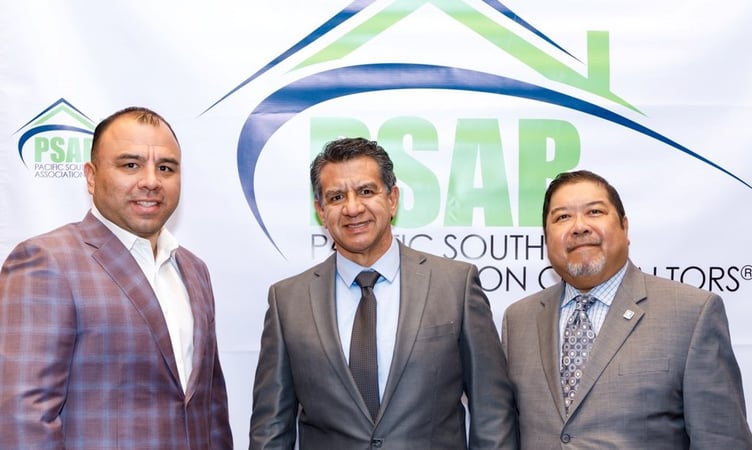
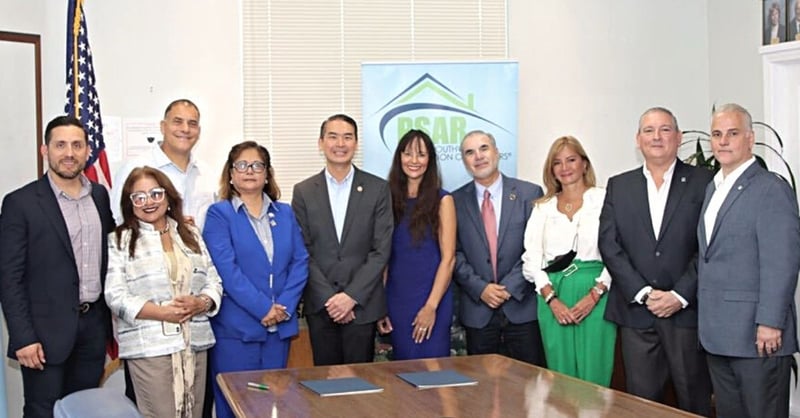
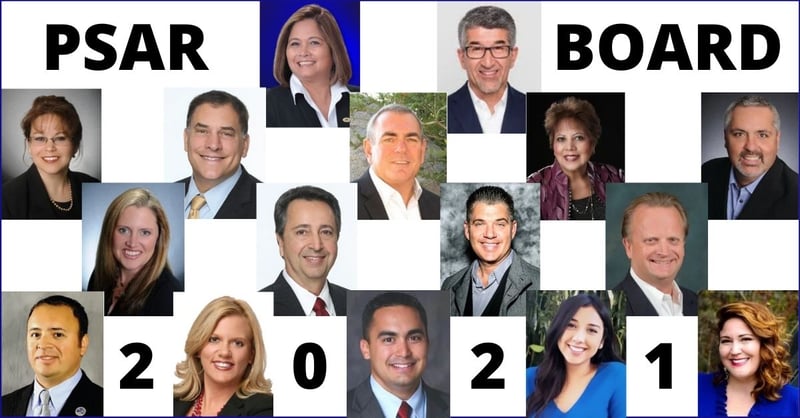
The Pacific Southwest Association of REALTORS® finalized its 2023 leadership team on June 24th. The following leaders were elected as Officers and Directors to serve in 2023.

President-Elect
Laurie MacDonald

Laurie MacDonald


Secretary / Treasurer
Sam Calvano

Sam Calvano


Directors

Merrie Espina
Merrie Espina
Valerie Gardner
Valarie Gardner
Rafael Perez
Rafael Perez
Amy Ruiz
Amy Ruiz
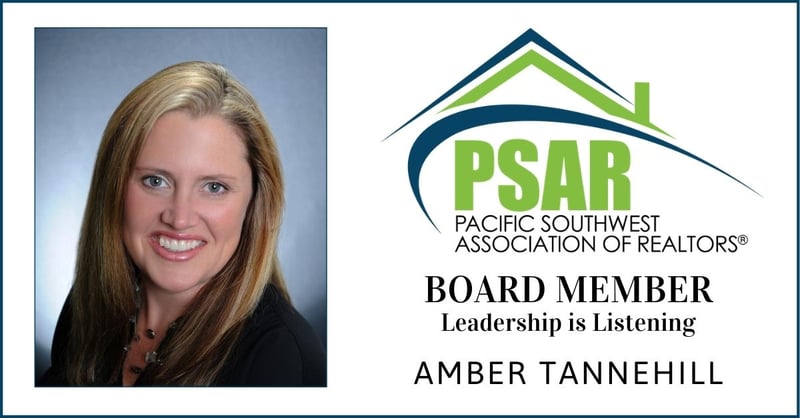
Amber Tannehill
Amber Tannehill
 

Affiliate Director

Martha Garcia
Martha Garcia

The incumbent set of Board of Directors and Officers will remain in their posts and continue to serve PSAR until December 31st, 2022.

Board of Directors (2023)
Jason Lopez, 2023 President

Laurie MacDonald, 2023 President-Elect

Sam Calvano, 2023 Secretary-Treasurer

Max Zaker, Immediate Past President

Anthony Andaya, 2022/2023 Director

Camille Bruno, 2022/2023 Director

Merrie Espina, 2023/2024 Director

Valerie Gardner, 2023/2024 Director

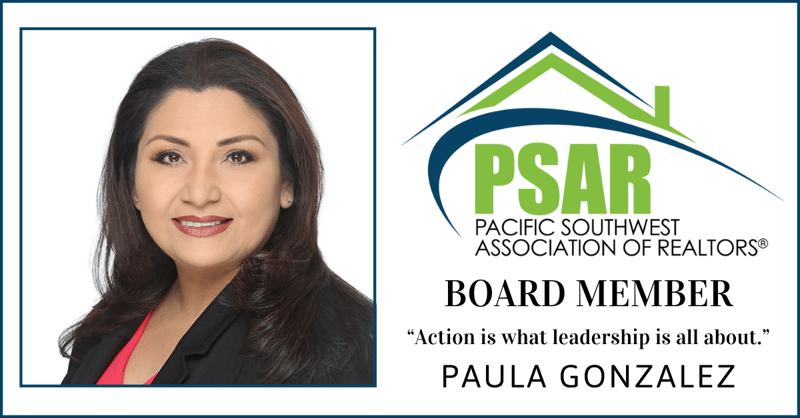
Paula Gonzalez, 2022/2023 Director

Dylan Graham, 2022/2023 Director

Rafael Perez, 2023/2024 Director

Amy Ruiz, 2023/2024 Director

Norma Scantlin, 2022/2023 Director

Amber Tannehill, 2023/2024 Director

Martha Garcia, 2023/2024 Affiliate Director

________________________________________________

PSAR's Mission is to empower Real Estate Professionals.

Since 1928, the Pacific Southwest Association of REALTORS® has played a significant role in shaping the history, growth, and development of the Real Estate industry in San Diego County.

We remain thankful to those who were nominated to lead PSAR. We are looking forward to great things from both the elected candidates and those who will continue to serve in our committee leadership roster.

Topics: Leadership

PSAR Members Made Their Voices Heard

Posted by Communications on May 20, 2022 3:36:05 PM

PXL_20220518_032748639.MPb

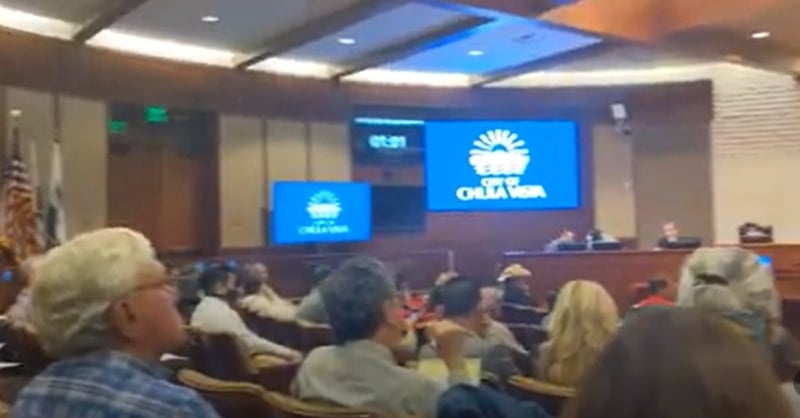
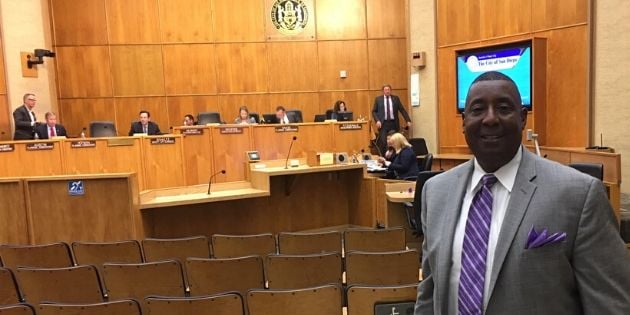
Members of the Pacific Southwest Association of REALTORS® (PSAR) made a powerful statement for property rights on behalf of housing providers while attending a recent Chula Vista City Council meeting where the subject of a new rent control ordinance was on the docket.

The City Council was considering an aggressive and overreaching ordinance that imposes additional regulations on housing providers. The controversial proposal, if passed, would negatively impact new housing creation by tightening restrictions on remodeling, owner move-ins and rental unit withdrawals, as well as expanding noticing and relocation assistance requirements.

Following over five hours of public comments, including testimony from many PSAR members, the City Council tabled a vote on the proposed ordinance, titled the “Residential Landlord and Tenant Provisions.” The Council stated that more data on the topic and potential language revisions are needed.

The actions taken by PSAR members were considered invaluable in the successful effort to prevent the Council from implementing an ordinance that would exacerbate the housing crisis. A revised version of the ordinance is expected to be considered by the City Council at a July 12 session.

Among the PSAR members who spoke at the May 17 city council meeting: Pat Russiano, Mike Campbell, Mark Scott, Nikki Coppa, Rich D'Ascoli, Yvonne Cromer, Robert Cromer, Mitch Thompson, George Ching, Eric Sutton, Peter Carlseen, Sam Calvano, Lupe Soto, Earl Jentz, Myllissa McCann and Josh Morales.

Richard D’Ascoli, PSAR CEO, stated in his testimony, “Most housing providers and owners are good people and most renters are good people. This extreme ordinance will punish every homeowner who may want to rent out a home and every renter who can’t find a place to rent.”

D’Ascoli cited a city staff report that included information from the Legal Aid Society of San Diego. According to the data, “no-fault” eviction disputes involve fewer than .27 percent of the 33,000 rental homes in Chula Vista annually, pointing to a much smaller issue.

The number of evictions totaled 13 in March, three in February, and seven in January. “Shouldn’t we help those 13 households rather than impact 33,000 rental units?” D’Ascoli asked. “Most housing providers are good actors, it’s the few we need to address. Let’s focus on them and not punish the entire city.”

D’Ascoli identified the long-term ramifications of the proposed ordinance: “Rent control and similar market restrictions will discourage the creation, maintenance, and upgrade of rental housing stock. This ordinance will discourage additional rehab and negatively impact the low-income renters the provisions were intended to serve. This ordinance also will reduce the value of properties in Chula Vista, compared to similar properties in other cities. Prudent property owners will choose to buy or build in areas with less cost and regulatory risk.

“Chula Vista will stagnate as the incentive to replacing aging, smaller complexes with upgraded, more dense buildings will no longer exist. Owners of single-family rental homes will either sell to national real estate investment trusts or they will sell to new owner-occupants. Available rental stock will decrease. Prices for renters will increase because supply will continue to be highly restricted. Also worrisome is the provision that anyone who violates any part of this law could be charged with a crime and sent to jail for up to six months.”

Other speakers from PSAR made the following points:

-- Burdensome regulations will result in less available housing, not more. This ordinance adds to the regulatory burden.
-- Provisions in the ordinance meant to prevent harassment of tenants would deter property owners from dealing with nuisance tenants.
-- Added renovation regulations would deter owners from upgrading rental properties, thus hurting tenants and surrounding neighborhoods.
-- The ordinance would create new, vague “anti-harassment” rules regulating landlord-tenant interaction, expanded notification requirements of up to 365 days, and higher relocation payments.
-- Landlords would be required to offer evicted renters, even if those renters caused property damage, the first right of refusal to move back in after a renovation.
-- The state of California recently enacted protections for tenants with AB 1482. That law provides sufficient regulation of landlord-tenant relationships.

Coalition partners with PSAR on the proposed Chula Vista ordinance included the Southern California Rental Housing Association (SCRHA) and the San Diego Association of REALTORS® (SDAR).

More Articles and News Coverage

Renters, Landlords at Odds Over Proposed No-Fault Eviction Proposal - Mitch Thompson shows new appliances as part of remodeling efforts. KPBS-TV, 05/17/2022.

Chula Vista City Council Postpones Eviction Moratorium Protection Vote - No decision after more than five hours of public comments and postponement until July 12. KPBS-TV, 05/18/2022.

Chula Vista City Council Considers Controversial Tenant Protection Ordinance - PSAR board member Jason Lopez explains the proposal is a solution looking for a problem. KUSI-TV, 05/18/2022.

Chula Vista Considers Ordinance Strengthening Protections for Tenants - PSAR 2022 President Max Zaker and PSAR member Mitch Thompson tell NBC 7 how the proposal would actually hurt tenants. KNSD-TV NBC 7 San Diego, 05/16/2022.

Chula Vista Council Hears from Over 50 Speakers - The meeting lasted for hours as landlords say the proposed ordinance would force them to sell their propertiesKGTV-TV 10News, 05/17/2022.

Decision Postponed on Controversial Renters' Protections - Quote from PSAR CEO Rich D'Ascoli: "...An ordinance that is overreaching..." KFMB-TV, CBS8, 05/18/2022.


Topics: Brokers/Managers, Government Affairs, Industry, Property Management

CHULA VISTA ORDINANCE WOULD MAKE THE HOUSING CRISIS WORSE

Posted by Communications on May 16, 2022 1:00:00 PM

There is a critical shortage of housing inventory. An excessive amount of red tape helped cause that shortage. Now, the City of Chula Vista is considering additional regulations on Housing Providers.

The proposed "Residential Landlord and Tenant Provisions" will impose the following:

  • Regulations that make substantial remodels, owner move-ins, and withdrawal from the rental market more difficult by adding stricter noticing requirements and relocation assistance requirements.
  • The creation of laws that allows for civil action and damages of $1,000-5,000 per violation per day.
  • The criminalization of any violation of the ordinance and the creation of fines in the thousands of dollars.

Mayor Mary Salas requested the creation of this ordinance in response to calls from tenant and rent control advocates. Unfortunately, the unintended consequences of this ordinance would end up harming tenants as well.

The unintended consequences of this ordinance will include the following:

  • The added difficulties of being a housing provider in Chula Vista will discourage the creation of much needed additional housing. This will hurt all of us, including those who would have a much harder time finding a place to rent. 
  • The added difficulties of undertaking substantial renovations would deter owners from upgrading unsightly buildings. This hurts the tenants who would live there and the livability of the surrounding communities. 
  • Provisions in the ordinance meant to prevent harassment of tenants would actually deter property owners from dealing with tenants who cause nuisances. This would hurt the tenants and all neighbors who live nearby and would have to deal with the nuisances.


It is well established that when you add regulation to something, you get less of it. We need more housing, not less. The State of California has recently enacted protections for tenants by enacting AB 1482. If there are problems for tenants, the City could focus on finding better ways to enforce existing laws, rather than adding more regulations that will negatively impact our already scarce housing supply.

Please send an eComment to the City stating your opposition to this misguided ordinance by clicking on the button below, and then clicking on the "Leave Comment" button:

TAKE ACTION


_______________________________________________________________________________


Not sure which Councilmember represents your neighborhood?  See below.

unnamed (2)-1


Topics: Brokers/Managers, Government Affairs, Market Information, Industry, Property Management

CRMLS: Public Remarks fields may no longer contain external links

Posted by Kevin McElroy on May 4, 2022 3:04:04 PM

Links to virtual showings, tours, and open houses are no longer exempt blog_220126_CRMLS_rules

Due to recent lifts to COVID restrictions in our service area, we have lifted the exceptions to CRMLS Rule 12.5 that we implemented in March 2020. These exceptions allowed listing agents and brokers to place links to virtual showings, virtual tours, and virtual open houses into public remarks fields.

CRMLS has returned to enforcing the original definition of the rule, which reads in part:

12.5 Misuse of Public Remarks.

Information in the public remarks shall only relate to the description, features, and condition of the property and related amenities. The following types of information may not be included in the public remarks:

  • Contact information of any kind;
  • Branded content;
  • Links to external websites of any kind, including but not limited to, agent or broker sites, video tours, virtual showing or open house tools, vendor sites, or offer submission/application/auction platforms;
  • Showing instructions or open house information;
  • Information regarding lockboxes, alarms, gate or other security codes, or occupancy status of the property (a statement that the property shall be delivered vacant is not a violation of this section);
  • Information deemed to create an unsafe or unsecure circumstance related to the listed property, property occupants, real estate practitioners, or the public;
  • Information directed toward agents or brokers, including but not limited to, references to compensation or bonuses;
  • Solicitations or invitations for the public to contact the listing agent or broker or any third parties affiliated with the listing agent or broker, and;
  • Content that violates Fair Housing law or that is deemed discriminatory, illegal, defamatory, offensive, or otherwise inappropriate. CRMLS reserves the right to remove and issue citations for any inappropriate content.

Violations to this rule may result in a citation and associated fine. Visit https://go.crmls.org/crmls-rules-and-regulations/ to read the full text of Rule 12.5. For further information or to chat with a Compliance Analyst, please contact us via the Compliance page on CRMLS.org.


Education

CRMLS offers a variety of resources to educate you on our products and services. Click above to visit the CRMLS training center.

Support

If you need MLS support, please click above or call (800) 925-1525 to be assisted.

Compliance

Your listing data is safe, clean, and accurate. Click above to chat live with a CRMLS Compliance representative.


Topics: Announcements, CRMLS, Paragon

City of San Diego’s ‘No-Fault Eviction' Moratorium.

Posted by Communications on Apr 13, 2022 4:44:00 PM

Questions remain about the City of San Diego’s pending ‘No-Fault Eviction' Moratorium.

On April 4th, after almost six hours of public testimony which included comments from PSAR volunteers and members, the city council passed the ‘No-Fault Eviction' Moratorium ordinance. The ordinance must come back for a second reading a month after the first reading and will go into effect 30 days after final approval.


Thanks to the efforts of PSAR and our colleagues, the original ordinance was amended to include an end date or sunset on September 30, 2022 (or 60 days after the end of the local emergency) whichever is sooner.  Realtors are wondering about how this ordinance will impact property owners who want to sell.

  • No termination of tenancy is allowed for a substantial remodel unless mandated by the government or court order.
  • Owners who wish to move into their homes or move in family members will have to serve a 90-day notice to terminate the tenancy. An immediate family member is limited to a parent, child, grandparent, and grandchild.

Property owners who wish to terminate a tenancy in order to withdraw units from the rental market, this includes selling a home, must provide a 6-month notice.

The ordinance is likely to receive final approval next month and it will cause unintended consequences. Additionally, some of the language is vague and confusing. Once the ordinance is finalized, PSAR will schedule legal counsel to brief our members on its impact. PSAR will continue to review the ordinance and is prepared to challenge it again at the second reading.

Before working with a client to terminate a tenancy, it is important to speak with your broker and legal counsel. This ordinance will put many owners in difficult positions.

A copy of the proposed ordinance may be found here.

This web page item #200 has links to the PowerPoint and backup information for a deeper dive.

San Diego-1


Topics: Brokers/Managers, Government Affairs, Market Information, Industry

A big change to Sentrilock Key Cards is coming soon!

Posted by Kevin McElroy on Mar 16, 2022 10:00:00 AM

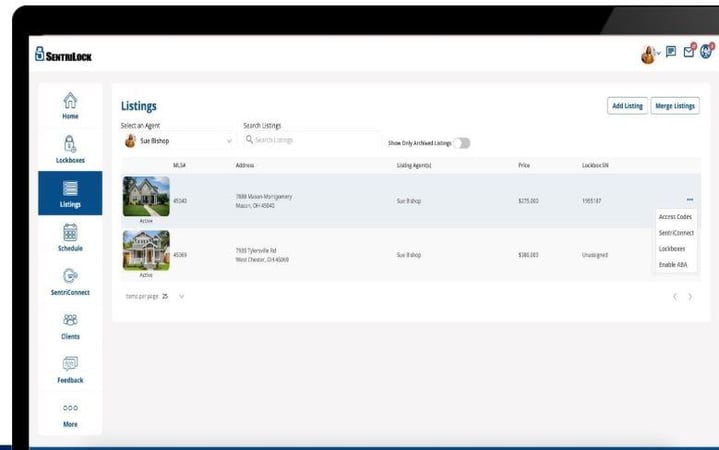
SentriLock Deprecates SentriCard

By March 30, 2022, SentriCard key cards will no longer open lockbox key compartments (unless you own the lockbox)!

The SentriKey phone application must be used by non-lockbox owners to open key compartments!

How do I open the key compartment?

If you own a lockbox, you will still be able to use your SentriCard to open the key compartment and/or release the shackle of your lockbox.  The SentriKey® phone app performs the same functions.

All others accessing a lockbox-- Showing agents, agents that use their broker’s lockboxes, team members, and assistants-- must use the SentriKey® app to open the key compartment using a Mobile Access Code sent by the app.


Showing in a remote area not using a Bluetooth® lockbox,

The SentriKey® Real Estate app can detect low or no cell coverage and a Mobile Access Code will be presented in the app. No card needed, no Bluetooth® needed!.

  1. From SKRE Home Screen > Select View Nearby Properties
  2. A message will pop up indicating that this feature is not available
    when offline. (If the lockbox uses Bluetooth, go to the home screen
    then press ENT on the lockbox.) If non-BLE, continue to step 3.
  3. Select Get Code
  4. Enter the Lockbox Serial Number
  5. Select Get Code
  6. Use Biometrics or PIN
  7. Your Access Code will display


How do I remove customization and borrowed lockboxes?

Lockboxes that are borrowed or customized require the lockbox owner’s SentriCard® to be inserted into the lockbox to release the shackle. This will set the lockbox back to its default settings and remove any customization.


Lockbox Sharing

Brokers sharing their Lockboxes will need to enable the ability for agents to view all lockboxes and access logs to generate one-day codes, release the shackle and assign lockboxes to listings. If this feature is disabled, an Office Staff or Broker office individual will need to assign the lockbox to an agent’s listing first in order to perform these functions.


How do I set the lockbox clock?

All lockboxes below an NXT Wireless (Blue Box) 24.34 version must use the lockbox owner’s SentriCard® to set the clock on a lockbox for the time to update.


How do I release the shackle?

Lockbox owners can use the SentriKey® app to generate a shackle release code, or owners can use their SentriCard® to release the shackle. If you are using a lockbox that is owned by another user, you will use the SentriKey® app to release the shackle by using a shackle code.


How do I recalibrate the lockbox?

With assistance from our Support department, the lockbox owner’s SentriCard® will be able to recalibrate the motor.


How do I customize a lockbox to another region?

By using the lockbox owner’s SentriCard®, the lockbox owner can customize a lockbox to a different region, enable/disable CBS, and enable/disable contractor mode for a non-BLE lockbox.


Questions?

Frequently Asked Questions May Be Found Here.


Or Email SentriLock at support@sentrilock.com

Call SentriLock: 513-618-5800

SentriLock-Logo-thumbnail-p4ssbnc9vybs202m3jscwh0kmxwqvp3xzco0p5swps


Topics: Education, YPN

Point-of-sale water retrofit requirement eliminated in San Diego

Posted by PSAR Communication on Mar 4, 2022 10:30:00 AM

The City of San Diego No Longer Requires a WATER CONSERVATION CERTIFICATE At the Point of Sale

The City of San Diego no longer requires property owners to file a Water Conservation Certificate when selling their property. The City Council approved the change to the Municipal Code which went into effect on February 27, 2022.

In 1992, the City of San Diego developed several permanent water conservation provisions which were more stringent than industry standards at the time. The provisions were added to the Municipal Code and required property owners to remove non-conserving water devices and install ultra low-flow toilets and other low-flow fixtures in all new construction or permitted remodels. The City also required property owners to submit compliance disclosure information upon the sale of a property. The City determined that review and enforcement of a Water Conservation Certificate are no longer necessary nor legally required.

California approved Senate Bill 407 in 2009 and requires owners of residential single-family, multi-family properties, and commercial properties to replace all non-compliant plumbing fixtures with water-conserving plumbing fixtures. SB 407 requires the disclosure of non-compliant fixtures between the seller and buyer at the time of property transfer. This requirement can typically be disclosed on a Real Estate Transfer Disclosure Statement (TDS.)

Learn more about water conservation laws and disclosure obligations at CAR in the risk management section under legal Q&As and disclosures here. (Log-in required.)

For more information, visit the City’s website.

Point-of-sale Water Retrofit Requirement Eliminated in San Diego


Topics: Brokers/Managers, Government Affairs

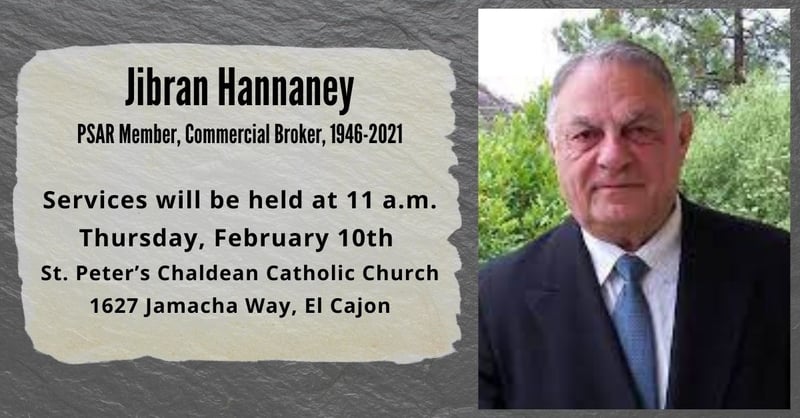
Jibran Hannaney, PSAR MEMBER, COMMERCIAL BROKER, 1946-2021

Posted by Rick Griffin on Feb 7, 2022 6:01:20 PM
blog_image_JIBRAN_HANNANEY

The PSAR family wishes to extend its condolences, thoughts, and prayers following the passing of PSAR member Jibran Hannaney. He was 75.

Jibran was a frequent attendee at the PSAR East County Pitch Session regularly held on Thursday mornings at the PSAR East County Service Center in El Cajon. He also was active with the PSAR Global Real Estate Council (GREC).

His family said he had worked in real estate sales for the past 10 years and had lived in El Cajon for about 20 years.

Jibran Joseph Hannaney was born in Baghdad on Oct. 29, 1946, to a family with six children, including five daughters and Jibran. He passed on Jan. 26, 2022.

In his mid-30s, he came to the U.S. to attend graduate school as an engineering student at John Hopkins University in Baltimore. In about 1990, he opened his own engineering firm called HEMC Environmental Management Corp., based in El Cajon. He continued to operate the firm until his passing. The firm is multi-licensed in engineering, contracting, business management, and facilities management.

His family said that Mr. Hannaney loved music, life, and laughter, as well as being a father and grandfather. He also loved learning, which attracted him to the real estate profession. No matter what was happening to him in his life, he would never miss an opportunity to make someone else smile. To say that he was widely loved, admired, and cherished in the community is an understatement. Mr. Hannaney is survived by five sisters, two daughters, and two grandsons.

Funeral services will be held at 11 a.m., Thursday, Feb. 10, at St. Peter’s Chaldean Catholic Church, 1627 Jamacha Way, El Cajon.

Burial will take place at Holy Cross Cemetery, 4470 Hilltop Dr., San Diego. A luncheon reception, expected to begin at approximately 1:30 p.m., will be held following the burial at St. Peter’s Chaldean Catholic Church.

His family said memorial donations can be made to any nonprofit assisting Iraqi refugees. One such organization is www.Helpiraq.org, which is operated by Chaldean Catholic Charities.

Jibran GREC 2

Mr. Hanney is joined by members of the PSAR Global Real Estate Council


Topics: Announcements, Leadership

County Policy Eliminates Hope for New Housing

Posted by Communications on Feb 4, 2022 4:00:11 PM

Facepalm pexels-kat-smith-568027

The Board of Supervisors will meet on Wednesday, February 9th at 9 am to discuss the implementation of a Vehicle Miles Traveled (VMT) Policy which could end hopes that San Diego will meet the housing needs of its residents.  

Please urge the Board of Supervisors to keep housing a top priority in San Diego County.  

You can submit written comments by clicking here: submit comments.

This proposal is item 7 on the Agenda, if you would be willing to testify on this, you can sign up here:  Sign up to speak

-------------------------------------------------------------------------------------------------------------------

Recently, PSAR sent a three-page letter to the San Diego County Board of Supervisors expressing our opposition to the Vehicle Miles Traveled (VMT) proposal.  See a copy of the letter by following this link.

VMT is a proposal that would slap new fees on housing development in car-centric communities. The fees would be calculated based on the additional “vehicle miles traveled.” Housing developments in rural or suburban areas would face fees that would disincentivize their construction.  Any homes that do get built would need to factor in those additional fees, pushing the dream of homeownership further beyond the reach of most aspiring buyers.  

Under the proposed VMT, to get approval for a project, a housing developer would have to show that their project would generate fewer vehicle miles traveled than the area’s average. 

PSAR’s letter to the Board of Supervisors states: “Homeownership is the bedrock of building strong communities and intergenerational wealth. REALTORS® know firsthand that buyers are moving to Riverside, Imperial Valley, and Mexico to own a property and build a future. They subsequently commute for hours on San Diego freeways, defeating the intent of the VMT policies.

“There are numerous economic and regulatory barriers that discourage developers from building both attached and detached “for-purchase” housing for all levels of income. If the County is forced to adopt a Vehicle Miles Traveled (VMT) planning tool that is being considered with a regional planning focus, the cost of new housing in the unincorporated portions of our region will be increased significantly, adding to the current housing shortfall.

“This policy will severely restrict future generations from realizing the dream of homeownership and a better quality of life for themselves and generations to come.”

The letter also states that PSAR is supporting six recommendations from the Building Industry Association (BIA) of San Diego County. BIA’s recommendations include an Infill Area Option, VMT Mitigation Program Options, and a programmatic Environmental Impact Report (EIR) to analyze VMT impacts.

PSAR is opposing VMT implementation because of the potential impacts on historically disadvantaged communities who would find it harder to realize the dream of homeownership.

PSAR’s letter states: “Homeownership is an essential steppingstone for families to build wealth. By adding requirements that will make homeownership opportunities more expensive for working families to purchase, we will be removing a crucial steppingstone for those who have not already had an opportunity to purchase a home. We would essentially be closing the door behind those who have already been fortunate enough to purchase a home.

“Society has been making a lot of strides towards providing historically disadvantaged communities with opportunities that had previously been denied to them. We should not be halting that progress by limiting access to homeownership opportunities. The book `The Color of Law’ by Richard Rothstein provides a very detailed analysis of how unequal access to homeownership due to government policies directly resulted in economic harm that continues to hold back communities of color to this day. Considering the fact that communities of color in San Diego are still suffering from the multigenerational impacts of redlining and segregation, we should not be implementing policies that cement these impacts by stopping the creation of new opportunities for homeownership or confining new housing opportunities for lower-income residents to certain areas.”

At their Jan. 26 meeting, the Board of Supervisors received a report from county planners that laid out ways to implement VMT. The board directed the planners to return on Feb. 9 with additional details on VMT options.

Please urge the Board of Supervisors to keep housing a top priority in San Diego County.  

You can submit written comments by clicking here: submit comments.

This proposal is item 7 on the Agenda, if you would be willing to testify on this, you can sign up here:  Sign up to speak


Topics: Brokers/Managers, Government Affairs, Market Information, Industry

Why you may see 'SD' at the end of listing IDs

Posted by Richard D'Ascoli on Jan 21, 2022 1:20:06 PM

Why you may see 'SD' at the end of listing IDs and what you need to do 

Why you may see 'SD' at the end of listing IDs

Learn how to properly identify SDMLS listings below 

You may start noticing that certain listing IDs in your MLS have a new suffix: 'SD.' For example: 2200000582SD.

On 1/1/2022, San Diego MLS changed its listing ID conventions. This change meant that some new SDMLS listings now use duplicate IDs. The new listing ID numbers are the same as IDs of older listings from our data share partners. Using the same listing ID for multiple listings causes data collisions in the MLS and confusion for real estate professionals who want to find specific listings.

To avoid these issues, CRMLS updated IDs for the listings. These listings and all SDMLS listings will appear with the letters 'SD' at the end of their ID numbers.

This change will impact your MLS ID searches in all MLS platforms. See below:

If you are using Power Search…

CRMLS Paragon Listing IDs

Searching for a 2022 SDMLS listing ID without the 'SD' suffix in Power Search will return all listings that begin with that listing ID, including the SDMLS listing and an older listing ID from a data share partner. The listing ending in 'SD' is an SDMLS listing from 2022.

If you are using Quick Search…

      CRMLS Quick Search

If you don't include the 'SD' suffix in Quick Search, Paragon will only return the listing that exactly matches the number you enter. To ensure you find the right listing, make sure you include the 'SD' ending.

      CRMLS Paragon Quick Search       CRMLS Paragon Quick Search with SD
               Doesn't show the newer listing                             Now shows both but must add suffix 'sd'

On third-party sites…

Depending on the site, you and your clients may see either the listing ID ending in 'SD' or the listing ID without 'SD.' When you're unsure which ID the site will use, it's best to reference other details for the listing, as its Active date or address.

Topics: Education, Announcements, CRMLS