FULL BRUNT OF VIRUS OUTBREAK FELT IN MAY HOUSING REPORT

Posted by Rick Griffin on Jun 26, 2020 4:55:44 PM

May housing market Statistics

The full impact of the coronavirus pandemic was felt in the local and statewide housing market in May, as revealed by the most recent monthly home sales and prices report from the California Association of REALTORS® (C.A.R.).

California home sales in May fell to their lowest level since the 2008 Great Recession with closed escrow sales of existing, single-family detached homes totaling a seasonally adjusted annualized rate of 238,740 units, according to information collected by C.A.R. from more than 90 local REALTOR® associations and MLSs statewide.

Statewide, May 2020 home sales were down 13.9 percent from the 277,440 units sold in April, and down 41.4 percent from a year ago, when 407,330 homes were sold in May 2019. Statewide year-to-date home sales are down 12.9 percent, the largest drop since November 2007.

In San Diego county, homes sales in May 2020 were down 14.6 percent, compared to April 2020, and 42.3 percent, compared to May 2019.

San Diego county’s year-over-year decrease of 42.3 percent in home sales in May compares to these Southern California counties: 53.3 percent in Orange, 52.0 percent in Ventura, 47.5 percent in Los Angeles, 43.0 percent in Riverside and 37.6 percent in San Bernardino .

The statewide median home price in May 2020 fell below last year’s price for the first time since February 2012 and breaking the state’s 98-month, year-over-year price-gain streak. The May 2020 statewide median price of $588,070 for existing single-family homes was down 3.0 percent from April 2020’s $606,410 figure and down 3.7 percent from May 2019, when the median price was a revised $610,940.

In San Diego, the median price for a single-family home in San Diego County in May 2020 was $655,000, down 2.4 percent from $671,000 in April 2020, with only a 0.8 percent difference from the $650,000 figure for May 2019.

May 2020 County Sales and Price Activity
(Regional and condo sales data not seasonally adjusted)

Median Sold P:rice

“The sharp sales drop in May was the steepest we’ve seen in some time, but there are encouraging signs that show the market is recovering and should continue to improve over the next few months,” said 2020 C.A.R. President Jeanne Radsick, a second-generation REALTOR® from Bakersfield, Calif. “With pending home sales up a stunning 67 percent in May, buyer demand is on the upswing amid record-low rates that are making monthly mortgage payments $300 less than a year ago.”

“As we predicted, May home sales took the full impact of the coronavirus pandemic as much of the state remained in lockdown during the past few months and caused three straight months of double-digit sales declines, which we haven’t experienced since the Association began reporting monthly home sales in 1979,” said C.A.R. Senior Vice President and Chief Economist Leslie Appleton-Young. “While we expect sales activity to remain below pre-COVID-19 levels, closed sales will improve markedly as the phased reopening of the economy continues and consumers feel more confident returning to the market.”

Reflecting the dramatic change in market conditions, a monthly Google poll conducted by C.A.R. in early June found 40 percent of consumers said it is a good time to sell, up from 29 percent a month ago, but down from 51 percent a year ago. The market uncertainty has not curbed the optimism for homebuying as much; as 32 percent of the consumers who responded to the poll believed that now is a good time to buy a home, sharply higher than last year, when 26 percent said it was a good time to buy.

Other key points from the May 2020 resale housing report included:

•  At the regional level, all major regions dipped in sales by more than 35 percent from last year, with the Bay Area and Central Coast dropping the most at -51.1 percent each, followed by Southern California (-45.6 percent), and the Central Valley (-36.6 percent).

•  Fifty of the 51 counties tracked by C.A.R. experienced a year-over-year loss in sales, with Monterey declining the most from last year at -63.0 percent, followed by Mendocino (-59.7 percent), and San Benito (-59.2 percent). Counties that experienced a sales decline compared to last year averaged a loss of 42.2 percent. Del Norte was the only county with an increase over last year.

•  Median prices continued to dip in May versus last year in the Central Coast and the Bay Area but inched up slightly in the Central Valley region. The median home price was virtually unchanged in Southern California. 

• Thirty-one of the 51 counties tracked by C.A.R. reported a year-over-year price gain in May, with Glenn County leading the way at 31.9 percent. Of the 19 counties that experienced a price drop over last May, Plumas showed the biggest decline at 23.3 percent. 

• The Unsold inventory Index jumped to 4.3 months in May, up from 3.4 months in April and 3.2 months in May 2019. The index calculates the number of months needed sell the supply of homes on the market at the current rate of sales.

• Total active listings continued to decline on an annual basis for the 11th consecutive month; the 34 percent year-over-year decrease in listings was the biggest drop since March 2013.

• All major regions recorded a decrease in housing supply of more than 25 percent, with both the Southern California and the Central Valley regions falling by more than 33 percent. All counties in Southern California, except Ventura, declined 36 percent or more from last year, with San Diego dropping the most at 42.7 percent.

• The median number of days needed sell a California single-family home increased to 17 days in May 2020 compared to 13 days in April 2020 but was lower than the 18 days in May 2019. to the figure in March 2020 was 15 days, with a 23 day figure in February 2020.

• In San Diego County, the median number of days an existing, single-family home remained unsold was 11 days in May 2020, compared to eight days in April 2020, 10 days in March 2020, 12 days in February 2020, 23 days in January 2020 and 14 days in May 2019.


May 2020 County Unsold Inventory and Days on Market
(Regional and condo sales data not seasonally adjusted)

Unsold Inventory Index

• The 30-year, fixed-mortgage interest rate averaged 3.23 percent in May, down from 4.07 percent in May 2019, according to Freddie Mac. The five-year, adjustable mortgage interest rate averaged 3.16 percent, compared to 3.65 percent in May 2019.


In other recent real estate and economic news, according to news reports:

• Nationwide sales of new single-family homes in May continued to rebound from a COVID-19-influenced low in April, according to the U.S. Census Bureau and the Department of Housing and Urban Development. Sales of new single-family homes in May were up 12.7 percent in a year-over-year comparison.

• There were fewer bidding wars for homes in May in San Diego. According to Redfin, 49.1 percent of homes for sale drew multiple offers, a decrease from April’s 53.4 percent figure. Nationwide, Redfin found that 49.4 percent of U.S. home offers in May faced competition, compared to 43.9 percent of offers in April. Of the 24 metros in the Redfin analysis, 11 saw a majority of Redfin offers facing competition in May. That's up from eight metros in April.

• CoreLogic said home sales in May had their biggest drop in nearly 30 years because COVID-19 held the market to a crawl. The home sales total of 2,327 in May was 40.7 percent down from the same month last year. It was the biggest drop in home sales since January 1991, when sales were down by 41.5 percent. Despite fewer sales, average home prices were largely unchanged, said CoreLogic.

• Small business owners turned more optimistic in May about an economic rebound and are expecting the coronavirus-induced recession will be short lived. The National Federation of Independent Business said its optimism index rose 3.5 percent in May to 94.4, an increase that was twice the Wall Street forecast.

• San Diego’s economy in dealing with COVID-19 will fare better than that of other parts of California because of a higher number of essential workers. Roughly 67 percent of workers in San Diego County are considered essential and less likely to have suffered furloughs, according to Beacon Economics. That’s a higher percentage than Silicon Valley, Los Angeles and San Francisco.

•  Who says you can't go home again? According to Zillow, about 2.7 million adults moved back home in March and April. Over 32 million adults were living with a parent or grandparent as of April 2020, up 9.7 percent from the same time the year before and is the highest number on record.

• The moving industry could potentially use up to $2.5 billion in revenue because of the coronavirus, according to HireAHelper.com, a moving website. During the 2008 recession, the moving industry lost about 16.5 percent of its revenue. This time around, revenues could decline between 12.2 and 19.9 percent.

Topics: Education, Marketing, Industry

New Publications from the DRE

Posted by Richard D'Ascoli on Jun 24, 2020 6:01:31 PM

Department of Real Eastate

The Department of Real Estate (DRE) updated a number of its publications.

• Spring Bulletin
• Fraud Warnings
• New License Applicants
• Loan Modifications
• 2020 REAL ESTATE Law Book

Updates from the Spring 2020 Real Estate Bulletin

  • Governor Newsom's Real Estate Commissioner appointee Doug McCauley was appointed on April 2nd.
  • Learn about the difference between citations and formal discipline and the programs progress after six years.  How do citations work? How can they be contested?  What happens if the citation has not been satisfied?
  • Developers are required to obtain a public report from the DRE prior to marketing homes in a common interest development (CID). Learn more about  Informing the DRE About Material Changes in Subdivision Public Reports.  
  • The California Franchise Tax Board also includes an interesting write up about Property Managers and California Withholding. 
  • The DRE may audit continuing education records of licensees. When requested applicants need to submit certificates of attendance or certified copies from sponsors of approved offerings as proof of training.  A licensee who fails to provide DRE with course completion certificates, as required, may be subject to a fine or potential disciplinary action.

DRE Flyer for Consumers: Fraud Warnings for California Homeowners in Financial Distress Provides an overview of home loan modifications and where to find free foreclosure avoidance counseling.


Instructions to License Applicants Provides information about how to obtain and maintain a California Real Estate License, a Prepaid Rental Listing Service License, and a Mortgage Loan Originator License Endorsement.


Loan Modification Self-Help Guide  The DRE has produced a self help guide for individuals to obtain their own loan modification.  Review this step by step guide to doing your own loan modification. 

The 2020 Real Estate Law Book Statutes and regulations with which real estate practitioners should be familiar. It is divided into four parts by subject matter as follows: Real Estate Law and Subdivided Lands Law, Business and Professions Code Sections 10000 through 11288 Regulations of the Real Estate Commissioner, Title 10 of the California Code of Regulations Administrative Procedure Act, Government Code Sections 11500 through 11528 Pertinent Excerpts from the California Codes, Various other code sections applicable to real estate including additional sections of the Business and Professions Code and Government Code.  Please note, the 2020 Real Estate Law does not contain all laws relevant to real estate. The 29 Codes which comprise California law are available in their entirety at the official website for California legislative information.

Topics: Brokers/Managers, Industry

FAIR HOUSING IS NOT AN OPTION, IT IS THE LAW

Posted by Rick Griffin on Jun 12, 2020 5:15:00 PM

fair housing protects our livelihood

Fair housing is more than a list of dos and don’ts, rights and penalties and mandatory continuing education. As stewards of the right to own, use and transfer private property, fair housing protects our livelihood and business as REALTORS® and depends on a free, open market that embraces equal opportunity.

Fair housing is not an option, it is the law. The Federal Fair Housing Act prohibits housing discrimination based on race, religion, sex, national origin, disability, and familial status (protected classes). Californians are further protected from discrimination on the basis of age, marital status, genetic information, sexual orientation, sexual identification, AIDS/HIV, medical condition, political activities and affiliation, military or veteran status, and/or being domestic violence survivors.

What are some common unlawful acts of discrimination? They include:

  • Refusing to sell a property because of a person’s protected class.
  • Restricting loans or targeting higher cost loans to people based on their protected class or the neighborhood where the home is located.
  • Falsely denying that housing is available for inspection, sale, or rental.
  • Failing to provide reasonable accommodations to a person with a disability.

Fair housing exists in a community when individuals of similar income have the same range of housing choices regardless of race or color, ancestry or national origin, religion, gender, disability, marital or familial status, sexual orientation, or source of income.

The Fair Housing Acts covers most housing. In very limited circumstances, the Act exempts owner-occupied buildings with no more than four units, single-family houses sold or rented by the owner without the use of an agent, and housing operated by religious organizations and private clubs that limit occupancy to members.

REALTORS® recognize the significance of the Fair Housing Act and reconfirm their commitment to upholding fair housing law as well as their commitment to offering equal professional service to all in their search for real property.

The National Association of REALTORS® (NAR) has a “Fair Housing Action Plan” that uses the abbreviation “ACT,” which stands for (A)ccountability, (C)ulture Change and (T)raining. It ensures that America’s 1.4 million REALTORS® are doing everything possible to protect housing rights in America. NAR recommends printing a copy of the “REALTOR® Fair Housing Declaration” and posting it in your office. It can be found here,www.nar.realtor/fair-housing/fair-housing-program/fair-housing-declaration.

The Fair Housing Declaration says:

   I agree to:

  • Provide equal professional service without regard to the race, color, religion, gender (sex), disability (handicap), familial status, national origin, sexual orientation or gender identity of any prospective client, customer, or of the residents of any community.
  • Keep informed about fair housing law and practices, improving my clients’ and customers’ opportunities and my business.
  • Develop advertising that indicates that everyone is welcome and no one is excluded;, expanding my client’s and customer’s opportunities to see, buy, or lease property.
  • Inform my clients and customers about their rights and responsibilities under the fair housing laws by providing brochures and other information.
  • Document my efforts to provide professional service, which will assist me in becoming a more responsive and successful REALTOR®.
  • Refuse to tolerate non-compliance.
  • Learn about those who are different from me, and celebrate those differences.
  • Take a positive approach to fair housing practices and aspire to follow the spirit as well as the letter of the law.
  • Develop and implement fair housing practices for my firm to carry out the spirit of this declaration.

Where and when is Fair Housing discrimination occurring? According to CSA San Diego County, recent examples include:

  • A nationwide mortgage lender had systematically charged higher interest rates to Hispanic and African-American borrowers.
  • In Virginia Beach, landlords refused to rent to families with three or more children.
  • In Connecticut a landlord refused to grant a tenant reasonable accommodation for her assistance dog which helped her with her cerebral palsy, seizure disorder, and depression.

In addition, a three-year investigation by Newsday, a New York newspaper, uncovered widespread evidence of unequal treatment by real estate agents on Long Island, New York. In one of the most concentrated investigations of discrimination by real estate agents in the half century since enactment of America’s landmark fair housing law, Newsday found evidence of widespread separate and unequal treatment of minority potential homebuyers and minority communities on Long Island.

The three-year probe strongly indicates that house hunting in one of the nation’s most segregated suburbs poses substantial risks of discrimination, with black buyers chancing disadvantages almost half the time they enlist brokers. The investigation, published Nov. 17, 2019, involved 25 undercover testers and 93 real estate agents who provided a total of 5,763 listings, as well as 240 hours of secretly-recorded meetings. Unequal treatment was directed toward Asians (19 percent), Hispanics (39 percent), Blacks (49 percent)

Additionally, the investigation reveals that Long Island’s dominant residential brokering firms help solidify racial separations. They frequently directed white customers toward areas with the highest white representations and minority buyers to more integrated neighborhoods. They also avoided business in communities with overwhelmingly minority populations. Fair housing laws bar agents from directing whites to one community and equally qualified blacks, Hispanics or Asians to other places, a practice known as steering.

The newspaper said, “Fair housing standards generally bar agents from talking about the backgrounds of people who live in neighborhoods as a form of verbal racial or ethnic steering. The standards also require agents to provide equal guidance to customers about areas in which they may want to live.

“Agents and brokers bear the responsibility for applying fair housing standards as they act as licensed gatekeepers to housing choices. Industry representatives have contended that proper training is the best way to ensure agents uphold fair housing laws, arguing against more aggressive enforcement through fines, license suspensions or revocations.

“Ultimately, fair housing violations are determined by the courts or enforcement agencies. Authorities may choose to file charges based on egregious conduct in a single case. More generally, they bring legal action after subjecting an agent to several paired tests to establish a pattern and to reduce the likelihood that an agent’s choices were either a fluke or soundly guided by the market at the time.”

The Urban Institute, a nonprofit group, conducted a nationwide study sponsored by the U.S. Department of Housing and Urban Development in 2010. That study involved more than 8,000 tests found real estate agents engaged less frequently than in the past in more explicit forms of discrimination, such as not showing available houses to minority buyers. However, the study also showed that agents placed minority buyers in more integrated neighborhoods at a higher rate than white buyers.

“The issue of discrimination is very subtle,” said Claudia Aranda, a director of field operations for the Urban Institute. “In the absence of treatment that’s more overt, in the absence of particular discriminatory comments, individual home seekers will never have potentially any reason to suspect discrimination.”

For more details about the Newsday study, visit https://projects.newsday.com/long-island/real-estate-agents-investigation.

In order to prevent the appearance of discrimination, CSA San Diego County recommends the following:

  • Train all your staff consistently on local, state and federal regulations.
  • Standardize your engagement practices.
  • Always post the Fair Housing logo prominently on your property.
  • Distribute materials and information equally to all interested parties.
  • Standardize the process of maintaining wait or interest lists.
  • Brief staff daily as to the availability of units.
  • Don’t show different units to different prospective applicants.
  • Don’t show unclean units to prospective applicants.

PSAR will present a webinar on “Fair Housing Laws and Regulations” from 10 to 11 a.m., Wednesday, July 1. Presenter will be Monica Lopez of CSA San Diego County, a nonprofit that advocates for fair housing and in meditating tenant-landlord issues. CSA services include fair housing counseling, dispute mediation, educational fair housing seminars and rental practice discrimination audits. CSA also is involved with immigrant rights, hate-crime prevention, human trafficking and voter education. The webinar will be presented over the Zoom online meeting platform. Registration information is available at www.psar.org. Zoom membership is not required to participate in the webinar.

Topics: Education, Marketing, Industry

LISTEN, UNDERSTAND & SPEAK UP

Posted by Richard D'Ascoli on Jun 5, 2020 5:01:05 PM

WE MUST ACTIVELY WORK FOR REAL CHANGE

The following statement from PSAR CEO Rich D’Ascoli is in response to the riots, looting and protests following the death of George Floyd, a black man while in the custody of Minneapolis police:


The shocking, senseless death of George Floyd is tragic. Our deepest sympathies are with the Floyd family and others, who through four hundred years of abuse, understand and feel this pain and grief like nobody else can.

As longtime champions of fair housing, equality and inclusion are among our most cherished values. PSAR is committed to leading the way on policies that address racial injustice and that build safe and inclusive communities. We remain committed to supporting the dignity and worth of all individuals, and to work vigorously to defend policies that bring justice, opportunity and security for all. We stand in support of racial equality and all those who search for it. We’re hoping this breakdown will ultimately turn into a breakthrough. Building the future begins with equal access to housing and opportunity for all.

Many of us are looking for ways to stand up for what we believe. We cannot remain disengaged and hope that this will go away. As a community of professionals working and living through extraordinarily challenging times, we must work together and remain committed to a better world for everyone, not just a few. Honesty, transparency, and empathy go a long way toward building trust and influencing change. Now is the time to listen, seek to understand, and speak up.

We appreciate all you do as REALTORS® to listen, learn and work with others to be part of the solution. As leaders in your communities, REALTORS® are active participants in promoting equality, inclusion and acceptance. Thank you for your support of PSAR.

If you have 15 minutes, please consider watching this video by Valerie Alexander on Unconscious Bias. I saw her speak at a CAR meeting in October with other CEOs from around California.  She helped me understand our biases, including my own, in a way that I hadn’t before.

________________________________________________________________________________________


Topics: Market Information

Listing Appointment? PSAR has tools for that.

Posted by Richard D'Ascoli on Jun 5, 2020 9:57:43 AM

Make a Great First Impression with your CMA

First impressions are everything. When your prospective clients give you the opportunity to wow them with how hard you will work to sell their home – don’t let the opportunity pass you by! It’s your chance to make it happen and win the listing. Having the very best in real estate comparative market analysis (CMA) software will ensure that you have everything your client needs all in one simple, effective, and beautiful presentation.

How Can You Make a Good Impression with a Cloud CMA Presentation?

Cloud CMA presentations make it easy for you to look awesome. In just minutes, you can have a client-ready report in hand and win that listing on the spot! So, how can you expect to impress your clients with a Cloud CMA presentation?

One of the first questions your client may have is, “What is a CMA?” followed by questions pertaining to the data and what it’s supposed to convey. Each CMA created with our software begins with an explanation of the contents and the purpose of the information. This will help solidify your position as an authority on local real estate trends and prices, as well as build a trusted and secure relationship with the client.

In addition to this valuable introduction, you will be able to provide your clients with report pages covering the following information:

  • Your photo and contact information will be displayed so each client knows that you are the real estate professional who has provided them with the very best information.
  • QR code allows clients to download the entire PDF report on their smartphone or tablet.
  • Explanation of short sales and foreclosures and how they affect sale prices in your client’s neighborhood.
  • Information on what goes into calculating the value of a home.
  • Map of the comparable listings in the client’s area.
  • List of comparable properties in the client’s area with listing status and price.
  • Listing information and photos for all properties in the report used for comparison.
  • Property analysis for active, expired, canceled and sold listings.
  • The suggested listing price for the client’s listing.
  • Commission breakdown.
  • Additional information on why your client needs a real estate agent, strategic pricing and timing, and why first impressions with their property are important.


Customization and Mobile Access

You can customize your report in any way you like to communicate this information to your prospective clients. Choose your colors, fonts, page layout, and even create your own custom pages.

You can also create and send reports instantly. Just send an email from your computer, tablet, or smartphone and let us do the work!

Presentations can be shared via email, Twitter or Facebook, and work on all popular mobile devices, including the iPad®.

MLS Connection

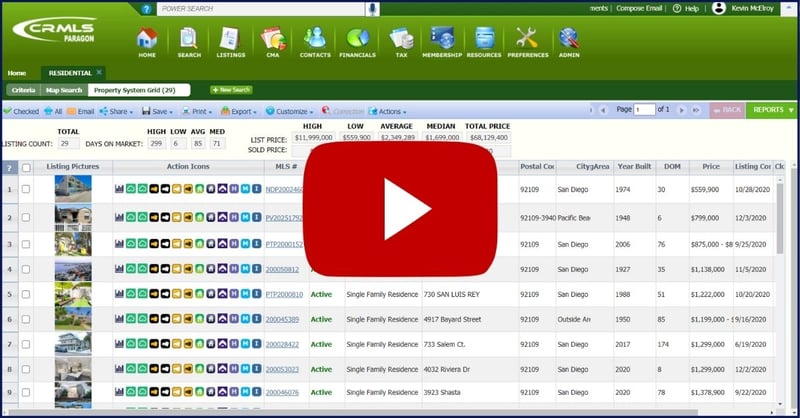
Above all, Cloud CMA makes it easy to generate beautiful client reports by connecting directly with Paragon or Matrix. Cloud CMA pulls data directly from your MLS as well as top websites to create a winning real estate CMA with current listing information. Cloud CMA eliminates the guesswork for you, saves you time, and makes you look awesome.

cloud cma video


PSAR Members access Cloud CMA along with many other tools from the login screen in Paragon or Matrix. 

Don't belong wot PSAR or CRMLS?  CloudCMA is available for $45/month.

paragon screen cloud cma


Topics: CRMLS, Technology, Marketing, PSAR Benefits

Paragon NOW Combines MLS & Tax Records in Search.

Posted by Richard D'Ascoli on Jun 3, 2020 7:00:00 AM


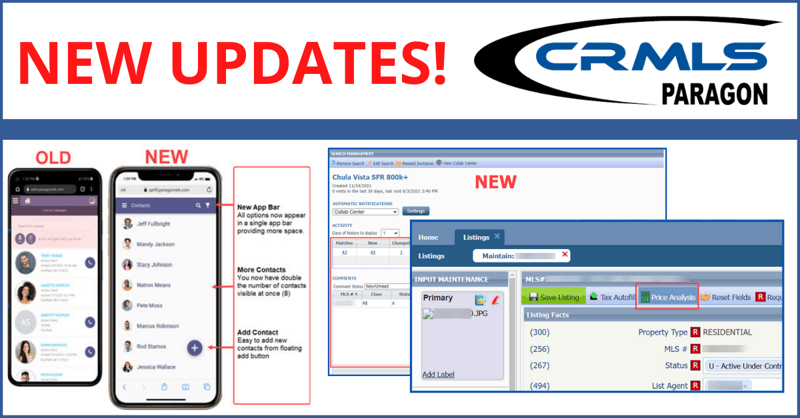
Paragon received some new enhancements! (Due to Tech difficulties portions of this Upgrade have temporarily been delayed)

Changes include new integrations with CRS Tax, new system feature tours, and more. Read the CRMLS Knowledgebase article for a full list of updates. Here are three impact-full changes:

Display Public Records with Listings on Map
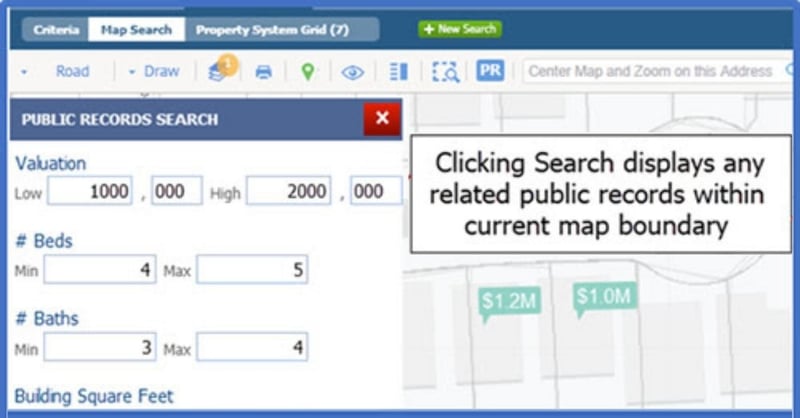
A new Premium Tax feature has been added, called Integrated Search, that gives users the ability to display both listings and public records that meet the same criteria on a single Map View.

Display Public Records with Listings on Map

CRS Data Property Report from Property Watch and Alerts
When the developers of Paragon introduced Property Watch, it lacked the ability to link to the CRS Data Property Report from the property panel that displays next to the Property Watch and Alerts grids. This feature has now been added.

CRS Data Property Report from Property Watch and Alerts

Tours of New System Features and Enhancements
Take a mini walk-through of new Paragon features and enhancements. The tour will pop up in Paragon automatically at selected features. Page through the tour or select Remind Me Later to view on your next visit to the page.

Tours of New System Features and Enhancements

A full list of changes is available on the CRMLS Knowledgebase. Click here to see the updates.


Topics: Brokers/Managers, CRMLS, Marketing

Learn from the april Market statistics

Posted by Rick Griffin on May 30, 2020 5:00:00 AM

Voice of Real Estate, April Housing Market

Home sales locally and statewide dropped sharply in the month of April as the housing market felt the full impact of the COVID-19 pandemic stay-at-home lock-down order.

In its most recent monthly home sales and price report, the California Association of REALTORS® (C.A.R.) stated that April 2020 home sales in San Diego County dropped 27 percent, compared to April 2019, and 15.9 percent, compared to March 2020.

Statewide, April 2020 home sales in California were down 30.1 percent from a year ago and 25.6 percent compared to March. Statewide year-to-date home sales were down 5.4 percent in April 2020.

Closed escrow sales of existing, single-family detached homes in California totaled a seasonally adjusted annualized rate of 277,440 units in April, according to information collected by C.A.R. from more than 90 local REALTOR® associations and MLSs statewide.

It was the first time for statewide home sales to drop below the 300,000 level since March 2008, and the month-to-month drop was the largest since at least 1979, when C.A.R. began tracking the data. Additionally, the year-over-year decline was the first double-digit loss in 15 months and the largest decrease since December 2007.

Sales in April reflect purchases that began in March as stay-at-home orders swept the nation. While fear of economic insecurity stopped some potential buyers, another likely major factor in the slowdown was that many skittish sellers took their houses and condos off the market to wait out the COVID-19 virus crisis.

Meanwhile, home prices themselves have remained relatively unaffected by the effects of the pandemic-influenced market.

The median price for a single-family home in San Diego County in April 2020 was $671,000, down 0.6 percent from $675,000 in March 2020, but still 3.4 percent higher than the $649,000 figure in April 2019.

April 2020 County Sales and Price Activity
(Regional and condo sales data not seasonally adjusted)

blog_200530chart1

Statewide, the median price of $606,410 for an existing single-family home in April 2020 was 1.0 percent lower than the $612,440 figure in March 2020, and 0.6 percent lower than a year ago in April 2019, when the median price was $603,030.

While the median price remained above the $600,000 benchmark statewide for the second consecutive month in April, price growth showed signs of softening when compared to the past six months. The year-over-year price gain was substantially less than the six-month average gain of 7.8 percent recorded between October 2019 and March 2020.

“As expected, California home sales experienced the worst month-to-month sales decline in more than four decades as the coronavirus pandemic prompted stay-at-home orders, which kept both buyers and sellers on the sidelines,” said 2020 C.A.R. President Jeanne Radsick, a second-generation REALTOR® from Bakersfield, Calif. “While some economic activity will resume as the state gradually reopens, the housing market is expected to remain sluggish for the next couple of months as potential market participants deal with the impact of stay-in-place restrictions.”

“With the recession-level decline in closed home sales, the statewide median price was just barely able to avoid going into negative territory in April, in part because high-end homes saw the biggest sales declines,” said C.A.R. Senior Vice President and Chief Economist Leslie Appleton-Young. “Even with tight supply and low interest rates, home prices will continue to be tested by economic deterioration in the short term.”

Reflecting the dramatic change in market conditions, a monthly Google poll conducted by C.A.R. in early April found nearly one-third (29 percent) of consumers said it is a good time to sell, up from 26 percent a month ago, but down from 45 percent a year ago. The market uncertainty has not curbed the optimism for homebuying as much; 31 percent of the consumers who responded to the poll believed that now is a good time to buy a home, a figure sharply higher than last year, when 22 percent said it was a good time to buy a home.

 Other key points from the April 2020 resale housing report include:

• All major regions reflected a dip in sales by more than 25 percent from last year, with the Bay Area dropping the most at -37.4 percent, followed by the Central Coast (-31.6 percent), Southern California (-30.2 percent), and the Central Valley (-26.1 percent).

• Median prices were lower in April from a year ago in the Central Coast (-6.1 percent) and the Bay Area (-0.8 percent) but increased modestly in both the Central Valley (4.8 percent) and in Southern California (3.5 percent).

• Regarding California’s supply of available housing, the Unsold Inventory Index jumped to 3.4 months in April from 2.7 months in March and was unchanged from last April. The index calculates the number of months needed sell the supply of homes on the market at the current rate of sales.

• Total active listings continued to decline on a year-over-year basis for the 10th consecutive month, and the 25 percent decrease in listings was consistent with what was observed before the shutdown.

• The median number of days to sell a California single-family home fell significantly from a year ago, from 21 days in April 2019 to 13 days in April 2020. That compares to 15 days in March 2020 and 23 days in February 2020.

• In San Diego County, the median number of days an existing, single-family home remained unsold on the market was eight days in April 2020, which compares to 10 days in March 2020, 12 days in February 2020, 23 days in January 2020 and 17 days in April 2019.

April 2020 County Unsold Inventory and Days on Market
(Regional and condo sales data not seasonally adjusted)

blog_20530chart2

• The 30-year, fixed-mortgage interest rate averaged 3.31 percent in April, down from 4.14 percent in April 2019, according to Freddie Mac. The five-year, adjustable mortgage interest rate was an average of 3.31 percent, compared to 3.75 percent in April 2019.

 In other recent real estate and economic news, according to news reports:

• Nationwide in April, sales of existing homes in the U.S. dropped 17.8 percent in a month-over-month comparison and 17.2 percent year-over-year, according to the National Association of REALTORS®. NAR stated each of the country's four major real estate regions experienced a decline in both monthly and yearly sales, with the West seeing the greatest dip in both categories.

• NAR also reports that 77 percent of potential home sellers in the U.S. are preparing to sell once the stay-at-home orders end. According to NAR’s Economic Pulse Flash Survey, conducted May 3-4, nearly three in four (73 percent) of REALTORS® currently working with sellers said their clients have not reduced listing prices to attract buyers. About 20 percent said buyers are expecting a five-to-10 percent decrease in home prices over the next 12 months.

• Home sellers are slowly returning to the market, according to realtor.com. After several weeks of nearly 40 percent year-over-year declines, new listings moved toward positive territory as evidenced by a 29 percent decline in a year-over-year comparison during the week of May 9. In San Diego County, new listings were still down 28.4 percent year-over-year during the same time period.

• Zillow reports after a 25 percent reduction in year-over-year web-page views on March 22, when COVID-19 was declared a global pandemic, San Diego County had experienced a 27 percent increase in year-over-year page views by April 15. Nationwide, both Zillow page views of for-sale listings and requests to be connected to Zillow agents were higher in April than in the same month a year ago.

• According to CoreLogic, San Diego home sales had their biggest annual drop in April 2020 since the 2008 Great Recession. There were 2,499 home sales in April, down 30 percent from the same time last year. The last time there was a year-over-year drop of that magnitude was March 2008. However, there was not a corresponding drop in home prices in April. The median home price reached $594,500, which was $50,000 less than the record high reached in November 2019.

• Redfin said there were 31 percent fewer homes for sale in San Diego County from April 6 to May 3. As of May 3, Redfin said there were 5,166 active listings in San Diego County, down from around 7,250 the same time last year
.

Topics: Market Information

Now you can Market On Hold (or) without a listing contract.  Really?

Posted by Richard D'Ascoli on May 29, 2020 2:00:17 PM

Yes, Really!  Marketing Prior to a securing a listing agreement.

blog_email_200529_marketing

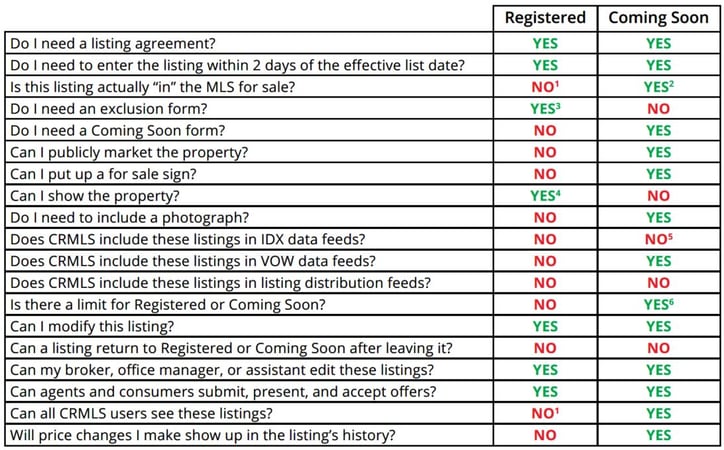
The CRMLS Board of Directors made a rules change this week.  The added language is in red below. Read it closely because the change is more significant than it may look at first glance. 

7.9 Mandatory Submission upon Marketing. Within one (1) business day of marketing or advertising a residential property to any member of the public, for sale which contains one to four units, or is a residential vacant land lot which is subject to any exclusive right to sell or seller reserved listing agreement, the Listing Broker must submit the property into the MLS for cooperation with other CRMLS participants. Marketing and advertising includes but is not limited to, any information about the property or its availability for sale displayed on any: signs, websites, social media, brokerage or franchise-operated websites, communications (verbal or written), multi-brokerage or franchise listing sharing networks, flyers or written material, or on any applications available to the public, or by conducting an open house. Any individual or entity that has signed within the previous year a Disclosure Regarding Real Estate Agency Relationship form in compliance with CA Civil Code section 2079.16 that identifies the Listing Broker shall not be considered a “member of the public” under this rule.  

The change is to Rule 7.9, “Mandatory Submission Upon Marketing.” This rule governs listing brokers’ submission of properties into the MLS. The previous version of this rule detailed how within one business day of marketing a property to the public, the listing broker must submit the property into the MLS. 

This new version makes clear that the listing broker must submit a property into the MLS within one day of marketing only if an exclusive listing contract exists.  If there is no contract, agents can talk about the listing that they "may secure."  Agents should use caution when discussing a listing prior to securing a listing contract.  The listing still remains open for a competitor to list with.  

The San Diego Old Paragon doesn't have "Hold" Yet.  Can I market a property when it's "Withdrawn?" 

The answer is YES!  The definition of the Withdrawn status does state that a property cannot be marketed or advertised, while remaining in our "old Paragon" system. But CRMLS will not be enforcing that aspect of the Rule until we actually get the CRMLS "Hold" status that is enjoyed by CRMLS Matrix users. CRMLS will allow marketing and advertising to occur the same as Hold listings in Matrix. A property in the status of "Withdrawn" can be marketed and advertised but cannot be shown.

The Withdrawn status in San Diego Paragon allows you to temporarily remove your listing from an “Active” status, without having to cancel it. This feature will allow you to place your listing in Withdrawn for a specified period of time. Marketing and Advertising as defined in Rule 7.5.1 is permitted. However, no showings are allowed, consistent with Rule 9.8.

To update your listing’s status to Withdrawn, follow the steps below.

Step 1: Navigate to your listings by clicking on the Listings tab and clicking on Maintain Listings.
p1


Step 2: Enter the MLS#, then click Go, or, enter the property address, then click Search. In the search results, click on the listing’s MLS# or Select an Action, then click on Maintain Listing.
p2


Step 3: Update the status to Withdrawn Then click Save Listing.
p3


Topics: Education, Brokers/Managers, CRMLS

$1500 In Closing Costs for Veterans

Posted by Rick Griffin on May 23, 2020 5:00:00 AM

PSAR Helps Veterans / Active Duty Service members
with the Robert Calloway Memorial Housing Grant*

To celebrate Memorial Day 2020, the Pacific Southwest Association of REALTORS® (PSAR) is proud to announce the launch of a special grant program designed to provide active duty, reserve and veteran military service members in San Diego County who are first-time homebuyers with closing-cost assistance.

In a joint partnership with the California Association of REALTORS® (C.A.R.) Housing Affordability Fund (HAF), PSAR is providing 34 grants, each in the amount of $1,500.  These closing cost assistance grants are being made available to military families for a first-time purchase of a home in San Diego County.

The PSAR-sponsored program, titled “Robert Calloway Memorial Veteran Housing Grant”, launches June 1, 2020 and will continue for one year or until the available grant funds are exhausted.

“We are very excited to give-back to our military community and provide closing-cost assistance to our hometown heroes and their families who are searching to find a place to call home,” said Robert Cromer, 2020 PSAR President. “Our nation has thrived because of the courage, perseverance and resolve of active duty, reserve and veteran Army, Navy, Air Force, Marine Corps and Coast Guard service men and women. They have served and protected this beautiful country and our rights that have kept us free. Now it’s our turn to serve those individuals who have stepped up to protect the values and freedoms our country was founded upon. They fought for our homes, now it’s our turn to take action and help them with their first homes.”

The joint partnership with PSAR and C.A.R. was initiated by the late Robert Calloway, who served as 2019 PSAR President. A military veteran, Calloway served in the U.S. Navy for 26 years, from June 1985 to June 2011, retiring as a Senior Chief Navy Counselor. He specialized in human resources and counseling for the Navy during 20 of his 26 years. In 2008, Calloway started selling real estate while still in the Navy. He joined PSAR at the start of his real estate sales career and was elected to the PSAR board of directors in 2014. Prior to serving as PSAR president, Calloway served as the founding president of the Veterans Association of Real Estate Professionals (VAREP), San Diego chapter.

Robert Calloway 1965-2020

Calloway passed away suddenly from heart disease on May 4. He was 54. At the time of his passing, Calloway was serving as a current PSAR board member and as a C.A.R. director and Vice Chair of C.A.R.’s Southern California Region 30.

“It’s great for our Association to team-up with C.A.R. and give back to our deserving veterans who have worked hard to protect our everyday lives,” said Rich D’Ascoli, CEO of PSAR. “We are committed to working together to enhance lives of our veterans over the long haul. We feel naming this grant after Robert is a fitting tribute to his legacy as a veteran and a member of the PSAR family of realtors.”

REALTORS® are limited to one transaction in a year’s time. To qualify for the closing-cost assistance, the homebuyer’s mortgage loan must already be approved through regular Desktop Underwriting (DU) industry standards and have an executed Residential Purchase Agreement (RPA) in escrow. Homebuyers also must be using a Veterans Administration (VA) loan for their home purchase. If, for any reason, the transaction does not fund or close escrow, the $1,500 allocation will return to the PSAR grant program fund.

The Robert Calloway Memorial Veteran Housing Grant program is funded by HAF, a 501(c)(3) nonprofit dedicated to addressing California’s growing housing affordability crisis. The HAF receives donations from C.A.R. members, non-members and other institutions that are committed to addressing housing challenges in California. HAF donations are then distributed through local REALTOR® associations who have submitted funding requests for local housing affordability and housing supply programs. For maximum impact, HAF funds are leveraged with local associations and their housing partners.

HAF was established in November 2002 to provide more options to first-time homebuyers. It was created by REALTORS® who bore witness to working families being denied the American dream of homeownership. The HAF mission statement states the nonprofit plays an active role in addressing ongoing housing affordability challenges facing Californians

*QUALIFICATIONS:
     • First Time Home Buyer
     • Property in San Diego County
     • VA Home Loan Guarantee
     • Represented by a REALTOR®  
     • Program is good for 1 year or until funds are exhausted, limit to one Application per Realtor 
 
(as of August 26, 2020 All grants have been given)

A committee of PSAR members will review and approve the grant applications. Committee members include Robert Cromer, Sam Calvano, Ditas Yamane and Tony Santiago.

“At PSAR, we use all tools available to achieve homeownership for everyone, including veterans” said Calvano. “Veterans can be assured that when they have a PSAR member representing them, they are getting the benefits of experience, knowledge and the best customer service. I am excited about this grant program which will help veterans with closing costs.”

“It is especially gratifying to help veterans find a home in San Diego,” said Yamane. “Veterans are our modern-day heroes who have selflessly shared so much and have sacrificed some of the best years of their lives, putting themselves in harm’s way to fight for liberty and keep everyone safe.”

“I have the upmost respect for our veterans,” said Santiago. “I am proud of be part of PSAR and our efforts to help these courageous men and women who have sacrificed so much.”

PSAR members who help a veteran family with closing-cost assistance are encouraged to create a video of the occasion when the keys to the front door are hand-delivered to their client. The best video will be shared in 2021 at the PSAR Real Estate Achievement and Leadership (R.E.A.L.) awards. The annual R.E.A.L. awards programs honors PSAR’s top producing agents and give them a platform to be recognized for their hard work and dedication by their sphere, peers and the public at large. The R.E.A.L. awards recognize agents and brokers who have achieved excellence through production and industry leadership. Awards are based on either sales volume dollars or units sold, including listings or sales units entered into the MLS.

 
Military Veterans

Housing Affordability Fund

Veterans Grant Program Flyer             HAF application Form

Topics: Announcements, Market Information

For a safer client environment - Virtual Meetings - At No Cost

Posted by Richard D'Ascoli on May 20, 2020 2:57:47 PM

Looking for ways to make your client feel safer throughout the buy/sell process?  By this time, most everyone is familiar with virtual meeting applications such as Zoom, Google Meet, Webex and the like.   But they require downloading their software utilities and managing accounts on their systems.

There is an alternative tool with which you may not be aware—zipConsult®, available within zipForm Plus®. With zipConsult®, you can conduct online meetings with your clients to review contracts, conduct virtual tours, go over required paperwork prior to sending documents for signatures, or simply to stay connected.  And the best feature - it’s already in your technology toolbox if you are a San Diego county realtor and a PSAR member!

The great thing about this program is that it resides inside Zipforms Plus®, so working with documents is easier. And you can host conference calls and meetings with multiple clients in multiple locations at the same time. 

Here are some of the feature/functions of zipConsult:

  • Share your screen with clients online and review zipForm transactions: Once the meeting begins simply start screen sharing and display the document you’d like to share – it’s that easy. For further privacy, the screen sharing feature allows you to share only a specific application (program). The rest of your desktop will be hidden from the attendees’ view.
  • Meet faster-- invite attendees utilizing saved contacts in your zipForm address book: zipConsult is integrated directly with zipForm Plus, so starting a meeting online is simple and quick. Select clients from the address book with no typing then connect, communicate and review faster than ever.

  • Plan meetings and schedule them in advance: Within the advanced options the Schedule a Meeting option allows you to setup the date, time, and attendees in advanced. Also included in this interface is an email message editor to craft the personal invite that your attendees will receive.

  • Video conferencing allows face to face client meetings online: Add a personal touch to meetings with a webcam. When you share your webcam feed it’s like being there in person. Up to six people can video conference at once

  • Conference calling and text chat keep participants engaged: Your zipConsult account includes a conference call number with PIN codes, so participants can join by phone or computer mic and speakers. Encourage engagement with easy communication via easy conference calling and text chat.

  • Meeting Notes: Keep detailed notes during the meeting for later review or reference. Notes can be kept private or public. Upon the conclusion of the meeting all notes can be emailed to attendees to share the results of the meeting or assigning follow up tasks.

  • Create unlimited online meetings: Feel free to explore the value of meeting with clients online. Review zipForm transactions, review property disclosures, or discuss aspects of the transaction process.

So enhance your clients’ sense of well-being while at the same making your own virtual activities more efficient cost-free!  Just contact CAR to find out how to get started with zipConsult.

Don't want to watch the video?  Check out the slide deck here.

Not sure how  to use this?  Check how Realtor Wes Young used zipConsult on a transaction.


Topics: Education, Technology, PSAR Benefits