How has The Market been infected?

Posted by Rick Griffin on Apr 3, 2020 4:56:18 PM

Southern California Housing Forecast

Southern California Housing Forecast Live Every Wednesday - 10:00 am

What will be the state of our real estate profession, and both local and national economies, after the COVID-19 pandemic is passed? Will the “new norm” of mandated adaptions we have made during the crisis become permanent?

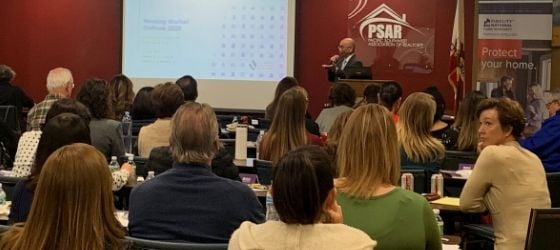
Economist Steven Thomas, publisher of “Reports on Housing,” recently spoke to PSAR members on Wednesday during a virtual "Zoom Meeting"and offered several interesting insights. Since 2004, Thomas has been publishing “Reports on Housing,” a monthly report for real estate professionals. The report tracks regional demand, inventory, distressed homes and market data. It also shares what buyers, sellers and real estate professionals are experiencing in the trenches. He will be providing a new live report next Wednesday, April 8th at 10:00 am. (and every Wednesday till April 29th)

Thomas is a California real estate broker with decades of real estate experience. He has a degree in Quantitative Economics and Decision Sciences from the University of California San Diego. He has been quoted in news stories published by the Orange County Register, Los Angeles Times, San Diego Union-Tribune, The Wall Street Journal, Fortune, USA Today, Bloomberg, ABC, CBS and NBC television, Cox Cable Television, KNX 1070,-AM News Radio, KFI AM-640 Radio, blogs and Internet news sites. 

In the aftermath of COVID-19, Thomas’ predictions for the remainder of 2020 include:

• Initially, the coronavirus lock-down will limit new supply and damper demand
• Unfortunately, coronavirus fears have resulted in many more cautious fence-sitter buyers
• After the public health concerns subside, look for a more balanced market with fewer unrealistic, overpriced
  homes by sellers who refuse price reductions
• Expect a “tug-of-war” between buyers’ irrational thinking and market realities
• Low mortgage rates also will also stimulate demand and speed up the recovery. Rates are likely to remain in
  the 3 percent range
• The luxury market will be sluggish until 2021
• Overall, the Southern California housing market is projected to appreciate 3-to-5 percent by the end of 2020

blog411_04032020_slide5Thomas said don’t get discouraged by news media reports of Covid-19- caused low economic numbers. This temporary downturn differs from previous downturns in U.S. macroeconomic history

He said, “recession” does not equal “housing crisis.” Home prices appreciated during three of the last five recessions:1980 (6.1 percent), 1981 (3.5 percent) and 2001 (6.6 percent), while decreasing in 1991 (1.9 percent) and 2008 (19.7 percent)

According to Thomas, the economic hardship resulted from the government effectively ordering a nationwide recession by asking businesses to close and workers to stay home.  Much of the economic disruption will continue throughout the second quarter. Real GDP will decline not due to recessionary factors but, instead, in response to meet health objectives as an investment in public health

Among other observations from Thomas:

• The pandemic has changed the real estate industry virtually overnight and presented unprecedented obstacles for realtors accustomed to an in person, high-touch process. REALTORS® are encouraged to utilize long-standing technology to enable remote home closings and other steps of the transaction process.

• We must adapt to a “new norm” by using available technology solutions and ingenuity to drive sales and meet client expectations. It’s important that real estate professionals work together responsibly to ensure the safety of and service to each other and our clients.

• Thomas observed that COVID-19 is a shared American experience, a touchpoint for tens of millions of us who are facing the same crisis and its challenges, even if in different ways. We’re discovering that disruptive times like this can be a catalyst for mass unification around a shared experience.blog411_04032020_slide3

Prior to the coronavirus outbreak, the housing market was pumping on all cvc lenders. It was on the edge of the hottest spring market since 2013. Multiple offers were the norm, home values were on the rise, and there were not enough homes on the market to satisfy the voracious appetite of buyers. Low mortgage rates, in the 3-percent range, were also propelling the housing market surge.

In the month of February prior to COVID-19, sales of existing homes in San Diego County were 3.4 percent higher compared to January 2020, and 7.2 percent higher when compared to February 2019, according to the California Association of REALTORS®. The median sales price of an existing single-family home in San Diego County was $670,000, a $10,000 increase from the $660,000 figure for January 2020. A year ago, in February 2019, the median sales price in San Diego was $625,000, a 7.2 percent lower compared to February 2020. The median number of days an existing single-family home remained unsold on the market in San Diego County was 12 days in February 2020 before the Covid-19 impact. That compares to 23 days in January 2020 and 22 days in February 2019.

blog411_04032020_slide4

Thomas offers a free housing forecast webinar every Wednesday at 10:00 a.m. Registration is available at www.reportsonhousing.com. He sells a “Reports on Housing” monthly subscription for $15 per month or $150 per year. The regional reports feature a local real estate snapshot. One month free is available upon sign-up. Follow Thomas on YouTube, visit www.Youtube.com/ReportsOnHousing, and Facebook at @reportsOnHousing.


Review Steven's last presentation from April 1st, 2020.   View Slides    |    Watch recorded video


Co-Hosted by:

PACIFIC SOUTHWEST ASSOCIATION OF REALTORS®                North San Diego County Association of REALTORS®                      Orange CountyRealtors            

Topics: Announcements, Industry

Clerk of the Board office now by Appointment Only

Posted by Richard D'Ascoli on Apr 3, 2020 12:02:54 PM

County of San Diego

I wanted to inform everyone that since the Sheriff Deputies are not letting members of the public into the building without an escort by an employee, the Clerk of the Board, has had to change the Map Recording Process that was previously set in place. In order to ensure we have staff available and can escort customers from the building entrance,  we will now be providing map services by appointments only. If a customer’s map requires approval/signature of the Clerk of the Board (COB), the customer can call us at (619) 531-5600 or email us at cobmaps@sdcounty.ca.gov to schedule an appointment. Our website has been updated to reflect this information & I will also be posting signs at the entrances of the CAC.

Best Regards,

Samantha Lanham

Board Assistant
County of San Diego - Clerk of the Board of Supervisors
1600 Pacific Highway, Rm. 402, San Diego, CA 92101


Recorder’s Office
When a customer has a map to be recorded, they may call the supervisor line at (619) 531-5007, or email  Vanessa.ross@sdcounty.ca.gov, Carlos.argandona@sdcounty.ca.gov  and  DeAnna.Hernandez@sdcounty.ca.gov to arrange a time to do so. A supervisor or the map staff will go out of the office to get the map and payment from the customer. If it meets all requirements and is recorded, the map staff will take the receipt for payment back out to the customer. If rejected, the map will be taken back to the customer for correction.

Please note: the above process will apply while the office remains closed to the public. Once the office re-opens, map recording will once again be processed on a walk-in basis.


Clerk of the Board
If the map first requires approval/signature of the Clerk of the Board (COB), the customer must first call the Clerk of the Board at (619) 531-5600 or email them at cobmaps@sdcounty.ca.gov for an appointment. They are only available Monday-Friday between 8-4 for map transactions. Once they have an appointment, they should then contact us at the above information to let us know their appointment time with the COB. Once done with the COB, the clerk or customer will call the Recorder’s Office, then they will walk the map down to the hall outside our office doors, where the supervisor or map staff will retrieve the map and fees for recording. Staff will return the receipt after transaction is completed.


Treasurer Tax Collector
If a Map Tax Clearance Certificate is required from the Treasurer-Tax Collector (TTC), the customer may request it by mail. They need to include the Map Tax Clearance Questionnaire, a 26” x 18” copy of the map and the $108.00 fee, mailed to: San Diego County Treasurer-Tax Collector, 1600 Pacific Hwy, Rm 162, San Diego CA 92101. The TTC will mail the original clearance back to the customer. If an immediate drop off or pick up is needed, contact the TTC staff at (619) 685-2622 or email Zina.poles@sdcounty.ca.gov (she is out of the office on Thursdays).

The Map Tax Clearance Certificate may be filed by mailing the original, along with the $8.00 filing fee to the San Diego Recorder/County Clerk, P.O.Box 121750, San Diego CA 92112-1750. The certificate may also be filed at the same appointment time the map is being recorded. We will not be making appointments to file the certificate only.


Topics: Brokers/Managers, PSAR Benefits, Industry

Two New Forms Released by C.A.R.

Posted by Richard D'Ascoli on Apr 1, 2020 9:37:25 AM

To help agents navigate practicing real estate during these challenging times, C.A.R. has released these best practice guidelines that reflect C.A.R.'s understanding of Governor Newsom’s stay-at-home order. This document details recommended best practices for marketing, showing and closing on properties while maintaining compliance with CDC recommendations.

To compliment new guidelines released by CAR yesterday, today two new forms were released:

  • One is a Listing Agreement Coronavirus Addendum or Amendment (RLA-CAA) for sellers and listing agents to sign, and
  • The other is a Property Viewing Advisory and Declaration (PEAD) that is to be given to and signed by the seller, buyer, agents and anyone else who will be entering a property.

The forms can be accessed here.  These forms will be added to Zipforms.

Successful non-essential businesses, while remaining open, are changing the way they do business.  For example, while they remain open, restaurants may not serve food.  The first priority needs to be safety. If the public, the client and the Realtors is careful and safe, we will get through this crisis more quickly.

Topics: Brokers/Managers, PSAR Benefits, Industry

PSAR LAUNCHES VIRTUAL TOWN HALL MEETINGS, TWICE A WEEK

Posted by Rick Griffin on Mar 27, 2020 4:59:27 PM

PSAR town Hall

Our Virtual Town Halls offer a benefit to our members as we “live alone together”

The COVID-19 coronavirus pandemic has changed our lives in ways unimaginable over the past few weeks. It’s on every channel, every news website and part of every conversation. Shelter in place orders and self-quarantines are keeping millions of people around the world hunkered down in their homes. In our lifetime, we’ve never had a crisis of this magnitude.

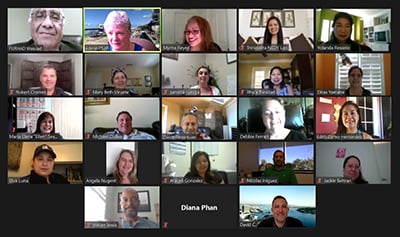
PSAR is addressing this reality proactively, and one of the steps taken is to launch a twice-a-week Virtual Town Hall meeting to deliver Covid-19 news updates, valuable information and insights related to our industry.  These meetings start at 12:30 p.m. every Tuesday and Thursday, utilizing the Zoom online video conferencing platform. All PSAR members are invited to join these live meetings. Zoom membership is not required to participate. You can download the Zoom link and login number for future PSAR Virtual Town Hall meetings on the PSAR website (click button).

PSAR Real Estate Town Hall

Rich D’Ascoli, PSAR’s Chief Executive Officer, is the host of the meeting. Guests are invited to provide industry updates and information. Members are invited to share their experiences and accumulated knowledge of conducting business in a very challenging landscape.  The virtual aspect of these meetings in itself is instructional to members who want to learn more about how to use technology to enhance their own business practices.

“We’re concerned about how COVID-19 will impact our members personally, including the health of their businesses,” said D’Ascoli. “We know the coronavirus pandemic is leaving people feeling fragmented and disconnected. Nobody wants to spend their days in isolation. But, social distancing does not mean social isolation. We all still want to connect with each other and we’re learning how to do that in different ways.

“So, our Virtual Town Halls offer a benefit to our members as we 'live alone together'". We at PSAR and all of our association members will be here to keep you company. All of us are always at our best when we respond to challenges as a PSAR community. Right now, helping people get the right information to stay healthy and keep their businesses moving is more important than ever. We all have a role in this endeavor.”

On Thursday, March 26, nearly 200 PSAR members participated in the latest Virtual Town Hall meeting, which included appearances by Ernie Dronenburg, San Diego County Assessor-Recorder Clerk, Joel Singer, CEO of the California Association of REALTORS® (C.A.R.) and Kristian Hoysradt, Political Representative with the National Association of REALTORS® (NAR).

They offered various perspectives on the impact of the virus.

The C.A.R. and NAR representatives  announced the launch of microsites on their websites that will deliver COVID-19 updates. The C.A.R. site is at www.CAR.realtor/coronavirus. The NAR site is at www.NAR.realtor/coronavirus.

PSAR has a special COVID-19 landing page at  https://info.psar.org/covid19.  There is also a page with financial resources for REALTORS® and their clients https://info.psar.org/financialhelp.  PSAR’s services during this crisis can be found here: https://info.psar.org/services.  Following are some of the notable points that were brought out in the Thursday Town Hall meeting.

Dronenburg said his office is fully operational and all exemption programs are continuing without interruption. He’s also planning to send a letter to Gov. Newsom requesting that REALTORS® and real estate are deemed as “essential businesses.”

Singer discussed the recent “safer at home” guidelines for open houses. C.A.R. is recommending a cessation of all face-to-face marketing or sales activities, including showings, listing appointments, open houses and property inspections. Clients and other consumers are also subject to these orders and should not be visiting properties or conducting other business in person.

However, property management and repair work, which generally involves maintaining sanitary and safety conditions, is permissible. Additionally, many other aspects of the real estate industry can continue to occur without in-person contact, including documentation and signing, and in many circumstances, closings.

Singer  referenced the availability of a “Coronavirus Addendum” to the standard real estate buy-sell transaction contract. The addendum allows a party in a real estate transaction to terminate or suspend the transaction for up to 30 days in the event of “unforeseen circumstances, which the parties could not have anticipated or are beyond their control.” C.A.R. said travel restrictions, government required isolations and closures of business offices due to the COVID-19 pandemic could inhibit a buyer or seller from signing documents in person, preventing a close of escrow.

Governor. Newsom’s announcement of a 90-day mortgage grace period was also mentioned by Singer. More than 200 banks, including Wells Fargo, Citibank, JPMorgan Chase and U.S. Bank, have agreed to a moratorium on mortgage payments for homeowners. The Federal Deposit Insurance Corp. has asked banks to take “reasonable and prudent steps” to assist consumers affected by the pandemic. Likewise, the Federal Housing Finance Agency, the Federal Housing Administration and Fannie Mae said hardship forbearance should be an option for distressed borrowers.

Hoysradt, speaking from the NAR offices in Washington, D.C., talked about the historic $2.2 trillion emergency package that was nearing final approval on Friday. He said the rescue package, intended to help revive the American economy and prevent it from collapsing, will help millions of small businesses facing a coronavirus cash crush, and individual Americans caught in a COVID-19 lockdown who may be unable to pay bills. 

Among the bill’s provisions, individuals who earn $75,000 or less in adjusted gross income would get direct payments of $1,200 each, while those making more than $75,000 would see smaller direct payments. Those making $99,000 or more would be excluded entirely from the direct payments. The bill also provides for up to $350 billion in federally guaranteed loans for small businesses and $500 billion in loans for larger businesses affected by the pandemic and subsequent closures.

Emergency funds will also be funneled into unemployment benefits, increasing payouts to nearly 100 percent of lost wages.  Benefits payout timeframes will be extended an additional four months.  And gig workers and independent contractors for the first time will be eligible

“As we all continue to navigate our new normal together, PSAR is committed to ensuring our members have what they need to be productive and successful,” said D’Ascoli. “We recognize that our members rely on us, perhaps more than ever, to help them stay productive. We take that responsibility seriously.  I can assure our members that we are here to help and serve them.

“In that spirit, our Service Centers are remaining open, weekdays from 9 to 5 p.m, to receive phone calls, personal emails and those from our help page . All hands are “on deck”. Some staff members are available to provide in-person services at our Service Centers by appointment. For those in-person encounters, we will of course maintain a six-foot, social distance requirement in support of the CDC recommendations.  Everyone stay healthy and good luck to you!”


Topics: Announcements, Industry

How does the (CARES) act provide Relief for Realtors?

Posted by Richard D'Ascoli on Mar 26, 2020 11:05:51 AM

The Senate has just passed the Coronavirus aid, relief and economic security (CARES) Act, a stimulus package that will provide assistants to Realtors.   C.A.R. is closely monitoring the legislation.   Review CAR's update here.

CARES act provide Relief for Realtors?


Topics: Announcements, Brokers/Managers, Market Information, Industry

FHFA to Grant Flexibilities for Appraisal and Employment Verifications

Posted by Richard D'Ascoli on Mar 25, 2020 2:49:06 PM
Federal Housing Finance Agency

FHFA Directs Enterprises to Grant Flexibilities for Appraisal and Employment Verifications
To facilitate liquidity in the mortgage market during the corona virus national emergency, the Federal Housing Finance Agency (FHFA) directed Fannie Mae and Freddie Mac (the Enterprises) to provide alternative flexibilities to satisfy appraisal requirements and employment verification requirements through....(click here)

Federal Housing Finance Agency

Topics: Announcements, Brokers/Managers, Market Information, Industry

C.A.R.'s Issues Guidance on Governor's Stay-at-Home Order

Posted by Richard D'Ascoli on Mar 21, 2020 5:09:42 PM

C.A.R. has issued guidance on the Governor's stay at home order.  This is not guidance from PSAR or our Board of Directors.  CAR has a legal team that is qualified to interpret and opine on legal matters.  Please consult your own legal council for advice and consult.  PSAR, CAR and NAR leaders continue to communicate with officials to educate them about the real estate business in this time of crisis.  


For more information please follow this link: 

car banner


Topics: Announcements, Brokers/Managers, Market Information, Industry

Postponement of this month's R.E.A.L. Awards to a future date

Posted by Richard D'Ascoli on Mar 13, 2020 4:52:33 PM

The R.E.A.L. Awards program to honor PSAR’s top producing agents will be postponed.

Due to concern for public safety as a result of COVID-19, commonly referred to as coronavirus and in recognition of state health officials’ recommendations, PSAR will delay the inaugural Real Estate Achievement and Leadership (R.E.A.L.) awards event, originally scheduled for Friday, March 27, at Viejas Casino and Resort. The event will be rescheduled to a future date.

Earlier this week, Gov. Gavin Newsom joined state health officials from the California Department of Public Health in recommending the cancellation of gatherings of 250 or more people across the entire state, escalating efforts to slow the spread of the virus.

All who purchased tickets to the March 27 event will be given the option of attending the future event or receive a refund.

Of course, we’re disappointed about the delay of this exciting event. However, the health, safety, and well-being of the entire PSAR community is the top priority for the Association leadership. I can assure you that your Association will continue to closely monitor this public health crisis and stay in contact with local, state and federal health experts to ensure that best practices are being followed and if additional precautions are advised. Some other PSAR meetings may be cancelled while others will be held remotely.

Over the next two weeks we will take time to regroup, and when the storm passes, put on an amazing event. The R.E.A.L. awards will be a celebration, with over 400 real estate professionals, of the successes we have respectively had in our businesses. Nobody is more disappointed in the delay than each of our dedicated group of volunteers who worked diligently during the past two months to make this event a memorable experience.

The R.E.A.L. Awards Committee members include Yvonne Cromer, Reshia Guarnotta, Amber Tannahill, Lupe Soto, Laurie Mac Donald, Carey Guthrie and Tony Santiago.  

The R.E.A.L. awards programs will honor PSAR’s top producing agents and provide a platform on which to be recognized for their hard work and dedication by their associates, other professional peers and PSAR. Award recipients are agents and brokers who have achieved excellence through production and industry leadership. Awards are based on either sales volume dollars or units sold, including listings or sales units entered in the MLS, and closed in 2019.


For information about other PSAR rescheduled programs (click here).


The virus, which causes a respiratory disease known as COVID-19, first appeared in Wuhan, China, last year.. Cases have been recorded in more than 100 countries and on every continent except Antarctica. More than 4,717 people have died and more than 128,000 others have been infected, many of whom are in China. In the U.S., more than 1,700 people have been infected across at least 46 states with at least 41 deaths, and 31 of them were elderly people from the state of Washington.

As the virus spreads, causing the shutdown of offices and schools across the U.S., many people are understandably on edge. However, the same preventative measures recommended to prevent the spread of influenza are also effective in reducing the risk of contracting or spreading coronavirus. Here are some recommended actions that will reduce the risk of contracting and spreading coronavirus:

• Stay home and do not travel if you have a fever, cough, shortness of breath or any other cold or flu-like symptom.
• Wash your hands frequently with soap and water for at least 20 seconds. If soap and water aren’t available, use    an alcohol-based hand sanitizer.
• Avoid touching your eyes, nose, and mouth with unwashed hands
• Avoid close contact with anyone who is sick
• Clean and disinfect frequently touched objects and surfaces
• Cover your mouth and nose with a tissue when you cough or sneeze, or cough or sneeze into your sleeve 
• Call ahead to your doctor before visiting

PSAR Covid-19 updates

Topics: Announcements, Industry

PSAR SUCCESSFUL IN STOPPING INCREASE TO PROPERTY TAXES WITH SEWER BILL

Posted by Rick Griffin on Mar 11, 2020 6:30:00 AM

EL CAJON the Valley of Opportunity

El Cajon Mayor Bill Wells, Councilmember Steve Goble and Councilmember Phil Oriz, thank you for listening to the concerns of PSAR and El Cajon residents.

Following testimony by PSAR members, the El Cajon City Council recently voted “no” on a proposal to add sewer charges to homeowners’ property tax bills.

PSAR testified that adding sewer charges to property taxes would have had a far-reaching negative impact for homebuyers and for the city of El Cajon. If approved, it would have meant that future homebuyers would need more money to qualify for a mortgage. It also would have resulted in a loss of buying power for homebuyers. Adding the charges would lower housing values and reduce equity, since a higher property tax bill will shrink a homebuyer’s available pot of money needed to purchase a home. 

Fortunately, three members of the El Cajon City Council, including Mayor Bill Wells and council members Steve Goble and Phil Ortiz, agreed with PSAR and voted to protect homeowner interests by not placing property sewer charges on the San Diego County property tax roll.

“Our members are gratified at the city council’s decision,” said Rich D’Ascoli, CEO, PSAR. “We look forward to sitting down, rolling-up our sleeves and helping El Cajon develop a mutual, long-term solution that will not adversely affect homebuyers and home sales. We’re ready to work with the city to find a better solution. Adding sewer charges to property taxes would have reduced the buying power of homebuyers. We have a number of better ideas that will not hurt homebuyers.”

This is not the first time the El Cajon City Council has attempted this. In July 2013, a proposal to add sewer charges to property tax bills was flushed down the proverbial toilet.  In El Cajon, the city maintains nearly 200 miles of underground pipeline, the majority of it construction before 1965. Many lines date back to the 1920s. 


Topics: Announcements, Industry

EL CAJON CONSIDERING RAISING PROPERTY TAXES WITH SEWER BILL

Posted by Rick Griffin on Mar 6, 2020 5:00:50 PM

PSAR Plans to protest proposal to hike property taxes with sewer bill.

EL CAJON the Valley of Opportunity

The El Cajon City Council is attempting to add sewer charges to homeowners’ semi-annual property tax bills. The City Council is scheduled to discuss this proposal at their next meeting, located at 200 Civic Center Way, El Cajon, 92020, on Tuesday, March 10 at 3:00 pm.

PSAR encourages you to advise your El Cajon clients who own property (residential, commercial, industrial) to send a protest letter to the El Cajon City Clerk before 2:00 pm Tuesday, March 10, in protest of adding sewer charges to their property tax bills.

This may seem at first to be an innocent action by elected officials. However, in reality, adding sewer charges to property taxes would have a far-reaching impact to individual homebuyers and for the city of El Cajon overall.

If these additions are approved, future homebuyers would need more money to qualify for a mortgage. The reason is because higher property taxes always result in lower borrowing ability. Another negative effect would be lower housing values, including lost equity, because a higher property tax bill will shrink a homebuyer’s available pool of money available to purchase a home. 

The bottom line is that anytime a property tax bill increases,  the higher amount  adversely affects the local real estate industry. Adding sewer charges to property taxes will reduce the buying power of homebuyers. 

Here are some numbers to consider: 

For a typical $400,000 home, purchased with 20 percent down and an 80 percent, 30-year mortgage loan at 5.5 percent, the monthly mortgage payment is approximately $1,817, insurance is $67 (based on $800/year) and property taxes are $367 (based on 1.1 percent of assessed value) for a total monthly payment of $2,251. However, if a sewer charge of $45 (based on property taxes of $540/year) were to be added, the total monthly mortgage payment for the same home would increase from $2,251 to $2,296. Sewer charges are calculated based on water use at each property. 

Furthermore, with a 40 percent minimum qualifying income, the homebuyer would need an annual income of $68,880 instead of $67,530 without the sewer bill added to their property taxes. That translates to a 2 percent higher income needed to qualify for the same loan. A homebuyer’s purchasing power is reduced by $8,000 when  an increased average sewer charge is added to the property tax bill. 

There are many issues and questions with which residents should be concerned. Seniors and individuals on a fixed income will be hit by a large bill at the end of the year. What considerations have been made for these individuals? Who will ratepayers go to when there is an error on the sewer bill if those charges are added to the annual tax payment? Although billing through the tax roll may be slightly less expensive each month, an incorrect bill can be much more impactful. The city intends to defer income from sewer ratepayers until the end of the year. How is that money financed? Isn’t it better for the city to collect this money upfront rather than waiting until the end of the year to bill? How much will this cost taxpayers?

This is not the first time the El Cajon City Council has attempted this action. In July 2013, a proposal to add sewer charges to property tax bills was flushed down the proverbial toilet. Municipalities are attracted to pass-through wastewater sewer costs coupled with property taxes because it saves the city time and money in mailing and administrative processing costs. It also allows for an easier way for cities to earmark construction costs for necessary sewer line repairs. In El Cajon, the city maintains nearly 200 miles of underground pipeline, with the majority of piping constructed before 1965. Many lines date back to the 1920’s. 

Last year, El Cajon approved higher sewer rates over the next five years. A typical customer paying $48.31 each month for sewer services will see his or her bill increase to $55.09 in 2020, $61.22 in 2021, $69.70 in 2022, $77.35 in 2023 and $88.76 in 2024. The city’s 17,000 residential customers haven’t seen a rate increase since 2011. Before then, the last adjustment to sewer rates in El Cajon was in 1999. Wastewater in El Cajon is piped to San Diego’s Point Loma treatment plant where it is treated and then released into the ocean.

The El Cajon City Council meeting on Tuesday, March 10 will begin at 3:00 p.m. at El Cajon City Hall, 200 Civic Center Way, El Cajon. The city council meeting is open to the public. PSAR members are encouraged to attend. Oral objections and/or protests may be made at the public hearing.

You are also encouraged to send an e-mail to the City of El Cajon stating your opposition. In your e-mail, refer to the “Sewer Billing System Change to the Property Tax Roll.” Protest emails must be sent prior to 2:00 p.m. on March 10. Any written objection or protest must include your name, Assessor Parcel Number (APN), sewer service address and a statement indicating your opposition to the placement of the sewer charges on the property tax bill. Protest emails can be sent to the City Clerk Angela Cortez at cityclerk@cityofelcajon.us,  or the City Manager Graham Mitchell at gmitchell@cityofelcajon.us.

###


agent productivity


Topics: Announcements, Industry