LANDLORDS, TENANTS CAN BENEFIT FROM RENTAL RELIEF RESOURCES

Posted by Rick Griffin on Dec 29, 2020 12:58:45 PM

RENTAL RELIEF RESOURCES

Landlords and tenants alike have been hit hard with economic challenges resulting from the Covid-19 pandemic. Fortunately, several local cities and nonprofits who administer federal government programs on behalf of cities, have made rental assistance resources available to both landlords and tenants who have suffered Coved-related economic losses. PSAR members active in their communities should be aware of these following landlord/tenant resources:San Diego-- In San Diego, With funding from the federal government, the San Diego Housing Commission (SDHC) helps more than 16,000 households with low income pay their rent in the City of San Diego. Through this rental assistance program, SDHC made payments totaling more than $166 million to more than 5,800 participating landlords on behalf of low-income families during Fiscal Year 2020 (July 1, 2019 – June 30, 2020).

In 2019, SDHC expanded its focus on landlord outreach and engagement with the creation of the Landlord Services Unit. This unit is composed of seven specialized staff who provide quality customer service to landlords and tenants participating in the Section 8 Housing Choice Voucher rental assistance program. For more details about SDHC rental assistance resources for properties located within the City of San Diego, contact SDHC, www.sdhc.org or call 619-578-7131.

The San Diego Housing Commission (SDHC)

The SDHC Landlord Services Unit manages the agencies Landlord Partnership Program (LPP), which provides financial and support incentives to landlords who rent to families who receive federal rental assistance through the Section 8 Housing Choice Voucher program within the San Diego city limits (92037 and ZIP codes that begin with “921”, except for 92118). Landlords who participate in the LPP may be eligible to receive up to $500 for each rental unit rented to a Section 8 household and up to $3,000 to help cover repair expenses in excess of normal wear and tear and rent due that exceeds the security deposit following tenant move-out. For more information about LPP, please visit https://www.sdhc.org/doing-business-with-us/landlords/landlord-partnership-program/

SDHC’s services to landlords include consistent and on-time rent payment, access to an online landlord portal, and enhanced customer service.

national City

-- In National City, South Bay Community Services (SBCS) launched a tenant-based rental assistance program in National City. The City of National City has reached out to PSAR seeking assistance in contacting property managers and management companies who have tenants with past due rent.

SBCS is now accepting applications for a COVID-19 Tenant Based Rental Assistance Program funded by the City of National City. This program will assist low-income families in who have suffered a loss in income or are unable to pay their past due rent because of Covid-related financial issues. You can help by notifying tenants that this rental assistance is available. Applications can be found at https://southbaycommunityservices.org/national-city-rental-assistance/. Application assistance is available in person at the National City Family Resource Center (304 W. 18th Street, National City), at  rentalassistance@csbcs.org, or by phone: (619) 336-8360
Chula Vista-- In Chula Vista, the city is developing its long-term strategic plan for housing and determining housing dollars usage, according to the city website. Earlier this year, the  Chula Vista City Council enacted a temporary eviction moratorium in response to Covid-19. The city’s moratorium, which provided eviction protection for residents and commercial tenants, was superseded and replaced with AB 3088, known as “The Tenant, Homeowner and Small Landlord Relief and Stabilization Act of 2020.” The law signed by Gov. Newsom on Aug. 31, protects renters, homeowners and small landlords through January 2021.

Chula Vista used a portion of the $3.3 million it received from the CARES Act to lend financial support to South Bay Community Services (SBCS), who assists residents with rent payments. An additional CARES Act allotment arrived Nov. 1, allowing SBCS to accept additional applications for rental assistance from those suffering economically from Covid-19 effects.El Cajon-- In El Cajon, several nonprofits who have contracts with the city are assisting El Cajon residents with rent payments. The nonprofits include Home Start (619-430-0032), Interfaith Shelter Network (619-702-5399) CSA San Diego County (619-444-5700). Earlier this year, the El Cajon City Council allocated $800,000 in special block grant funding to those impacted financially by the Covid pandemic.la Mesa-- In La Mesa, Home Start is overseeing a Rental Assistance Program. Applicants may qualify for up to three months of past-due rent assistance for those who have experienced job loss and/or other Covid-related financial challenges. Earlier this year, the La Mesa City Council approved $1.8 million in Coronavirus Aid Relief and Economic Security Act funding to businesses and residents. A portion of that money, roughly $600,000, was allocated to rental assistance to help people avoid eviction and homelessness. 
lemon Gove-- In Lemon Grove, Home Start is supporting the city’s rental assistance efforts. The Lemon Grove City Council allocated $100,000 of $162,371 in Federal Coronavirus Aid, Relief, and Economic Security Act funds to Home Start to help individuals needing hotel vouchers, transportation, reunification efforts and emergency items such as food, blankets and diapers. Funds are also available to those who need rental and utility assistance.

_______________________

SouthBay community Services                        Home-Start

Topics: Brokers/Managers, Market Information

PSAR’S EDITION OF `TWAS THE NIGHT BEFORE CHRISTMAS

Posted by Rick Griffin on Dec 24, 2020 10:00:00 AM

Wishing you Happy Holidays from PSAR.

‘Twas the night before Christmas, and all through the house,
not this REALTOR® was working, not even my spouse.
The escrows had closed, the documents signed with extreme care,
and commission checks had been deposited without a second to spare.

The “For Sales” signs and brochures were nestled in the back of my shed,
while visions of day spa visits danced in my head.
I was chill-laxin’ in my PJs after finishing my favorite Starbucks frap,
preparing my brain for a long winter’s nap.

The wintertime moon was bright in its glow,
illuminating only a couple of lockboxes below.
When all of a sudden, my wondering eyes saw a new text,
another local REALTOR®’s name appeared and you won’t believe what happened next.

The text message was lively and brief,
it told of an all cash-offer that was way beyond belief.
More rapid than eagles my thoughts raced through my mind,
this amazing offer was one of a kind.

No contingencies, no home inspection, not even an appraiser,
How grateful I was, how the buyers did me a favor.
Before I knew it, my cell phone began to ring,
I sprung from my couch and my heart began to sing.

I leaped in my car and drove to the meeting,
but I first brushed my teeth since holiday treats I had been eating.
From the top of the porch to the retaining wall,
this property met all Covid-protocol, thanks to lots of Lysol.

The documents were many, measuring from my head to my foot,
there were certainly enough of them to cause a cardiac caput.
But I knew exactly what to do, how to anticipate any impasses,
because I had attended many PSAR educational classes.

Now Paragon, now LionDesk, giddy-up HomeSnap, Matrix and CRMLS,
just one more transaction to close, now won’t it be bliss.
The transaction closed so easy and quick,
I knew in a moment it must be because of St. Nick.

The buyers sprung to the front door, now they were living the dream,
For REALTORS®, it’s always a joy to see homebuyers’ faces beam.
And I heard them exclaim, as they smiled with delight,
“Merry Christmas to all, and to all a good night.”

Topics: Market Information, Marketing

November Home Sales Statewide Highest in 15 years

Posted by Rick Griffin on Dec 18, 2020 4:15:00 PM

Voice of Real Estate - November

California’s housing market remained red hot in November 2020 with statewide home sales reaching the highest level in 15 years. Record-low mortgage rates and flexibility to work from home has driven home-buying interest to levels not seen since the last decade, according to the California Association of REALTORS® (C.A.R.).

November 2020’s statewide sales total broke the 500,000-units benchmark for the first time since January 2009.

Closed escrow sales of existing, single-family detached homes in California totaled a seasonally adjusted annualized rate of 508,820 for November 2020. It was an increase of 5 percent from 484,510 homes in October, and 26.3 percent higher from November 2019, when 402,880 homes were sold.

The year-over-year, double-digit home sales gain recorded in November was the fourth consecutive month and the largest increase over a year’s time since May 2009.

Meanwhile, California’s median home price for November 2020 dipped slightly after breaking the $700,000 benchmark over the past three months. The statewide median price dropped to $699,000 in November 2020, down 1.7 percent from $711,300 in October 2020.

However, home prices continued to gain on a year-over-year basis with the statewide median price surging 18.5 percent from $589,770 recorded in November 2019. The double-digit increase from 2019 was the fourth month in a row and the highest 12-month gain since February 2014. The gain was also higher than the six-month average of 9.7 percent observed between May 2020 and October 2020. 

November 2020 County Sales and Price Activity
(Regional and condo sales data not seasonally adjusted)
November 2020 County Sales and Price Activity

In San Diego County, November 2020 home sales decreased 7.8 percent, compared to October 2020, but increased 23.2 percent higher than in November 2019.

Similarly, the median home price for a single-family home in San Diego County dropped slightly in November 2020 to $740,000, a 1.2 percent decrease from October 2020’s figure of $749,000, but a 12.3 percent increase from November 2019’s figure of $659,000.

“Home-buying interest is at levels that we have not seen for years, setting the stage for a stronger-than-expected comeback that fully recovered all the sales that the market lost in the first half of the year due to the pandemic,” said 2021 C.A.R. President Dave Walsh, vice president and manager of the Compass San Jose office. “Housing supply remains an issue, however, as we will likely to see a shortage of homes for sale in the near term, which will put upward pressure on prices and dampen affordability for those who haven’t been able to take advantage of low rates.”

“California’s housing market continues to be the bright spot in the economy, but the direction and pace of the recovery will hinge on the coronavirus pandemic and the distribution of the vaccine in the coming months,” said C.A.R. Senior Vice President and Chief Economist Leslie Appleton-Young. “The rise in COVID-19 cases and tighter constraints on economic activity recently imposed will likely have implications for the housing market as renters and homeowners face adverse impacts to their incomes, which is why Congress should pass additional relief for renters, homeowners, and workers as soon as possible.”

Perhaps due to rising cases of the Coronavirus, fewer consumers said it is a good time to sell in December, according to C.A.R.’s monthly Consumer Housing Sentiment Index. Conducted in earlier this month, the poll found that 55 percent of consumers said it is a good time to sell, down from 59 percent a month ago, but up from 51 percent a year ago. Meanwhile, low interest rates continue to fuel the optimism for homebuying; just over one-fourth (27 percent) of the consumers who responded to the poll believed that now is a good time to buy a home, up from last year, when 24 percent said it was a good time to buy a home.

Even with low inventory levels, the coronavirus pandemic has increased the demand for spacious, multi-functional homes as more homeowner families are dealing with homebound distance learning for school and working remotely for the job.

Other key points from C.A.R.’s November 2020 resale housing report included:

-- Home sales from a regional perspective continued to increase in November 2020 by double-digits in year-over-year comparisons for most California regions. The San Francisco Bay Area had the highest gain of 34.4 percent over last year, followed by the Central Coast (33.4 percent), Southern California (19.1 percent) and the Central Valley (18.3 percent).

-- Median home prices from a regional perspective also posted double-digit increases in November 2020 in year-over-year comparisons. The San Francisco Bay Area median price remained at its record high in November, rising 18.9 percent from last year. The Central Coast region had the second largest median price increase at 18.7 percent, followed by the Central Valley (17.6 percent), Southern California (14.4 percent), and the Far North (13.6 percent).

-- With a resurgence in Covid-19 cases in recent weeks and the market entering the traditional holiday season, active listings declined from the prior month as expected, contributing to a substantial decline in inventory. Active listings fell 46.6 percent from last year and continued to drop more than 40 percent on a year-over-year basis for the sixth straight month.

-- The unsold inventory of available homes for sale fell sharply from 3.1 months in November 2019 to 1.9 months in November 2020. Statewide inventory in October 2020 was 2.0 months. Inventory levels measured in months refers to the number it would take for the current supply of available homes on the market to sell-out given the current rate of sales.

November 2020 County Unsold Inventory and Days on Market
(Regional and condo sales data not seasonally adjusted)
November 2020 County Unsold Inventory and Days on Market

-- In San Diego County, the inventory of available homes for sale in November 2020 was 1.6 months, compared to 1.8 months in October 2020 and 2.7 months in November 2019.

-- Active listings in all major California regions continued to decline in November 2020 in year-over-year comparisons. The Central Valley had the biggest year-over-year drop of 53.3 percent in November, followed by Southern California (49.0 percent), Central Coast (-46.3 percent), Far North (-40.1 percent), and the San Francisco Bay Area (-18.7 percent).

-- The median number of days it took to sell a California single-family home was nine days in November 2020, compared to 10 days in October 2020, 11 days in September 2020 and 25 days in November 2019. The nine-day November 2020 figure was the lowest ever recorded.

-- In San Diego County, the median number of days an existing, single-family home remained unsold on the market was seven days in November 2020, which was the same number in October 2020 and September 2020. The timeframe a year ago in November 2019 was 17 days. The November 2020 seven-day figure compares to eight days in August 2020, 10 days in July 2020, 12 days in June 2020, 11 days in May 2020, eight days in April 2020, 10 days in March 2020, 12 days in February 2020 and 23 days in January 2020.

-- The housing market in California’s mountain resort areas has generally outperformed the state during 2020’s first 11 months due to increased demand in second homes and vacation homes, as available supply continues to decline. In a comparison of home sales between November 2020 and November 2019, Mammoth Lakes saw a 400 percent increase, followed by South Lake Tahoe (81.4 percent), Big Bear (73.9 percent) and Lake Arrowhead (58.1 percent). Similarly, median home prices jumped in Big Bear by 40.8 percent from last year, followed by South Lake Tahoe (39.6 percent) and Lake Arrowhead (32.0 percent). In contrast, home prices declined by 2.5 percent Mammoth Lakes in November 2020, compared to 2019.

-- The 30-year, fixed-mortgage interest rate averaged 2.77 percent in November, down from 3.70 percent in November 2019, according to Freddie Mac. The five-year, adjustable mortgage interest rate was an average of 3.0 percent, compared to 3.41 percent in November 2019.

In other recent real estate and economic news, according to news reports:

-- The average rate for a 30-year, fixed-rate mortgage continued to plummet, dropping to 2.67 percent in the second week of December. It was the lowest rate since Freddie Mac began tracking the data in 1971. A year ago at this time, it averaged 3.73 percent.

-- Mortgage applications increased 1.1 percent for the week ending Dec. 11, according to the Mortgage Bankers Association’s week-over-week comparison report. Refinance applications also increased 1 percent during the same week and 105 percent in a year-over-year comparison.

-- CoreLogic said San Diego County median home price in November remained unchanged from October and September at $650,000, which is 9.3 percent higher than a year ago. It was the second consecutive time for no monthly price increase since May. The price represents all homes, including single-family, condos and townhomes.

-- A group of top real estate economists speaking at a forecast forum hosted by the National Association of Real Estate Editors recently predicted that home prices will continue to rise in 2021 fueled by low mortgage interest rates and lack of homes for sale.

-- Californians are pessimistic about their economic future with 73 percent of survey respondents in San Diego and Orange counties anticipating bad financial times during the next 12 months, according to a report released in early December by the Public Policy Institute of California. The survey of 2,325 Californians conducted after the November election showed the statewide average of pessimism at 68 percent.

-- Realtor.com is predicting prices for existing single-family homes will continue to climb in 2021, making affordability a continued problem. San Diego is projected for an 11.3 percent year-over-year increase in existing home sales and a 5.5 percent rise in home prices. Realtor.com also expects mortgage rates to climb from 3 percent at the beginning of 2021 to 3.4 percent by year’s end. Realtor.com admits there are numerous wildcards that could shake up the housing market, including what happens with Covid-19 vaccines or more government-imposed shutdowns.

-- Rental applications in San Diego County were lower by about 7 percent for the third quarter in a year-over-year comparison as many grown children moved back in with their parents, or doubled up in apartments to make their dollars go further, according to the data firm Rent Café. The report said in 18 of the 30 largest U.S. cities, including San Diego, more renters left than moved into rental properties. The firm also said apartment rents decreased in 2020 in the nation’s top 10 most expensive cities.

Topics: Brokers/Managers, Market Information

MORE HOUSING OPTIONS, TAX RELIEF, ARE BENEFITS OF PROP. 19

Posted by Rick Griffin on Dec 11, 2020 4:36:18 PM

Benefits of Prop. 19

All PSAR members should be aware of the significant benefits available to homeowners as a result of the recent passage of Proposition 19 in the November general election.

Approved by California voters by a 51.1 percent to 48.9 percent margin, Prop. 19 is considered by many as a landmark property tax exemption law that is now part of the California constitution. Thanks to more than 8.5 million voters who marked their ballots “yes” for Prop. 19, homeowners will be able to take advantage of tax relief while providing much-needed revenue for schools, fire districts, cities and counties as they face budget shortfalls due to the harmful economic impact of Covid-19.

Prop. 19 was endorsed by C.A.R. and many others because it will spur housing economic recovery.

Prop. 19 limits property tax increases on primary residences for family transfers, homeowners over 55 years old, people with severe disabilities and victims of natural disasters or wildfires by removing unfair location and price restrictions.

Prop. 19 also limits property tax increases on family homes used as a primary residence by protecting the right of parents and grandparents to pass on their family home to their children and grandchildren for continued use as a primary residence.

Overall, Prop. 19 will open up tens of thousands of housing opportunities, making homes more readily available for first-time homeowners, families and Californians throughout the state.

There are two major benefits of Prop. 19, both dealing with what’s called “tax basis portability,” which means homeowners can enjoy an exemption from a reassessment of property taxes when they move to a new residence.

New Rules for Homeowners Over 55 Years of Age

With the passage of Prop. 19, a homeowner who is over 55 years of age, severely disabled or whose home has been substantially damaged by wildfire or natural disaster may transfer the taxable value of their primary residence to a replacement primary residence anywhere in the state within two years of the sale and up to three times, regardless of the value of the replacement primary residence.

According to the California Association of REALTORS® (C.A.R.), Prop.19 makes three significant changes to the portability of one’s tax basis from the sale of a principal residence to a replacement principal residence.

First, Prop. 19 allows a seller of a principal residence to transfer the tax basis of that principal residence to the purchase of a replacement principal residence anywhere in the State of California. Under prior law, the seller was limited to transfers either within the same county (under Proposition 60) or between a limited number of counties that specifically permitted such taxable value transfers (under Proposition 90).

Second, Prop. 19 allows the transfer of the tax basis of the sold principal residence to the replacement principal residence regardless of value with certain adjustments to the tax basis if the replacement principal property is of “greater value” than the sold principal residence. Under prior law, only transfers of “equal or lesser value” were eligible for the exemption.

Third, Prop.19 permits such transfers up to three times (but unlimited for those whose homes were destroyed or substantially damaged by fire). Prior law allowed such transfers only one time

There still remains some questions about the timing of tax benefits under Prop. 19 applying to transactions and sales before April 1, 2021.

According a statement from C.A.R., “Although we believe that the tax benefits under Proposition 19 apply to transactions where either the sale or purchase of a primary residence takes place before April 1, 2021, as long as the subsequent sale or purchase takes place within two years and on or after April 1, 2021, others have taken the position that both the sale and purchase must occur on or after April 1, 2021. C.A.R. will seek official clarification of this issue.”

New Rules on Intergenerational Family Transfers After Feb. 1, 2020

Prop. 19 also changes the rules on exemptions from reassessment for intergenerational transfers by limiting the exemption to the transfer of a primary residence to a child (or grandchild) only when the property continues to be used as a family home by the child (or grandchild). However, if the divergence between the taxable value and the actual value is too great, a partial increase in the new taxable value will be imposed.

Prop. 19 also includes provisions that would allow the transfer of a family farm to retain its taxable value.

These new rules apply to any purchase or transfer beginning Feb. 16, 2021.

Here are a few questions-and-answers relating to intergenerational family transfers and family farms:

Q: If I pass my principal residence on to my children or grandchildren, will the property be reassessed?

A: So long as the property continues to be used as a family home (primary residence), and the transferee claims the homeowner exemption, the property tax basis will remain the same, subject to some upward adjustments if the property value, at the time of transfer, is more than $1M over the original tax basis.

____________________________

Q: If the property is transferred to a child or grandchild and used as a family home, what will the new tax basis be if at the time of transfer the property value is less than $1M over the original tax basis?

A: The new tax basis will remain the same as the original tax basis. For example, if the original tax basis was, let's say, $500,000, and at the time of transfer the property is valued at $1.2 M, then the tax basis will remain at $500,000. This is because $1.2M is not more than $1M over the original taxable basis.

____________________________

Q: How are family farms included in Proposition 19?

A: Family farms have the same exemptions as family homes (principal residences). “Family Farm” means any real property under cultivation or which is being used for pasture, or grazing, or that is used to produce any agricultural commodity. It does not require the transferee to live in the property as a principal residence.

PSAR members who have additional questions about the benefits of Prop. 19 are encouraged to contact either C.A.R. or the office of San Diego County Assessor-Recorder-County Clerk (ARCC) Ernest J. Dronenburg, Jr. The ARCC office oversees assessing the value of real estate and personal property (property taxes constitute the largest share of revenue for the county). The office also involves registering business names and issuing marriage licenses, birth and death certificates. 

For assistance from the Assessor’s office please contact Taxpayer Advocate Jordan Marks. Jordan is a PSAR member and welcomes calls and emails from PSAR members. He can be reached at Jordan.Marks@sdcounty.ca.gov. For emergency assistance you can reach Jordan on his cell phone is (619) 372-0226.The website for the ARCC office is www.SDARCC.com.


Topics: Brokers/Managers, Market Information

PSAR COMMENTS ON DOJ, NAR SETTLEMENT ON ALLEGED ANTITRUST VIOLATIONS

Posted by Rick Griffin on Dec 4, 2020 4:01:46 PM

Department of Justice News

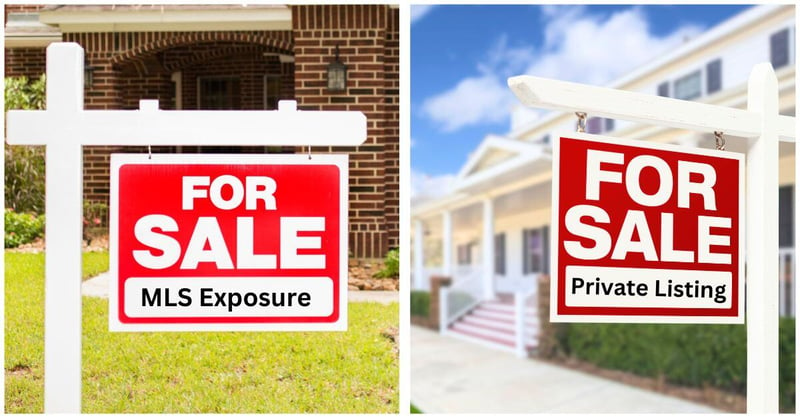
You may have seen the recent headlines about the U.S. Department of Justice (DOJ) having filed an antitrust lawsuit alleging the National Association of REALTORS® (NAR) maintained illegal, anticompetitive restraints on REALTOR® competition, including business practices and policies that prohibited multiple-listing services from disclosing commissions for buyers’ agents to prospective buyers.

The Justice Department accused NAR, the real estate industry’s largest trade group with more than 1.4 million members and 1,400 local associations, with restraining free trade under the Sherman Act, thus creating an environment in which there was little visibility for homebuyers to learn about the commission a buyer’s agent would earn.

This announced action sounds alarming.

However, with a look past the headlines, you will see that the current settlement between the DOJ and NAR, which was announced at the same time as the antitrust complaint filing, means that future outcomes are expected to trend positive for our real estate profession.

According to NAR, who maintained that there was no wrongdoing committed, the settlement requires the following changes in the way in which REALTORS® compete:

 #1. Public display of buyer broker compensation.
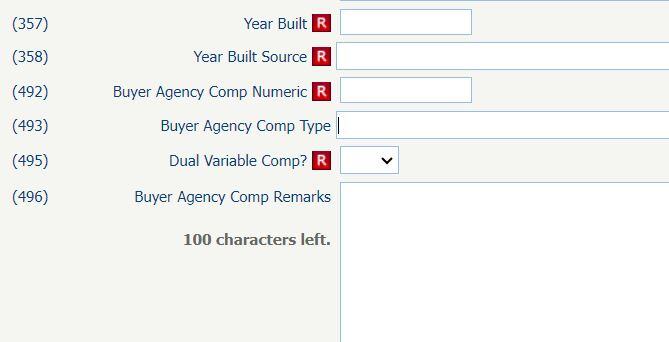
“The amount of compensation offered to a buyer’s agent for each MLS listing will be made publicly available. Publicly accessible MLS data feeds will include offers of compensation, and buyers' agents will have an affirmative obligation to provide such information to their clients for homes of interest.”

#2. Consumer access to all properties that fit their criteria.
“MLSs and brokerages, as always, must provide consumers all properties that fit their criteria regardless of compensation offered or the name of the listing brokerage.”

#3. Forbidding buyers’ agents from representing services as “free.”
“While NAR has long encouraged buyers' agents to explain how they expect to be paid, typically through offers of cooperative compensation from sellers' agents, there will be a rule that more definitively states that buyers' agents cannot represent that their services are free to clients.”

#4. Lockboxes and licensed agents.
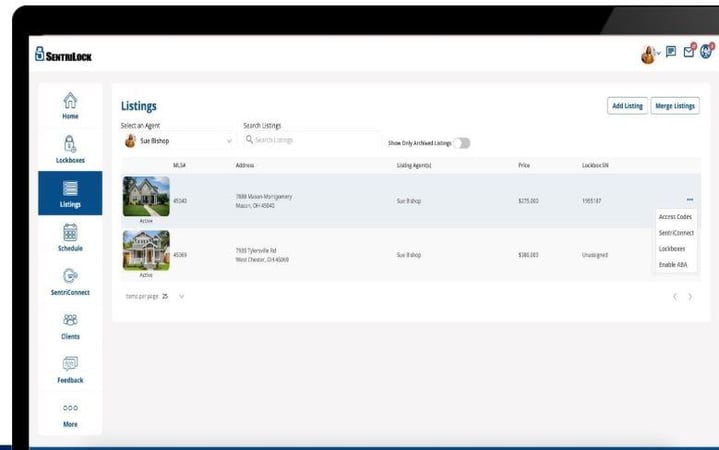
“With the seller's prior approval, a licensed real estate agent will have access to the lockboxes of properties listed on an MLS even if the agent does not subscribe to the MLS.”

“For the most part, these changes more explicitly state what already is in the spirit and intent of the NAR Code of Ethics and MLS policies regarding providing information about commissions and MLS participation,” said Robert Cromer, 2020 PSAR President. “PSAR has long sought to ensure fairness, transparency and a competitive real estate market for home buyers and sellers. We have always been committed to an MLS system that puts consumers first and benefits homebuyers, sellers and brokerages.”

According to a statement from Makan Delrahim, Assistant Attorney General of the Justice Department’s Antitrust Division, “Buying a home is one of life’s biggest and most important financial decisions. Home buyers and sellers should be aware of all the broker fees they are paying. Today’s settlement prevents traditional brokers from impeding competition, including by internet-based methods of home buying and selling, by providing greater transparency to consumers about broker fees. This will increase price competition among brokers and lead to better quality of services for American home buyers and sellers.”

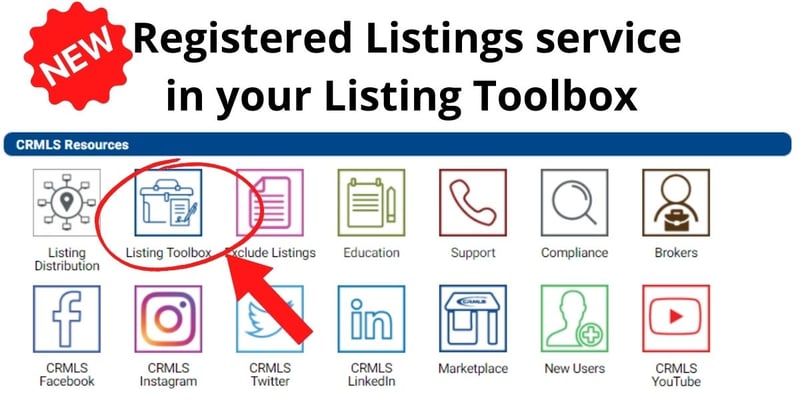
The California Regional Multiple Listing Service (CRMLS) said in a statement, “CRMLS plans to fully comply with the terms of this government-mandated agreement, once finalized. Visit www.go.CRMLS.org/NewRules to keep up to date on how CRMLS will implement these rules.”

Inman News Service posted recent news articles covering possible disruptive consequences from the DOJ lawsuit and proposed settlement. These consequences include:

-- Commissions may be squeezed since consumers will have more visibility into options when choosing which real estate brokerage or agent with whom to work.

-- MLSs can no longer hide commission rates.

-- REALTORS® will not be allowed to set a filter in the MLS for homes for potential buyers based on commission levels.

-- Buyers’ agents cannot make misrepresented statements, for example, “My services are free” (because they aren’t free if the seller pays the commission).

-- A licensed agent cannot be denied lockbox access on the basis of not being an MLS member.

The DOJ-NAR settlement is not yet final as the DOJ is still receiving public input. A DOJ statement said comments regarding the proposed final judgment may be submitted to Chief, Office of Decree Enforcement and Compliance, Antitrust Division, U.S. Department of Justice, 950 Pennsylvania Ave., N.W., Washington, D.C., 20530. The DOJ also stated, “At the conclusion of the 60-day comment period, the court may enter the proposed final judgment upon a finding that it serves the public interest.”

Topics: Brokers/Managers, Market Information

RECORD-BREAKING HOUSING MARKET OUTPERFORMS EXPECTATIONS

Posted by Rick Griffin on Oct 30, 2020 4:32:08 PM

SAN DIEGO HOME SALES IN JULY 2020

California’s housing market outperformed expectations in September 2020 with home sales at their highest level in more than a decade and the median home price at another record high for the fourth straight month.

According to the most recent monthly home sales and price report from the California Association of REALTORS® (C.A.R.), home sales and prices are setting records despite the lowest inventory in years.

The statewide inventory of 2.0 months in September 2020 was lower than 3.6 months in September 2019. It was the lowest statewide level since November 2004. In San Diego County, the inventory declined by nearly half from 3.1 months in September 2019 compared to 1.7 months in September 2020.

Closed escrow sales of existing, single-family detached homes in California approached the 500,000 level in September, making the Covid-19 pandemic that depressed California’s housing market earlier this year seem like a distant memory, although year-to-date homes sales were down 3.7 percent in September.

CAR said home sales totaled a seasonally adjusted annualized rate of 489,950 units in September 2020, according to information collected from more than 90 local REALTOR® associations and MLS statewide. The September 2020 statewide home sales number was up 5.2 percent from August 2020 and 21.2 percent higher than September 2019. It was the third straight month for home sales to exceed the 400,000 level and the highest level recorded since February 2009. September sales rose 5.2 percent from 465,400 in August 2020 and were up 21.2 percent from a year ago, when 404,030 homes were sold on an annualized basis in September 2019.

September 2020 County Sales and Price Activity
(Regional and condo sales data not seasonally adjusted)
blog_201031_chart1

In San Diego County, September 2020 homes sales rose 7.5 percent compared to August 2020 and 32.8 percent higher than September 2019.

To complement high home sales figures, the statewide median home price hit another new high in September 2020, after setting records in June, July and August. California’s median home price exceeded the $700,000 mark for the second consecutive month, as it reached $712,430 in September 2020, edging up 0.8 percent from $706,900 in August 2020, and jumping 17.6 percent from $605,680 in September 2019. The yearly price increase was the highest recorded since February 2014 and higher than the six-month average of 5.3 percent observed between March 2020 and August 2020.

In San Diego County, the median price for a single-family home in September 2020 was $735,000, a 0.3 percent difference from $732,560 in August 2020, and 15.4 percent higher than the $636,750 figure from September 2019.

Home sales in all price segments are continuing to bounce back since the Covid-19 crisis depressed the housing market earlier this year while sales of higher-priced properties are recovering faster than the rest of the market.

Analysts say factors causing price increases include a lack of homes for sale leading to price wars, plus record low interest rates and workers stuck doing jobs from home are raising homeownership levels and some are looking for more square footage space.

“As motivated buyers continue to take advantage of the lowest interest rates in history, home sales will be elevated in the next couple of months, and the housing market should remain a bright spot in a broader economy that continues to struggle,” said C.A.R. President Jeanne Radsick, a second-generation REALTOR® from Bakersfield, Calif. “And with many employers allowing the flexibility of working remotely, homebuyers now also have the option of searching in less expensive areas where homes are more affordable and buyers can get more home for their money.”

“With the statewide home price hitting new highs for the past four months, it’s sounding like a broken record as California home sales and prices continue to outperform expectations,” said C.A.R. Senior Vice President and Chief Economist Leslie Appleton-Young. “However, with the shortest time on market in recent memory, an alarmingly low supply of homes for sale, and the fastest price growth in six and a half years, the market’s short-term gain can also be its weakness in the longer term as the imbalance of supply and demand could lead to more housing shortages and deeper affordability issues.”

Reflecting the rise in home prices, consumers continue to say it is a good time to sell, according to C.A.R.’s monthly Consumer Housing Sentiment Index. Conducted in early October, the poll found that 56 percent of consumers said it is a good time to sell, down from 58 percent a month ago, but up from 52 percent a year ago. Meanwhile, low interest rates continue to fuel the optimism for homebuying; 28 percent of the consumers who responded to the poll believed that now is a good time to buy a home, up from last year, when 22 percent said it was a good time to buy a home.

Other key points from the September 2020 resale housing report included:

-- At the regional level, homes sales increased in the high double-digits compared to last year in all major regions. The Central Coast and the San Francisco Bay Area had the strongest sales growth in September with both regions surging 42 percent and 34.2 percent, respectively. That was followed by increases in the Far North (28.3 percent, Southern California (25.0 percent and the Central Valley (18.4 percent).

-- At the regional level, home prices posted double-digit increases compared to last year in all major regions. The Central Coast had the highest increase in median price, rising 20.6 percent from last year, followed by the San Francisco Bay Area (20.5 percent, the Far North (19.0 percent, Southern California (15.2 percent) and the Central Valley (14.6 percent. All regions except the San Francisco Bay Area set a new high in median price in September.

-- Active listings in September 2020 continued to decline significantly in all major regions. The Central Coast had the biggest drop (-60.3 percent) from last September, followed by the Central Valley (-51.5 percent), Southern California (-49.9 percent), the Far North (-43.9 percent), and the San Francisco Bay Area (-31.9 percent).

-- Housing inventory tightened by double-digits in all price segments, but the constraint was more pronounced in the affordable markets. Active listings in every price range continued to decline sharply from last year, with for-sale properties priced below $1 million falling 56 percent on a year-over-year basis. Compared to a year ago, the supply for homes priced between $1 million and $3 million declined 30.4 percent, and homes priced at or above the $3 million benchmark declined 19.4 percent.

-- The median number of days it took to sell a California single-family home was 11 days in September 2020, down from 24 days in September 2019. It’s the lowest statewide figure ever recorded. The 11-day figure compares to 13 days in August 2020, 17 days in July 2020, 19 days in June 2020, 17 days in May 2020, 13 days in April 2020, 15 days in March 2020 and 23 days in February 2020.

September 2020 County Unsold Inventory and Days on Market
(Regional and condo sales data not seasonally adjusted)
blog_201031_chart2-1

-- In San Diego County, the median number of days an existing, single-family home remained unsold on the market was seven days in September 2020, compared to 18 days in September 2019. The seven-day figure compares to eight days in August 2020, 10 days in July 2020, 12 days in June 2020, 11 days in May 2020, eight days in April 2020, 10 days in March 2020, 12 days in February 2020 and 23 days in January 2020.

-- The 30-year, fixed-mortgage interest rate averaged 2.89 percent in September, down from 3.61 percent in September 2019, according to Freddie Mac. The five-year, adjustable mortgage interest rate was an average of 2.98 percent, compared to 3.38 percent in September 2019.

In other recent real estate and economic news, according to news reports:

-- The Commerce Department reported the nation’s third-quarter domestic product (GNP), a measure of the total goods and services produced in the July-to-September 2020 period, expanded at a 33.1 percent annualized pace. That’s the fastest growth ever for the U.S. economy and it follows the worst quarter in history when the economy plunged 31.4 percent in the second quarter 2020. The previous GNP quarterly record of 16.7 percent was set following World War II in the first quarter of 1950.

-- Realtor.com said the housing market is bucking the traditional trend of a cool-down in the fall season, which typically occurs as students return to school. While buyers normally begin to hunker-down this time a year, instead sellers are getting top dollar for their home outside of the prime selling season, said Realtor.com.

-- CoreLogic reports the September 2020 median home price in San Diego reached a new high of $650,000, which was a 10.2 percent increase since the Covid-19 lockdown began in March. September’s number exceeds the previous record of $640,000 in August 2020.

-- A recent S&P CoreLogic Case-Shiller reports home prices in San Diego increased 7.6 percent over the past year, the third-fastest in the nation and at a rate not seen in more than two years. The other cities with faster increases were Phoenix, up 9.9 percent, and Seattle, up 8.5 percent.

-- Redfin reports the median price of a single-family home in San Diego County rose 15.7 percent over the past year since September 2019 to $665,000. That compares to a 14.4 percent increase in the nationwide median home price to $333,900.

-- Zillow reports the median price of a single-family home in September was $632,264, marking a 7.6 percent increase from a year ago. Nationally, the typical home value rose 5.8 percent in a year-over-year comparison to $259,906 in September.

-- The Federal Housing Finance Agency said home prices increased 1.5 percent nationally from July to August, the largest month-to-month increase since 1991. Prices were 8 percent higher in August 2020, compared to August 2019.

-- A Redfin survey of more than 3,000 people in October revealed that 16 percent of them would consider moving to another country outside the U.S. if their preferred presidential candidate loses in November. That’s up from 9 percent four years ago. Redfin’s survey also found that 20 percent of Biden voters say they would leave the U.S. if he loses. Among Trump supporters, 15 percent said they’d depart if the President loses reelection. A greater percentage, 24 percent, said they are considering moving to another state. Redfin also reports landlords in multiple states are thinking about raising rents if Biden wins.

Topics: Brokers/Managers, Market Information

IT TOOK 8 DAYS TO SELL A HOME IN SAN DIEGO IN AUGUST

Posted by Rick Griffin on Sep 25, 2020 4:30:00 PM

San Diego Home Sales in August 2020

The Covid-19 pandemic that depressed California’s housing market earlier this year seems like a distant memory after the release of the most recent monthly home sales and price report from the California Association of REALTORS®.

In August 2020, California’s housing market continued to improve as statewide home sales climbed to their highest level in more than a decade and median home prices set another high, breaking July’s record.

The August numbers are the latest evidence that buyers and sellers have brushed off economic uncertainty in the reality of a post-Covid-19, housing market rebound.

Existing, single-family home sales in California totaled 465,400 in August 2020 on a seasonally adjusted annualized rate, up 6.3 percent from July 2020’s sales of 437,890, and 14.6 percent higher from August 2019, when 406,100 homes were sold on an annualized basis.

It was noteworthy that August’s sales total climbed above the 400,000 level for the second straight month since the Covid-19 crisis depressed the housing market earlier this year. It was the first time since the summer of 2016 that sales increased from the previous month three months in a row.

In San Diego County, August 2020 homes sales were down 2.2 percent from July 2020, but 10.2 percent higher than August 2019.

In addition to home sales records, home prices also set a record in August 2020. The statewide median price hit another new high after setting records in June and July.

California’s median home price broke the $700,000 mark, reaching $706,900 in August 2020, a 6.1 percent jump from July 2020’s $666,320 and reflecting a year-over-year rise of 14.5 percent compared to the $617,410 price set in August 2019.

August 2020 County Sales and Price Activity
(Regional and condo sales data not seasonally adjusted)
August 2020 County Sales and Price Activity

Sales of higher-priced properties are recovering faster than the rest of the market, pushing upward the statewide median home price. The median price represents the point at which half of the homes sell above a price and the other half below it.

The yearly price increase was the highest recorded since March 2014 and larger than the six-month average of 4.3 percent observed between February 2020 to July 2020.

In San Diego County, the median price for a single-family home in August 2020 was $732,560, a figure which was 1.9 percent higher than the $719,000 price tag in July 2020 and 12.7 percent higher than the $650,000 amount for August 2019.

“California’s strong housing recovery in terms of sales and price over the past few months is encouraging as motivated buyers are eager to purchase homes amid the lowest interest rates ever, which led to the fastest sales growth in a decade,” said 2020 C.A.R. President Jeanne Radsick, a second-generation REALTOR® from Bakersfield, Calif. “However, persistently low housing inventory will continue to push up home prices due to heavy buyer competition, which is starting to outweigh the benefits of record low interest rates and hamper housing affordability.”

“Low rates and tight housing inventory are contributing factors to the statewide median price setting a new record high three months in a row from June to August, said C.A.R. Senior Vice President and Chief Economist Leslie Appleton-Young. “A change in the mix of sales is another variable that keeps pushing median prices higher, as sales growth of higher-priced properties continued to outpace their more affordable counterparts.”

Reflecting the rise in home prices, consumers continue to say it is a good time to sell, according to C.A.R.’s monthly Consumer Housing Sentiment Index. Conducted in early September, the poll found that 58 percent of consumers said it is a good time to sell, up from 54 percent a month ago, and up from 46 percent a year ago. Meanwhile, low interest rates continue to fuel the optimism for homebuying; 34 percent of the consumers who responded to the poll believed that now is a good time to buy a home, sharply higher than last year, when 22 percent said it was a good time to buy a home.

Other key points from the August 2020 resale housing report included:

-- Home sales at the regional level increased in all major regions from last year. The Central Coast and the San Francisco Bay Area had the strongest sales growth in August with both regions surging more than 10 percent in sales from last year. The Far North and Southern California regions increased more modestly in sales with a gain of 8.6 percent and 5.5 percent, respectively.

-- Home prices at the regional level posted double-digit price increases from last year in nearly all major regions. San Francisco Bay Area had the highest median price increase, rising 18.7 percent from last year, followed by the Central Coast (16.4%), Southern California (12.9%), and Central Valley (12.2%).

-- All but two counties reported a year-over-year gain in price, with 33 of the counties growing more than 10 percent. Santa Barbara had the highest price increase, gaining 41.7 percent year-over-year.

-- With fewer for-sale properties being added to the market, housing supply remained significantly below last year’s level. The 50.3 percent drop from a year ago was the biggest decline in active listings since at least January 2008. It was also the ninth consecutive month with active listings falling more than 25 percent from the prior year. 

-- With higher-than-normal housing demand and supply not being replenished as fast as prior to the pandemic, the Unsold Inventory index (UII) remained at the lowest level in the last 15 years. The UII fell sharply from 3.2 months in August 2019 to 2.1 months this August.

-- Housing supply tightened up in all price segments, but the housing shortage is especially pronounced in more affordable markets. While active listings in every price range declined by double-digits on a year-over-year basis, for-sale properties priced below $1 million fell 58 percent from last year. Compared to a year ago, the supply of homes priced between $1 million to $3 million declined 33.1 percent, and homes priced at or above the $3 million benchmark declined 17.2 percent.

-- The median number of days it took to sell a California single-family home was 13 days in August 2020, down from 23 days in August 2019. The August 2020 timeframe compares to 17 days in July 2020, 19 days in June 2020, 17 days in May 2020, 13 days in April 2020, 15 days in March 2020 and 23 days in February 2020.

August 2020 County Unsold Inventory and Days on Market
(Regional and condo sales data not seasonally adjusted)
August 2020 County Unsold Inventory and Days on Market

-- In San Diego County, the median number of days an existing, single-family home remained unsold on the market was eight days in August 2020, compared to 17 days in August 2019. The August 2020 timeframe compares to 10 days in July 2020, 12 days in June 2020, 11 days in May 2020, eight days in April 2020, 10 days in March 2020, 12 days in February 2020 and 23 days in January 2020.

-- The 30-year, fixed-mortgage interest rate averaged 2.94 percent in August 2020, down from 3.62 percent in August 2019, according to Freddie Mac. The five-year, adjustable mortgage interest rate was an average of 2.91 percent, compared to 3.36 percent in August 2019.

In other recent real estate and economic news, according to news reports:

-- Realtor.com said the number of listings in San Diego County is 43 percent lower than a year ago, according to its report for the week ending Sept. 12. Also, the median listing price is 8.8 percent higher in a year-over-year comparison.

-- CoreLogic said San Diego County’s median home price in August 2020 hit another all-time high of $640,000, up from the previous peak of $634,000 in July 2020. The real estate data reporting firm also said home prices in the county have risen more than 8 percent since March, when the Covid-19 pandemic began, and 9.4 percent since this same time last year.

-- More than 20 percent of Californians say they are bored of where they live and want to move somewhere else, according to a recent survey by Unclutterer.com, a website for home and office organization. The survey also revealed that 36 percent of city dwellers in California now want to move out to the suburbs or the country.

-- Home sales nationwide exceeded 1 million in August 2020, according to the U.S. Census Bureau and Department of Housing and Urban Development. Sales totaled 1,011,000, a 43.2 percent increase since August 2019, 4.8 percent compared to July 2020 and a record high not seen since 2006.

-- The Covid-19 pandemic has aggravated the housing’s market longstanding lack of supply, creating a historic shortage of homes for sale, reports The Wall Street Journal. Many potential home sellers are keeping their homes off the market for pandemic-related reasons. Meanwhile, buyers are accelerating purchase plans or considering homeownership for the first time to get more living space as many Americans anticipate working from home for the long term. The National Association of REALTORS® said there were 1.3 million existing single-family homes for sale at the end of July, the lowest count for any July going back to 1982. For the week ending Sept. 12, Zillow Group Inc. reports the nationwide inventory was down 29.4 percent from a year ago and the lowest level since late 2017.  

Topics: Brokers/Managers, Market Information

SAN DIEGO HOME SALES REBOUND BY 58 PERCENT IN JUNE

Posted by Rick Griffin on Jul 31, 2020 4:15:00 PM

SAN DIEGO HOME SALES IN JUNE 2020

The rebound happened over one month’s time.

In May of this year, the full impact of the coronavirus pandemic nosedived California’s home sales to their lowest level since the 2008 Great Recession.

By contrast, California’s housing market in June regained its footing with the largest month-over-month sales increase in nearly 40 years, according to the most recent monthly home sales and prices report from the California Association of REALTORS® (C.A.R.).

Statewide, June 2020 home sales were up a whopping 42.4 percent compared to May 2020. This month-over-month increase was the largest since C.A.R. began reporting monthly sales in January 1979. Closed escrow sales of existing single-family detached homes in California totaled a seasonally adjusted annualized rate of 339,910 units in June, compared to 238,740 in May. Compared to a year ago, statewide home sales were down 12.8 percent, when 389,730 homes were sold on an annualized basis.

In San Diego County, June 2020 homes sales were 58.1 percent higher when compared to May 2020, when home sales were down 14.6 percent in a comparison to April 2020. There was a nominal increase of 1.7 percent in home sales in June 2020 over June 2019.

Meanwhile, home prices remained strong in June 2020, setting another record high statewide, despite the Covid-impacted sales environment.

After dipping briefly below $600,000 in May, California’s median home price increased to $626,170 in June 2020, an improvement of 6.5 percent from $588,070 in May 2020 and 2.5 percent from $610,720 in June 2019. The monthly price increase was higher than the historical average price change from May to June and, in fact, was the highest ever recorded for a May-to-June comparison. 

A change in the mix of sales was a key factor that pushed the median price higher in June, as sales of higher-priced properties showed stronger than lower-priced homes. Homes priced below $500,000, which made up 48 percent of total sales in the California market in May 2020, only comprised 44 percent of all sales in June 2020. Sales of million-dollar and above properties, on the other hand, increased in market share to 18.1 percent in the most recent month compared with 15.6 percent in May 2020. 

In San Diego, the median price for a single-family home in San Diego County in June 2020 was $678,000, an increase of 3.5 percent from $655,000 in May 2020, and 2.0 percent higher than $665,000 in June 2019.

June 2020 County Sales and Price Activity
(Regional and condo sales data not seasonally adjusted)
June 2020 County Sales and Price Activity

“Home sales bounced back solidly in June after hitting a record bottom in May, as lockdown restrictions loosened and pent up demand driven by record-low interest rates roared back,” said 2020 C.A.R. President Jeanne Radsick, a second-generation REALTOR® from Bakersfield, California.

“A new record high in the statewide median price suggests that there is stronger housing demand from more qualified, affluent buyers in this extremely favorable lending environment,” said C.A.R. Senior Vice President and Chief Economist Leslie Appleton-Young. “It also highlights both the affordability and supply issues created by the uneven impact of the coronavirus pandemic as the more affordable segments of the state’s housing market are recovering at a slower pace.”

Reflecting growing confidence in market conditions, a monthly Google poll conducted by C.A.R. in early July found that 44 percent of consumer respondents stated it is a good time to sell, up from 40 percent a month ago, but down from 49 percent a year ago. Meanwhile, low interest rates continue to fuel the optimism for homebuying. 31 percent of the consumers who responded to the poll believe that now is a good time to buy a home, a sharply higher figure than last year’s 23 percent of respondents.

Other key points from the June 2020 resale housing report include:

-- Median prices increased in all regions in June, with the more affordable markets increasing year-over-year in the high-single digits. The Bay Area and the Central Coast regions, which experienced dips in price in May, bounced back in June with moderate increases of 4.2 percent and 5.4 percent, respectively. Median prices in the Central Valley and the Southern California continued to rise from last year by 7.4 percent and 3.3 percent, respectively, as pent-up demand returned to the market.

-- Housing supply continued to trend downward on a year-over-year basis, with active listings falling more than 25 percent for the seventh consecutive month. A sizable year-over-year drop in active listings of 43 percent, coupled with a robust gain in closed sales, led to a decline in C.A.R.’s Unsold Inventory Index (UII) in June. The Index dropped to 2.7 months in June from 4.3 months in May and was down from 3.4 months in June 2019. The index indicates the number of months it would take to sell the supply of homes on the market at the current rate of sales.

-- Housing supply continued to decline significantly across the state, with all areas falling more than 30 percent in active listings from last year. Southern California had the biggest drop in supply, with for-sale properties plunging 47.3 percent year-over-year.  While all counties in the region dropped at least 40 percent from a year ago, both Riverside and San Bernardino plummeted more than 50 percent in active listings.

-- The median number of days it took to sell a California single-family home was 19 days in June 2020, equal to that of June 2019. June 2020’s 19-day figure compares to 17 days in May 2020, 13 days in April 2020, 15 days in March 2020 and 23 days in February 2020.

June 2020 County Unsold Inventory and Days on Market
(Regional and condo sales data not seasonally adjusted)

June 2020 County Unsold Inventory and Days on Market

-- In San Diego County, the median number of days an existing single-family home remained unsold on the market was 12 days in June 2020, which compares to 11 days in May 2020, eight days in April 2020, 10 days in March 2020, 12 days in February 2020, 23 days in January 2020 and 13 days in June 2019.

-- The 30-year, fixed-mortgage interest rate averaged 3.16 percent in June, down from 3.80 percent in June 2019, according to Freddie Mac. The five-year, adjustable mortgage interest rate averaged 3.09 percent, compared to 3.48 percent in June 2019.

In other recent real estate and economic news, according to news reports:

-- According to CoreLogic, the median home price in San Diego reached a new high of $600,250 in June, indicating that COVID-19 has not stopped the upward pressure on home prices. San Diego was not alone in this trend, with three of the six Southern California counties reaching record price peaks in June.

-- According to Zillow, the median price of a single-family home in San Diego County rose 5 percent year-over-year in June to $636,815 while inventory experienced a 27.6 percent year-over-year decline. Nationally, home values continued their steady, upward trajectory in June, growing 4.3 percent year-over-year to $252,178. Phoenix is the hottest top-50 market, reported Zillow. Home values in the Arizona city rose 9.6 percent year-over-year in June, followed by Birmingham, Ala. (up 7.6 percent) and Memphis, Tenn. (up 7.5 percent).

-- Home prices are expected to increase through the summer, including in San Diego County, which has the second-highest year-over-year price increase behind New York City, according to First American Financial Corp. The five markets with the greatest year-over-year increase based on First American’s Real House Price Index include New York (14.8 percent), San Diego (10.1 percent), Pittsburgh (8.8 percent), Orlando (6.3 percent), and St. Louis (5.4 percent).

-- The Covid pandemic is not affecting home sales, according to Realtor.com, which said monthly traffic hit an all-time high of 86 million unique users in June, breaking May’s record of 85 million users. Supply still remains the biggest factor slowing the recovery, however, as total listings remain 31 percent lower than last year.

-- Although buyers appeared to regain confidence in June, sellers lagged behind as new listings slumped during the month, according to Realtor.com’s June Monthly Housing Trends report. In the San Diego-Carlsbad market, new listings dropped by 21 percent in June 2020, compared to June 2019, and the year-over-year, “active listing count” decreased by 36.6 percent. Nationally, housing inventory across the U.S. was down 27.4 percent year over year in June. The national volume of new listings was down by 19.3 percent from last year, which actually represented an improvement from declines of 44.1 percent in April and 29.4 percent in May.

-- Bidding wars for homes are increasing in San Diego. According to Redfin, 65.7 percent of home offers in June faced multiple competitive offers. San Diego was the second most competitive market in the country in June, trailing only Boston, which had 72.4 percent of homes fielding multiple bids.

-- The total value of residential real estate in San Diego County is $564 billion, according to a recent LendingTree report. For perspective, this figure is comparable to the value of Warren Buffet’s Berkshire Hathaway firm or the GDP of Poland., San Diego’s total is the 12th highest in the U.S.New York City is top-rated at $2.8 trillion, which is more than the GDP of the United Kingdom in 2019. Los Angeles, with $2.3 trillion, has the second-highest residential real estate value in the U.S. nearly the GDP of Italy and the combined value of Amazon and Google’s parent company Alphabet. San Francisco is third at $1.3 trillion, the equivalent of Mexico’s GDP or the value of Microsoft.  

Topics: Brokers/Managers, Market Information

LISTEN, UNDERSTAND & SPEAK UP

Posted by Richard D'Ascoli on Jun 5, 2020 5:01:05 PM

WE MUST ACTIVELY WORK FOR REAL CHANGE

The following statement from PSAR CEO Rich D’Ascoli is in response to the riots, looting and protests following the death of George Floyd, a black man while in the custody of Minneapolis police:


The shocking, senseless death of George Floyd is tragic. Our deepest sympathies are with the Floyd family and others, who through four hundred years of abuse, understand and feel this pain and grief like nobody else can.

As longtime champions of fair housing, equality and inclusion are among our most cherished values. PSAR is committed to leading the way on policies that address racial injustice and that build safe and inclusive communities. We remain committed to supporting the dignity and worth of all individuals, and to work vigorously to defend policies that bring justice, opportunity and security for all. We stand in support of racial equality and all those who search for it. We’re hoping this breakdown will ultimately turn into a breakthrough. Building the future begins with equal access to housing and opportunity for all.

Many of us are looking for ways to stand up for what we believe. We cannot remain disengaged and hope that this will go away. As a community of professionals working and living through extraordinarily challenging times, we must work together and remain committed to a better world for everyone, not just a few. Honesty, transparency, and empathy go a long way toward building trust and influencing change. Now is the time to listen, seek to understand, and speak up.

We appreciate all you do as REALTORS® to listen, learn and work with others to be part of the solution. As leaders in your communities, REALTORS® are active participants in promoting equality, inclusion and acceptance. Thank you for your support of PSAR.

If you have 15 minutes, please consider watching this video by Valerie Alexander on Unconscious Bias. I saw her speak at a CAR meeting in October with other CEOs from around California.  She helped me understand our biases, including my own, in a way that I hadn’t before.

________________________________________________________________________________________


Topics: Market Information

KEEP PACE IN THE FUTURE WITH VIRTUAL OPEN HOUSES

Posted by Rick Griffin on May 16, 2020 5:00:00 AM

Virtual Open Houses

Perhaps the greatest impact of the Covid-19 measures is on open houses. Going forward, instead of group open-house gatherings, expect fewer open houses with smaller numbers, as well as private home showings, featuring social distancing and plenty of disinfectant, masks and hand sanitizers available at the entryway.

The adaptability and ingenuity of realtors have come into play and a better and simpler way to conduct an open house has been developed--  a virtual open house using a laptop or cell phone. 

“Covid has changed the way real estate is being bought and sold all over the world. It has created a lot of uncertainty as agents are unsure of what the new norms will be,” said PSAR REALTOR® member Anthony Manzon. “No longer can we have public open houses with hundreds of people in attendance. Gone are the days of aggressively pricing properties and getting every single person into the house to create bidding wars.”

Indeed, as the pandemic has spread across the country, many home sellers, spooked by an unsure economic future and/or the thought of buyers potentially leaving virus deposits throughout their homes, have taken their properties off the market.

“The more agents hosting virtual open houses means the practice will become standard in our profession, which is good for everybody,” said Manzon. “All agents will benefit as more buyers and sellers become comfortable and confident with high-level virtual open houses. We can show the public this is how we can transact in today’s market in a safe way.”

Manzon, who prefers using a laptop for his virtual open houses, has created a Facebook page, called “Realtors of the Virtual World,” that offers training and success stories about virtual open houses and other virtual industry tools.

According to Manzon, agents who become proficient at hosting a virtual open house will attract new clients, demonstrate how to be proactive and solution-based and will keep buyers and sellers and agents safe, thus reducing the spread of the virus.

“Be sure to have some sort of lead capture, provide more information than what the MLS provides and remember that with every virtual open house agents are interviewing for their next client,” Manzon said.

Clearly, the rapid migration to digital technologies driven by the pandemic will continue during the nation’s economic recovery and beyond. REALTORS® will need to keep pace. After the lockdowns end, this time will be remembered for the rapid deployment of digital access to services across nearly every business sector.

Recently, Rich D’Ascoli, CEO of PSAR, facilitated an online discussion about virtual open houses with several REALTORS®. Here is a sampling of their comments: 

• “In my opinion, virtual open houses are the wave of the future,” said Amber Tannehill. “The ability to show a client a home virtually will assist us in identifying the buyers who are serious and ready to make an offer. As we adapt to what appears to be a new normal, we will certainly have some obstacles to overcome, but I find that buyers and sellers are understanding and appreciative as we make these adjustments." 

• “Open houses are still happening, but with virtual open houses, we’re just filtering the effort through a different process,” said Jason Lopez.

• “Because of the restrictions, traditional open houses may be a thing of the past. But, in some ways, virtual open houses are a better way to get the word out,” said Denisse Roldan Newell. “It’s becoming more important to become tech-savvy, and it’s not that difficult. It’s how we embrace change.” 

• “If you aren't willing to adapt as the market changes, then you will quickly learn what it’s like to be irrelevant,” said Sarah Heck. “Virtual open houses and new safety protocols are now the standard of care for our industry.” 

• “Virtual open houses are the wave of the future and, as REALTORS®, we need to learn it because it’s an important listing tool. Otherwise, we might lose the listing,” said Jacklyn Lamkin Dougan. “We need to be fearless and embrace change and be willing to do whatever it takes.”

• “It might take a few practice runs, but I think clients are very understanding and excited about virtual open houses as a new technology,” said Patty Nesbitt. “It’s better than watching the news. We need to bring happiness and normalcy to people’s lives.”

• “I’m excited about virtual open houses because it will be one of the great real estate game-changers that comes out of the pandemic environment,” said Elaine Boyd. “Virtual open houses are a win for all sides. The sellers love having fewer people wandering through their homes. Great for agents, too. We can do as many or as few VOHs as we like. Even if you do just one, you can post it on YouTube, then anyone can “walk” through the home any time. The 3D imaging is key for getting a true sense of walking through the home. It’s the wave of the future, just amazing. The Virtual Open House is so more than a bridge for these strange days of Covid-19. It is a new style of open house that benefits us all and it is here to stay.” 

Here are some general tips on hosting a virtual live open house.

To prepare for the virtual open house, first, select a time and date as you would for any open house. Allow 30-45 minutes to tour the property and answer questions from participants. 

Next, select an online meeting platform, such as Zoom, Google Meet or others.  Decide on a “private” open house private with a select group or streaming it to a platform like Facebook to be promoted widely. 

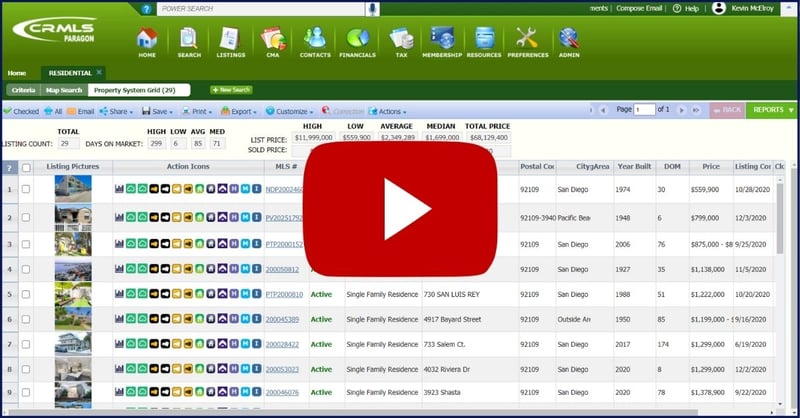
The following live web conferencing services are currently allowed on CRMLS Paragon: BlueJeans, bluejeans.com; Facebook Live, facebook.com; GoToMeeting, gotomeeting.com; GoToWebinar, gotowebinar.com; Google Hangouts,  hangouts.google.com; Google Meet, meet.google.com; Join.me, join.me; Livestream, livestream.com; Periscope, periscope.com; Skype, skype.com; Microsoft Teams, teams.microsoft.com; Webex, webex.com; Whereby, whereby.com; YouTube Live, youtube.com; Zoho, zoho.com; Zoom, zoom.us.

Facebook is popular because it allows you to create an event from your Facebook business page. Under the “Events” tab create a new public event to share.

To drive traffic to your virtual open house, include the link in a shared event via Facebook and other social media platforms. Also email your client list and agents who will bring interested buyers.

On the event day, prepare the house as you would for a typical open house.  Make sure it’s clean, presentable and properly lit.

If the home has a fast WiFi Connection and you feel confident with mobile technology, live streaming from the property is an option.

Another method is to prepare content like Matterport, video clips, and other multimedia in advance and review the content live from a home office.

Start the tour by opening your Facebook app on your smartphone, go to your business page, open-up the event you’ve previously created. Go to the “Say Something” option, click the “Live Video” option and then click “Start Live Video.” You’re on: “Hello, Facebook friends, thanks for tuning in to this live virtual open house.” The recording can then be posted on your Facebook timeline. And, don’t forget to follow-up with your viewers.

When using a smartphone, keep it in a horizontal position, not vertical, so participants see a wider view of the home as you’re touring. Put yourself on the other side of the camera and imagine how the audience is viewing the screen. Slowly move the smartphone and try not to shake it. There are gimbals available online for less than $100 that help to stabilize live video.

During the tour, think of your ideal buyer. Anticipate the questions they might ask and discuss the features they would find interesting. Some agents respond live to questions by looking at specific points of interest in a home.

Topics: Market Information, Marketing