PSAR Honors Toni Atkins and Juan Vargas for Championing Homeownership, Recognizes Local Leaders

Posted by Communications on Nov 22, 2024 4:55:30 PM

The Pacific Southwest Association of REALTORS® also installed its 2025 Board of Directors during the celebratory event.

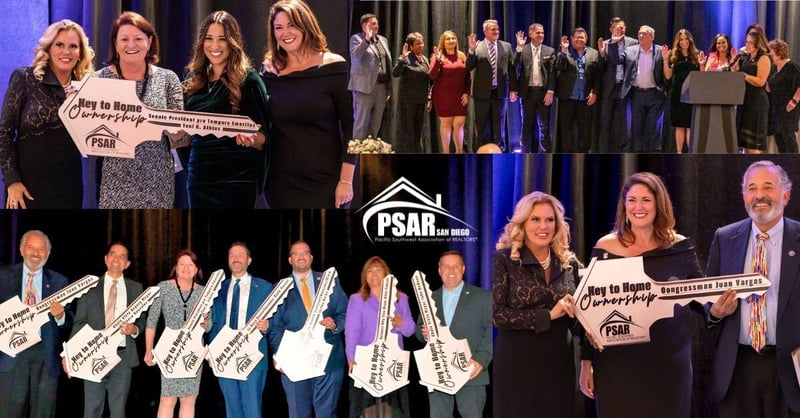
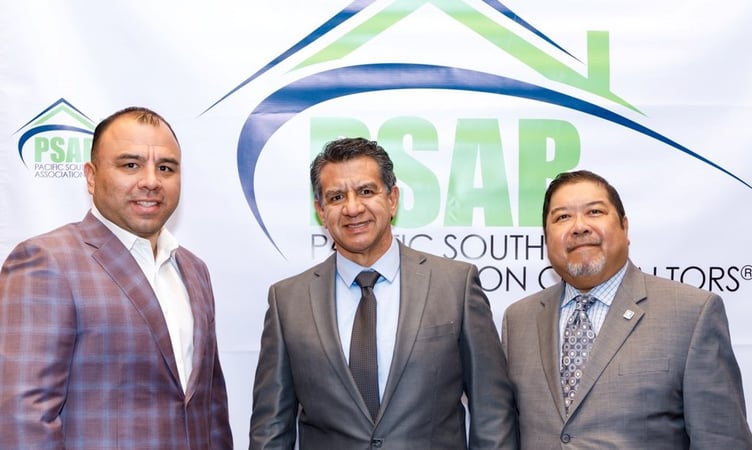
The Pacific Southwest Association of REALTORS® (PSAR) recently hosted a special event to honor the achievements of elected officials who have made significant strides in expanding housing accessibility and protecting property rights. The event recognized Senator Pro Tem Emeritus Toni G. Atkins and Congressman Juan Vargas for their leadership, along with several local leaders for their impactful contributions. The evening also celebrated the installation of PSAR’s 20254 Board of Directors.


Transforming Housing Policy in California:

LinkedPreview-PSAR68Senator Pro Tem Emeritus Toni Atkins received the PSAR Key to Homeownership Award for her pivotal role in shaping housing policy in California. Atkins championed Senate Bill 9, the California Housing Opportunity and More Efficiency (HOME) Act, which simplifies the process for homeowners to create duplexes or subdivide properties, increasing the housing supply and affordability.

"SB 9 is about giving homeowners more flexibility and creating opportunities for families to achieve the dream of homeownership," said Atkins during her remarks.

Atkins authored the California Dream for All program, a shared appreciation loan program that has helped thousands of families across California achieve the dream of homeownership. 

Atkins also strongly opposed Proposition 33, calling it "as deceptive as it is dangerous" and warning that it could "dramatically hinder new housing construction." Her leadership has been instrumental in addressing California’s housing crisis and advancing fair housing initiatives.


Advocating for Housing at the Federal Level: The Key's to Homeownership.

LinkedPreview-PSAR76Congressman Juan Vargas was also honored with the PSAR Key to Homeownership Award for his tireless efforts to support homeownership at the national level. As a member of the House Financial Services Committee, Vargas has championed fair lending practices and policies to expand access to affordable housing resources.

During his remarks, Vargas shared a personal story about how his parents used the growing equity in their home to provide for their family. "My mother and father taught us the value of homeownership—not just as a place to live, but as a tool for opportunity. They put ten children through college because of the equity they built in their home," Vargas shared.


Recognizing Local Leaders:

PSAR also honored several local officials for with The Key to Homeownership Award for their dedication to advancing access to homeownership and protecting property rights.  All of these elected officials opposed the anti-pro-housing bill Prop 33.:

elected officials with keys

State Senator Brian Jones:  Introduced legislative packages addressing homelessness and housing availability.

Supervisor Joel Anderson: Supported efforts to fight homelessness, provide rental assistance, and provide workforce housing.  He also opposed barriers to housing caused by VMT Policies. 

Jordan Marks, San Diego County Assessor/Recorder/Clerk: Advocated for Proposition 13 protections, enhanced tax relief programs, and fought against real estate fraud.

John McCann, Chula Vista Mayor: Focused on public safety, economic growth, and homeowner education in Chula Vista.

Ron Morrison, National City Mayor: Opposed rent control measures that threaten property rights and prioritized homeownership opportunities.

Alonso Gonzalez, Chula Vista Deputy Mayor (And a PSAR Broker Member): Brought industry knowledge as a REALTOR® to advocate for equitable zoning and housing access.

Ditas Yamane, National City Vice Mayor: A former PSAR President who championed property rights and affordable homeownership.

Colin Parent, La Mesa Councilmember: Crafted policies like La Mesa’s ADU ordinance and affordable housing programs to expand housing options.


Celebrating PSAR Leadership:

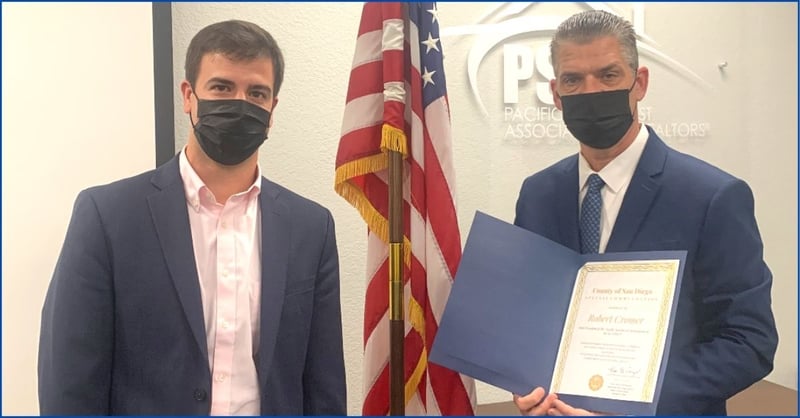
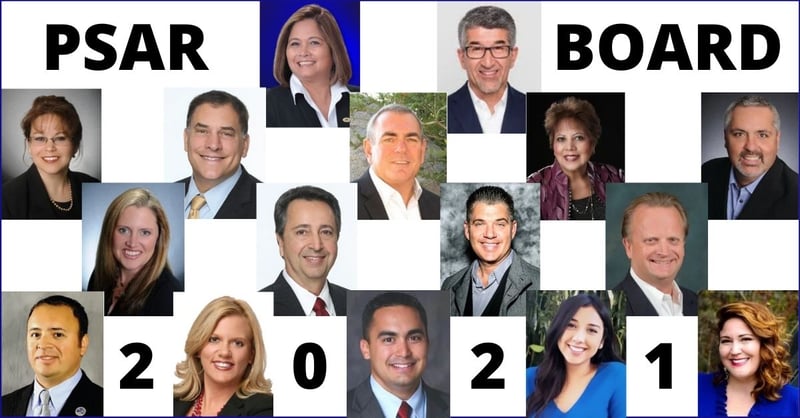
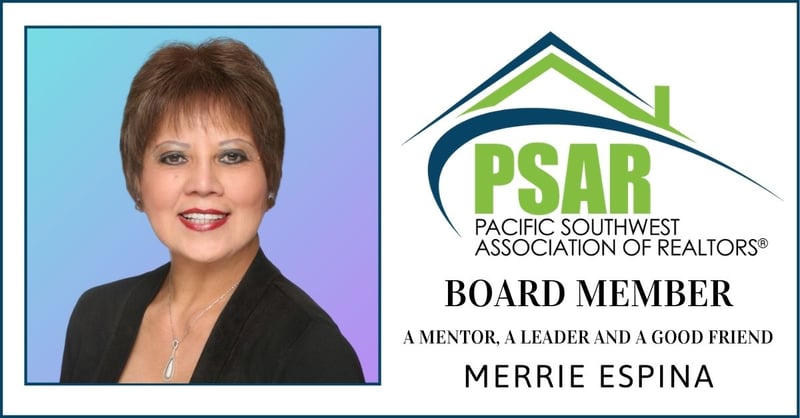
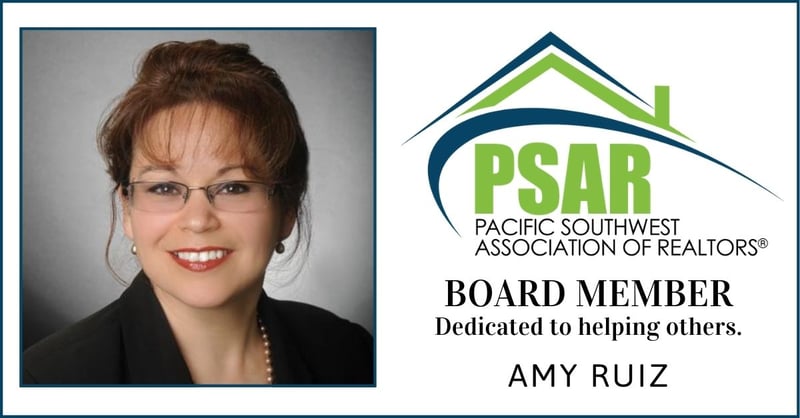
The evening concluded with the installation of PSAR’s 20254 Board of Directors. The new board, led by incoming President Yvonne Cromer, will guide the association in its mission to empower real estate professionals and advance housing opportunities throughout San Diego County.

2025 board sworn in

Thank you Don Anderson of Insight Photos and Brandon of Linked Preview for these great photos: 2025 Installation Dinner Photos
 
And Thank You     

Topics: Announcements, Events, Brokers/Managers

California Buyer-Broker Agreements: DRE Bulletin Adds to the Maze

Posted by Richard D'Ascoli on Nov 15, 2024 4:38:12 PM

California Buyer-Broker Agreements: DRE Bulletin Adds to the Maze

The real estate industry is facing significant changes to buyer-representation, and PSAR members need to stay informed. With the recent Sitzer-Burnett settlement, the passage of California’s AB 2992, and NOW a newly released California Department of Real Estate (DRE) bulletin, REALTORS® are navigating uncharted territory. These updates reflect an ongoing evolution in the industry, but inconsistencies between them may create challenges for REALTORS® working to remain compliant.

C.A.R. Legal is currently reviewing these documents in detail and will likely reach out to the DRE for clarification regarding the bulletin. REALTORS® can expect further guidance as these details are analyzed more thoroughly.

This blog is a first look at how these changes align—or don’t. While this is not a definitive legal analysis, it highlights important areas to consider.


Key Inconsistencies REALTORS® Need to Understand

1. Timing of Agreement Execution

  • Choose: Sitzer-Burnett Settlement: REALTORS® and MLS subscribers must secure a signed buyer-broker agreement before touring properties.

  • AB 2992: Allows the agreement to be signed as late as the execution of a purchase offer.

  • DRE Bulletin: Reflects AB 2992’s timing, which is less stringent than the settlement.
    Impact: REALTORS® may face conflicting guidance depending on whether they are complying with AB 2992, the settlement, or MLS rules.

2. Agreement Expiration

  • Choose: AB 2992: Limits agreements to a maximum of three months.

  • Sitzer-Burnett Settlement: Does not specify a duration but requires clear terms.

  • DRE Bulletin: Does not mention expiration limits.
    Impact: REALTORS® could face compliance issues if agreements extend beyond three months under California law, even if not restricted under the settlement.

3. Compensation Negotiation and Disclosure

  • Choose: Sitzer-Burnett Settlement: Caps compensation at the agreed amount and prohibits exceeding it from any source.

  • AB 2992: Allows buyers to negotiate seller concessions to cover agent fees but does not impose a cap.

  • DRE Bulletin: Discusses compensation but lacks clarity on handling caps or seller concessions.
    Impact: REALTORS® may inadvertently violate settlement terms by exceeding the agreed-upon compensation if following only state law or the bulletin.

4. Scope of Applicability

  • Choose: Sitzer-Burnett Settlement: Applies to all REALTORS® and covered MLS participants.

  • AB 2992: Broadens applicability to all California buyer’s agents, regardless of MLS or REALTOR® status.

  • DRE Bulletin: Suggests universal applicability but does not distinguish between REALTORS® and non-REALTORS®.
    Impact: REALTORS® operating outside MLS systems may face uncertainty about compliance standards.

5. Content of Agreements

  • Choose: AB 2992: Mandates detailed agreements specifying services, compensation, payment timing, and an expiration date.

  • Sitzer-Burnett Settlement: Requires clear compensation disclosure but does not specify other elements.

  • DRE Bulletin: Mentions transparency but omits critical details about mandatory agreement elements.
    Impact: REALTORS® risk non-compliance if agreements lack required elements under AB 2992.


First Look Recommendations for REALTORS®

  1. All Association members who are REALTORS(s) and all MLS members must abide by the terms of the settlement, even if AB2992 is less restrictive. Consult Your Broker: Brokers are a key resource in clarifying compliance with these changes

  2. Utilize the C.A.R. Legal Hotline: REALTORS® should seek professional guidance on navigating the complexities of overlapping requirements.

  3. Adopt a Conservative Approach:

    • Execute agreements before property tours, consistent with the settlement.

    • Ensure agreements meet AB 2992’s requirements, including the three-month expiration limit.

    • Disclose compensation clearly and avoid exceeding agreed-upon amounts.


What’s Next?

The DRE bulletin is brand new, and this is PSAR’s first analysis of its potential implications. While C.A.R. attorneys will undoubtedly provide a more detailed review, it’s critical for REALTORS® to begin understanding these changes now. Taking a proactive and cautious approach will help REALTORS® avoid missteps and serve clients effectively during this transitional period.

PSAR is here to support its members through these changes. Stay tuned for updates and additional resources as more information becomes available.

Topics: Brokers/Managers, Industry

Clear Cooperation Policy: Consumer Choice vs. Market Exposure

Posted by Richard D'Ascoli on Oct 10, 2024 11:44:41 AM

Clear Cooperation Policy: Consumer Choice vs. Market Exposure

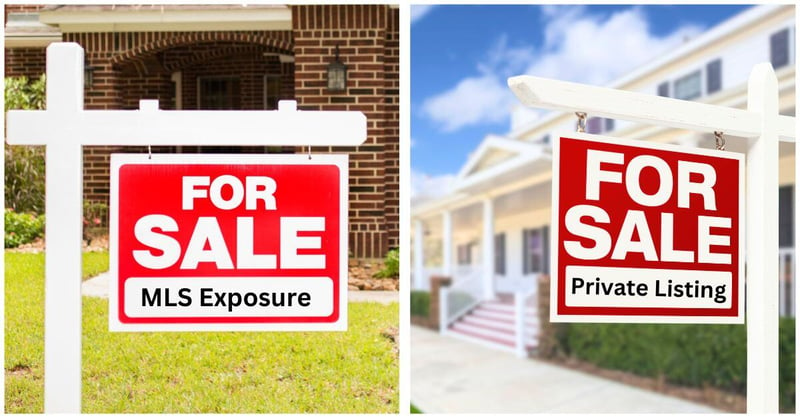
The National Association of REALTORS® (NAR) implemented the Clear Cooperation Policy (CCP) in May 2020, which mandates that listings be submitted to the Multiple Listing Service (MLS) within one business day of being publicly marketed. This policy, designed to ensure fairness and transparency, has sparked a heated debate within the real estate industry. Two influential voices in this discussion are Robert Reffkin, CEO of Compass, and James Dwiggins, CEO of NextHome. While Reffkin advocates for consumer choice and agent flexibility, Dwiggins argues that maximizing market exposure through the MLS is essential for ensuring sellers get the highest price for their homes. Recently Zillow also weighed on the side of Dwiggins calling out Fairhousing issues. Redfin's CEO also sided with Dwiggins while Anywhere's spokesperson called for changes to the policy.

Robert Reffkin's Position: Consumer Choice and Agent Flexibility

Robert Reffkin, as the CEO of Compass, opposes the Clear Cooperation Policy, emphasizing the importance of consumer choice in how homes are marketed. He believes that before the CCP, agents had greater flexibility to act in the best interest of their clients, allowing them to tailor marketing strategies according to their client's unique needs without being restricted by MLS rules.

Reffkin argues that some sellers value privacy over broad exposure, and the CCP forces these clients to market their homes publicly even when they would prefer not to. He highlights situations where privacy is a priority, such as when sellers are dealing with personal issues like illness or divorce. In such cases, Reffkin asserts that the policy compromises the agent's ability to act in the client's best interest by mandating public marketing, which may not align with the seller's preferences.

Additionally, Reffkin challenges the assumption that more exposure always results in a higher price. He points out that many clients, including home builders, have successfully sold properties off the MLS, suggesting that not every seller believes maximum exposure is essential. Reffkin argues that consumer choice should take precedence, allowing sellers to decide how much exposure their property receives and how they want their home to be marketed.

James Dwiggins' Position: Maximizing Exposure for Better Outcomes

James Dwiggins, CEO of NextHome, presents a contrasting viewpoint. He defends the Clear Cooperation Policy, arguing that its purpose is to ensure that all listings receive maximum exposure, which he contends is crucial for sellers to achieve the best price for their homes. According to Dwiggins, the MLS system levels the playing field by making listings available to the entire marketplace, benefiting both consumers and the real estate industry as a whole.

Dwiggins stresses that before the CCP, large brokerages often held back listings for internal promotion, limiting the competition that benefits sellers. By keeping listings off the MLS, these firms reduced the pool of potential buyers, often leading to lower sale prices for homeowners. Dwiggins argues that market exposure through the MLS ensures that listings reach the widest possible audience, which creates a competitive environment and drives prices up.

While Reffkin advocates for consumer choice, Dwiggins emphasizes that most sellers—around 99%, by his estimate—want to maximize the value of their home. He highlights studies showing that homes sold off-MLS can lose anywhere from 5% to 17% of their potential value compared to homes listed on the MLS. For Dwiggins, the key to protecting consumers' financial interests lies in ensuring their property is seen by as many potential buyers as possible, rather than limiting exposure for the sake of privacy or exclusivity.

Dwiggins also warns of the legal and reputational risks of eliminating the CCP. He points to previous lawsuits filed by sellers who felt misled by agents into keeping their homes off the MLS, only to discover later that they could have received a better price by listing publicly. Without the CCP, Dwiggins argues, large brokerages would revert to promoting exclusive listings internally, hurting consumers and the industry's reputation in the long run.

Comparing Consumer Choice and Market Exposure

At the core of this debate is a fundamental difference in how Reffkin and Dwiggins view the best way to serve consumers. Reffkin prioritizes consumer choice, arguing that sellers should have the flexibility to decide how their homes are marketed. He believes that forcing all listings onto the MLS, as the CCP requires, limits a seller’s ability to manage personal and financial concerns on their own terms. In Reffkin’s view, the Clear Cooperation Policy reduces the options available to both sellers and agents, particularly for those who value discretion and privacy.

On the other hand, Dwiggins focuses on ensuring that consumers get the highest price for their homes through maximum market exposure. He believes the CCP prevents large brokerages from monopolizing listings for internal gain and protects consumers by ensuring their property is marketed to the largest possible audience. For Dwiggins, the CCP is essential to safeguarding sellers' financial outcomes, as broad exposure leads to more competition and higher offers. He sees the MLS as the most effective tool for creating a fair and transparent marketplace, and while he acknowledges the policy can be improved, Dwiggins insists that its core purpose—guaranteeing market access—must remain intact.

Conclusion: Consumer Choice vs. Market Exposure

The debate over the Clear Cooperation Policy ultimately comes down to a question of how best to serve consumers: Is it more important to prioritize consumer choice, or is maximizing market exposure the best way to protect homeowners’ financial interests?

Reffkin argues that sellers should have the freedom to choose how their home is marketed, particularly when privacy or personal concerns are at play. He views the CCP as a rigid policy that limits both sellers’ and agents’ ability to navigate complex situations in a flexible manner.

Dwiggins, in contrast, contends that the true benefit to consumers lies in giving their homes maximum exposure to the marketplace, ensuring they receive the highest possible price. He argues that the CCP protects sellers by preventing exclusive, off-MLS listings that often result in lower sales prices. For Dwiggins, market exposure is critical to safeguarding consumers' financial outcomes.

As the real estate industry continues to debate the future of the Clear Cooperation Policy, the central question remains: Should the industry prioritize consumer choice or market exposure? Both perspectives highlight important considerations, but the answer will ultimately shape the future of real estate transactions and the value sellers receive from their homes.

PSAR Flood Relief Grants Aid Families After January 2024 San Diego Floods

Posted by Communications on Sep 3, 2024 12:00:00 AM

When devastating floods struck San Diego County in January 2024, hundreds of families were displaced, and many faced the uncertainty of how to cover their housing expenses. In response, the Pacific Southwest Association of REALTORS® (PSAR), in partnership with the REALTORS® Relief Foundation, launched the Flood Relief Grant Program to provide direct financial support to affected households.

Through this program, PSAR was able to distribute $190,000 in housing assistance grants, helping nearly 100 households with critical expenses such as mortgage, rent, and temporary housing. Each qualified applicant received up to $2,900 in assistance, offering much-needed stability during a time of crisis.

Community Impact

The grant program brought national disaster relief dollars directly into San Diego County. While the floods caused more than $30 million in damage and displaced more than 1,200 residents, PSAR’s program served as an immediate bridge to help families cover urgent housing costs while they awaited insurance claims, government relief, or other recovery assistance.

Families across impacted neighborhoods expressed gratitude for the program’s fast response. By easing financial pressure, the grants allowed many to remain in their homes or secure safe housing after losing so much to floodwaters.

Collaboration for Recovery

The success of this effort was made possible through collaboration:

  • The REALTORS® Relief Foundation provided more than $1 million in funding.

  • PSAR and local REALTOR® leaders facilitated outreach, application review, and disbursement of funds.

  • Community partners and media outlets helped spread the word, ensuring residents were aware of the application deadline and eligibility requirements.

This combined effort highlighted the REALTOR® community’s commitment to supporting housing stability and serving as trusted advocates beyond real estate transactions.

Lessons Learned and Next Steps

While PSAR is proud of the impact of the Flood Relief Grants, the need in our community remains far greater than any one program can solve. The experience underscored the importance of:

  • Fast mobilization of resources when disaster strikes.

  • Strong community partnerships to reach underserved neighborhoods.

  • Transparent reporting on outcomes, so members and residents understand the difference REALTORS® make locally.

A Record of Resilience

The Flood Relief Grant Program reflects PSAR’s mission: Empowering Real Estate Professionals and supporting the communities where REALTORS® live and work. Nearly 100 families received tangible help at a time when they needed it most.

As San Diego County continues its recovery, PSAR remains committed to advocating for housing stability, building stronger communities, and ensuring that REALTORS® are recognized as community leaders in times of both prosperity and crisis.


This program was made possible the the National Association of REALTOR® Relief Foundation.  To donate, please click here.  

20240127_090351sm


Topics: Government Affairs, Industry, story

Why Proposition 33 and Rent Control Harm All Californians

Posted by Richard D'Ascoli on Aug 29, 2024 3:23:11 PM

BlogBanner_Rent_Control

Understanding Rent Control and Proposition 33

Rent control policies, such as those proposed under Proposition 33, aim to limit the amount landlords can charge for rent. While these policies are often introduced to protect renters, they can lead to unintended and harmful consequences for renters, property owners, and the broader housing market. Proposition 33, in particular, seeks to expand rent control by eliminating the protections provided under the Costa-Hawkins Rental Housing Act, which currently exempts single-family homes and new construction from local rent control ordinances.

Distortion of Supply and Demand

Rent control disrupts the natural balance of housing supply and demand. By capping rents, developers and property owners lose the financial incentive to build or maintain rental properties, leading to a reduction in the overall supply of housing. As the supply decreases, demand continues to rise, particularly in high-demand areas, resulting in a housing shortage. This shortage makes it increasingly difficult for renters to find available units, driving up competition and ultimately exacerbating the very affordability issues rent control aims to address.

Impact on Single-Family Homes and Property Owners

Proposition 33 would remove the current protections for single-family homes under Costa-Hawkins, allowing local governments to impose rent control on these properties. This change would have far-reaching effects on homeowners, including retirees, service members, and others who might want to return to their homes after renting them out. These homeowners could be restricted from setting their own rental rates, limiting their ability to use or sell their properties as they see fit.

For property owners looking to sell their rental properties, Proposition 33 would further complicate matters. Under rent control, the value of these properties may decrease, limiting the pool of potential buyers. Instead of selling to first-time homebuyers or middle-class families, owners may be forced to sell to wealthy investors who can navigate the complexities of rent-controlled properties. This dynamic could further exacerbate housing inequality and reduce homeownership opportunities for many Californians.

Does Rent Control Truly Benefit the Poor?

While rent control is often marketed as a tool to help low-income renters, it does not require that applicants pass a means test to qualify for these benefits. As a result, rent-controlled units are sometimes occupied by higher-income tenants who do not need the financial assistance intended for the poor. This situation creates an unfair advantage for wealthier individuals who secure these below-market rents at the expense of property owners, who are forced to subsidize these tenants.

Moreover, wealthier individuals living in rent-controlled units are unlikely to leave, as they continue to benefit from artificially low rents. This reduces turnover and makes it more difficult for new residents, especially those from low-income backgrounds, to find affordable housing. In some cases, these individuals can even maintain their rent-controlled units while subletting them to others at higher rates, further distorting the market and benefiting those who do not need the help.

This inequity highlights a fundamental flaw in rent control policies: they do not necessarily target those most in need of housing assistance. Instead, they can provide significant benefits to those who are already financially secure, exacerbating the challenges faced by low-income renters who are unable to compete in a market with limited affordable housing options.

Landlords Targeting “Better” Tenants

Another unintended consequence of rent control is that it incentivizes landlords to be more selective about the tenants they accept. Knowing that they could be stuck with a tenant indefinitely, landlords may prioritize applicants with higher incomes, stable jobs, and strong credit histories, effectively shutting out lower-income renters. This selective process can deepen inequalities in the housing market, making it even harder for vulnerable populations to secure housing.

In some cases, landlords may even choose to convert rental units into condominiums or sell their properties to avoid the restrictions of rent control altogether. This further reduces the availability of rental housing and can contribute to gentrification, where lower-income residents are displaced from their neighborhoods.

Impact on Local Governments

The ripple effects of Proposition 33 extend to local governments as well. As property values decline due to the reduced profitability of rent-controlled properties, so too does the property tax revenue that local governments rely on to fund essential services like public safety, education, and infrastructure. In cities where rent control is widely implemented, these reductions in revenue can lead to budget shortfalls, forcing cuts to critical services that impact the entire community.

Additionally, as the rental housing market contracts, the housing shortage could worsen, leading to increased homelessness and placing further strain on government resources. Local governments may find themselves in the difficult position of having to address the unintended social consequences of rent control, from increased demand for social services to the need for more affordable housing construction, which itself may be hampered by the disincentives created by Proposition 33.

Conclusion

Proposition 33 and the expansion of rent control might seem like a solution to California’s housing crisis, but they are more likely to exacerbate existing problems. Rent control distorts the housing market by reducing supply and increasing demand, often failing to benefit the low-income renters it is supposed to help, and encourages landlords to be more selective, shutting out those most in need of affordable housing. Additionally, the policy threatens to reduce property tax revenues, which could lead to cuts in essential public services and worsen the state’s housing shortage.

Furthermore, by allowing rent control on single-family homes, Proposition 33 risks harming retirees, service members, and other homeowners who may wish to return to or sell their properties. It also limits opportunities for first-time homebuyers, favoring wealthy investors who can navigate the complexities of rent-controlled properties. The opposition from leaders like Senator Toni Atkins and Mayor Todd Gloria underscores the potential damage this proposition could do to housing development and affordability.

Moreover, rent control does not require means testing, which can lead to situations where wealthier individuals benefit from below-market rents at the expense of property owners and those who truly need affordable housing. This lack of targeting makes rent control not only ineffective but also unfair, as it can allow wealthier tenants to remain in rent-controlled units indefinitely, further reducing opportunities for low-income renters.

For these reasons, it is crucial to oppose Proposition 33. Instead of expanding rent control, California needs policies that encourage the development of more housing, improve the quality of existing rental units, and truly address the needs of low-income renters. Only by addressing the root causes of the housing crisis can we create a more stable and equitable housing market for all Californians.

Topics: Government Affairs, Industry

CMA in the San Diego Dual MLS Marketplace Post Settlement

Posted by Communications on Aug 16, 2024 4:47:10 PM

blog banner_Prperty_Comps

In San Diego’s unique real estate market, REALTORS® often must navigate information from two MLS systems: SDMLS and CRMLS. Each system manages the disclosure of sold-seller concessions differently, which can lead to confusion when pulling comparable sales (comps). Understanding how each system handles concessions is critical for accurate property evaluations.  One key takeaway is this:


BEST Practice

Once a property is sold, in both SDMLS and in CRMLS, to make your listing to be available for comparables, input the entire Concession Amount into the Concession Comment Field so agents in both MLS systems know what it is.  It is critical that agents list all concession amounts and what they were allocated towards so that other agents know what was given as a buyer concession vs a commission concession.  Find out why by reading this post.

Key Differences Between SDMLS and CRMLS when Researching Comparables Post Settlement. These Fields are available to complete after a property has sold and is being moved from pending to sold status.

SDMLS Approach:
SDMLS has specific guidelines regarding the disclosure of seller concessions. According to their Q&A on policy changes post-settlement:

“Seller-offered concessions should be mentioned in the Confidential Remarks field with the instruction to contact the listing agent for details.”

In SDMLS, agents can use the “Concessions Comments” field to input details about seller concessions. This field allows for flexibility, with comments that may include text descriptions or numeric values. For example, agents might see comments like:

    • “$2,990 for wood-destroying pest repairs”
    • “Closing costs covered by the seller”
    • “$5,700 Seller Credit”

While these comments provide valuable information, they can be inconsistent in format and detail, which may complicate property comparisons.

CRMLS Approach:
CRMLS still includes the flexible comment section and this is the field that will be shown in the SDMLS system, but CRMLS takes a different approach to reporting concessions. The CRMLS system provides a breakdown of seller concessions at the close of a transaction, with the mandatory fields categorized as follows:

    • Closing Costs (e.g., escrow and title fees)
    • Property Improvements (e.g., repairs and upgrades)
    • Financing Costs (e.g., loan origination fees, discount points)
    • Buyer Broker Fee (amount the seller paid directly to the buyer’s broker)
    • Other

This breakdown ensures that agents and their clients have a clear understanding of how concessions, were applied.

Viewing Concessions Across the Two Systems

When navigating concessions in the dual MLS marketplace, agents will see different displays depending on the MLS they are accessing.

For CRMLS subscribers, the report for CRMLS listings will include a detailed breakdown of concessions by category (circled in red.) The example below shows how these details are presented. If an SDMLS agent included a remark in the “Concessions Comments” field, those details will appear in the highlighted sections shown in yellow here:

CRMLS Paragon View (Actual PSAR listing)
concessions-2

For SDMLS users viewing CRMLS listings, the screen (below) will display the structured concession breakdown on the right side, while any SDMLS-specific remarks will be visible on the left:

SDMLS Paragon View (Same Actual PSAR listing)
sdmls concessions-1

CRMLS Paragon View (Actual SDMLS sold listing)
crmsl paragon view actual sdmls sold listing

SDMLS Paragon View (Actual SDMLS sold listing)

SDMLS Paragon View Actual SDMLS sold listing

Understanding these distinctions is essential for agents who need to pull comps from both MLS systems. Accurate comparisons require not only the ability to see the numbers but also to understand the context in which they’re reported.

Navigating the Differences

For agents working in either MLS system, it’s important to recognize how each handles concession disclosures and reporting. When pulling comps, take note of the differences between SDMLS’s more flexible comments and CRMLS’s detailed breakdown. Adjusting for these variances allows you to deliver more precise market analyses to your clients, ultimately helping them make better-informed decisions in San Diego’s dynamic real estate market.


Mourning The passing of Tracy Morgan Hollingworth

Posted by Communications on Aug 14, 2024 3:12:55 PM


TRACY MORGAN HOLLINGWORTH

PSAR GOV’T AFFAIRS DIRECTOR (1956-2024)

(Services)

The PSAR family is heartbroken at this time following the sudden passing of Tracy Morgan Hollingworth, who held PSAR’s Government Affairs Director position for the past 21 years. According to husband Andrew Hollingworth, Tracy passed away peacefully in her sleep on August 5. She was 68 at the time of her passing.

Considered the dean of real estate lobbyists in San Diego County, Tracy was greatly loved and admired. No one in San Diego had worked longer in real estate government affairs than Tracy. She was proud of her record of longevity in government affairs services among Realtors in California-based REALTOR® associations.

Tracy was more than just a colleague. She was a pillar of the community, a dedicated leader, and a true friend to many. She served on many boards and commissions in service of her community and as recently as July 23, she attended a meeting between members of the PSAR Government Affairs Committee and California State Senator Brian Jones. Over the years, her savvy political advocacy efforts contributed to the prevention of passage ofTracy-Morgan-Hollingsworth-web many state laws deemed detrimental to the best business interests of PSAR members.

Rich D’Ascoli, PSAR CEO, commented, “As a REALTOR® advocate for PSAR, Tracy was instrumental in defeating rent control in National City, a critical victory for property owners. She also played a key role in protecting private property rights in East County by helping as an opposition member to downzoning efforts. Her advocacy extended to the county level, where she worked on several land use initiatives, including the General Plan update, to ensure the interests of private property owners were represented and protected.”

PSAR member Mike Anderson, a long-time participant on the PSAR Government Affairs Committee, stated, “Tracy’s governmental updates for the GA committee were always thorough and enlightening, and she was invaluable during our GA meetings and on our annual Sacramento Legislation Day trips.”

A San Diego native, Tracy was born Jan. 2, 1956. She grew up in the East County and attended Flying Hills Elementary School in El Cajon and Cajon Valley Junior High. Her grandfather had moved with his family from Illinois to the Bostonia area of El Cajon in 1911, so her East County roots ran deep. She graduated from Santana High School in Santee. At Santana, she organized school assemblies and served as a peer counselor, confidentially assisting other students with personal problems ranging from family issues to drug addiction.

As a summer job, she worked in the Kings Canyon National Park, where she met actors Tim Conway and Harvey Korman, alums of the long-running TV show "The Carol Burnett Show", who were traveling with their families.  After summer's end, she was awarded a scholarship and attended Mount Vernon College, a women’s college in northwestern Washington, D.C., from 1976 through 1977. There, she studied international law and worked alongside professors who helped craft legislation for members of Congress. She also took a “Comparative Politics” course, for which she traveled to Rome and London and met with national lawmakers.

In 1977, Tracy landed a staff position with California U.S. Senator S.I. “Sam” Hayakawa. Tracy assisted in the drafting of legislation that helped San Diego’s tuna fishing industry stay competitive with fishing fleets in other countries. Later, while completing her bachelor’s degree in political science and economics at San Diego State University, she worked to implement those policy recommendations.

An economics professor encouraged her to join an internship program at the state Capitol in Sacramento.  While there, she earned a master’s degree from California State University, Sacramento. She spent 10 years working at the state Capitol for members of the California State Assembly, the League of California Cities, and other governmental bodies. During her time with the State Assembly, Tracy worked with key policy staff to draft legislation designed to create the California Welfare to Work Program, the first and only tax surplus rebate to state taxpayers. She also helped the California Association of REALTORS® carry a bill that expanded the C.A.R. Legal Action Fund.

Tracy met her husband Andrew "Andy" Hollingworth while both were working late hours analyzing committee bills for hearings. Before the age of PCs, the state had developed a cumbersome computer network that Andy had mastered. Andy, who was working as an advisor to four legislative committees, instructed Tracy on how to search for key bill information that showed legislators what special interest groups were supporting certain legislation and what organizations supported or opposed the legislation. Tracy and Andy dated four years before Andy proposed on one knee in the snow during a trip to Lake Tahoe.

Tracy’s work in the Legislature led to her serving 13 years with the Sacramento Association of REALTORS® (1988-2001). She then spent 21 total years serving the East San Diego County Association of REALTORS® (ESDCAR) and Pacific Southwest Association of REALTORS®  following the merger of the two associations.

In 2002, she started her own association management consulting firm. In addition to PSAR members, her clients over the years included the American Society of Landscape Architects San Diego Chapter, California Council of the American Society of Landscape Architects, East Otay Mesa Property Owners Association, California Municipal Managers Association, ACE Mentor, Urban Land Institute and several other land-use organizations.

Tracy is survived by her husband of 35 years Andrew Hollingworth, sisters Kathleen Morgan and Mary Ellen Morgan, and their 90-year-old mother Diane Morgan. Andrew stated that he was Tracy’s confidant as well as business partner. “We collaborated on everything, Tracy was a wonderful spouse and partner. She was the smartest person I know of in terms of land use real estate policy and politics. She has mentored many real estate lobbyists and elected officials. Tracy lived and breathed real estate.” In March of this year, Tracy and Andrew participated in a formal marriage recommitment ceremony officiated by County Assessor-Recorder-County Clerk Jordan Z. Marks.

“Tracy was fiercely loyal to her friends in good times and bad, and friendly and helpful to everyone,” said Andrew. “Once you were her friend you remained so for life.”


Services 

The family has planned the following public events to celebrate Tracy’s life:

A viewing will be held from 9 a.m. to 1 p.m., Monday, Aug 26, at Glen Abbey Mortuary’s La Jolla Chapel facility in Pacific Beach, located at 4710 Cass St., at the corner of Cass and Diamond Streets.

Burial and prayers will follow at 2 p.m. at Glen Abbey Memorial Park, located at 3838 Bonita Road, Bonita.

A celebration of life ceremony will be held from 12 p.m. to 1 p.m., Saturday, Sept. 7, at La Jolla Presbyterian Church sanctuary, located at  7715 Draper Ave., La Jolla. The parking garage entrance is on Kline Street. A reception will follow in the church Fellowship Hall located across the courtyard.

For more information about these public events, contact Kathleen Morgan at katinparis03@yahoo.com.

PSAR expresses our sincere condolences to the Hollingworth family at this time. Cards and notes can be mailed to the PSAR offices.

Topics: Announcements

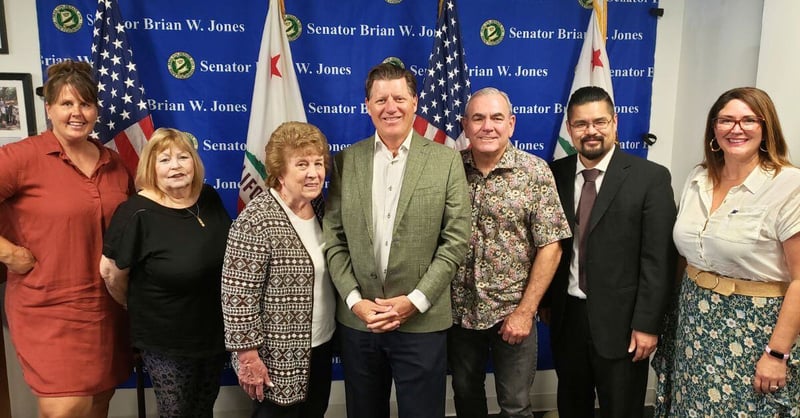
PSAR Government Affairs Committee Meets with Senator Brian Jones

Posted by Rick Griffin on Jul 31, 2024 9:00:00 AM

Facebook_ Gov Affairs with Senator Jones-1

All PSAR members should be proud of how PSAR Government Affairs Committee members have been actively advocating for homeownership during meetings with elected officials from throughout San Diego.

Recently, PSAR members met with California State Senator Brian Jones, who has represented the 40th Senate District since 2018. He is currently serving as Senate Minority Leader.

The major topic discussed at the meeting with Jones is the housing shortage. High home prices and mortgage rates have created a chilling effect on the housing market, frustrating aspiring first-time buyers and homeowners looking to move. Adding to the misery, the low housing supply has kept prices up, even as elevated borrowing fees bite into purchasing power and affect affordability. 

Also, prospective sellers are deterred over concerns about the mortgage rate they would incur with their next home, creating a “lock-in effect” that constrains the market. The lock-in effect occurs when homeowners who secured ultra-cheap mortgages when interest rates were low now feel trapped in their current property and reluctant to relocate, thus, limiting the number of existing homes available for sale.

Sen. Jones told PSAR members he believes there are ways to increase the inventory of single-family homes to first-time buyers by making it easier for older homeowners looking to downsize.

In addition, PSAR members heard Jones's request for the Association’s assistance with researching San Diego County homeowners, ages 55 and older, who might be interested in downsizing.

Jones said he believes more homeowners would be receptive to relocating to smaller homes, giving more options to first-time buyers, if benefits were available that still offered attractive living amenities.

One idea is to examine the incentives currently available for subsidized rentals and then apply those same incentives toward the creation of entry-level ownership housing. Another idea is to make it easier for developers to build entry-level homes by offering the same programs that benefit for-profit and non-profit builders of rental housing.

Overall, PSAR members described the meeting with Jones as “productive” and “enlightening.” PSAR members thanked the Senator for his continued partnership in looking for solutions to the housing shortage. 

The 40th California State Senate District includes more than 1 million residents of East and North San Diego County. The 40th Senate District includes the cities of Escondido, Poway, San Marcos, Santee and San Diego City communities of Carmel Mountain Ranch, Mira Mesa, Rancho Bernardo, Rancho Peñasquitos, Scripps Ranch, Sorrento Valley and University City, along with the San Diego County unincorporated communities of 4S Ranch, Alpine, Bonsall, Fallbrook, Lakeside, Pine Valley, Rainbow, Ramona and Valley Center.

Jones grew up in the 40th District. He attended Santee Elementary, Cajon Park Middle School, and Santana High School, and earned a bachelor’s degree in business administration. Jones served eight years on the Santee City Council followed by three terms (2010-2016) in the State Assembly before his first election to the Senate in 2018. PSAR endorsed Jones in his 2022 reelection bid.

Topics: Announcements, Leadership

"By failing to prepare, you are preparing to fail." – Benjamin Franklin

Posted by PSAR Communication on Jul 26, 2024 11:00:00 AM

benjamin franklin in preparation

C.A.R. UPDATES   |   NAR UPDATES   | CRMLS UPDATES

Be prepared for major changes in Real Estate transactions and buyer representation that roll out this summer.
Updated July 31st, 2024.

Why will the Practice Change on August 17, 2024?

PSAR, CAR, and NAR offer educational resources to Realtors that target their need to quickly learn about policy and procedural changes and how to conduct business in the real estate marketplace after August 17 of this year. (Note: NAR or CAR login is required to access many of these member benefits)

The post-settlement contracts are finalized and Michael Shenkman is conducting a series of classes to explain the use of the new contracts from both sides of a transaction.
In this three-part series, Mr. Shenkman explains how the post-settlement changes integrate with the form groups (BRBC, RLA, RPA) in different stages of the real estate process.  Classes will be held at PSAR's Central Office.  August 13th: BRBC   |  August 15th: RLA  | August 20th: RPA


Get up to speed on C.A.R. forms updates and how to utilize the revised versions in your business transactions.

CAR Town Hall Meetings (Recording Available)

CAR Form Training Free for members use code FORMS49   (Register Here)

C.A.R. New Forms & Business Practice Resources (Updated August 9, 2024)

  • Forms and resources
  • News and Statements
  • Legal Presentations & Townhalls
  • Courses & Training Video
  • Designated Email Address for Forms Questions: july2024forms@car.org

July 10, 2024 Forms release List of new & revised FORMS RELEASE: 
(note: items with an asterisk indicate new forms)

    • Broker Compensation Advisory (BCA)
    • Buyer Financial and Personal Information (BFPI)*
    • Buyer Identification of Preferences and Priorities (BIPP)*
    • Buyer Material Issues for a Specific Property (BMI-SP)*
    • Buyer Representation and Broker Compensation Agreement (BRBC)
    • Cancellation of Buyer Representation (COBR)
    • Modification of Terms – Buyer Representation Agreement (MT-BR)*
    • Modification of Terms – Listing Agreement (MT-LA)*
    • Multiple Listing Service Addendum (MLS)*
    • Notice of Broker Involved Properties (NBIP)
    • Open House Visitor Non-Agency Disclosure and Sign-In (OHNA-SI)*
    • Property Showing and Representation Agreement (PSRA)*
    • Residential Listing Agreement (RLA)
    • Residential Purchase Agreement (RPA)
    • Seller Payment to Buyer’s Broker (SPBB)
    • Tenant Representation and Broker Compensation Agreement (TRBC)*
    • Other listing agreements and purchase agreements have also been conformed to the changes to the RLA and RPA, respectively.

Latest updates from NAR

Fine-tune your knowledge and skill set by attending a FREE Accredited Buyer's Representative (ABR) class.

If you missed the live PSAR l ABR class, the NAR offers two free alternatives:
 

      • Schedule a live instructor-led online ABR class. Select <ABR Designation> as the course title, and <Instructor Led> as the Delivery Format here. This usually paid-for class is FREE until the end of 2024; the cost returns to $110 in 2025.

      • Take a Free self-paced 12-hour online course.  Access it here.

Latest updates from CRMLS

  • CRMLS resources, policy changes, Concessions Field, and a video from the CRMLS General Counsel: More info.
  • Compensation is to be removed from CRMLS on August 13th.
  • A summary of information about the NEW CRMLS Concessions Field from PSAR is here.
  • CiP Field
    • As of 7/30, the Concessions in Price (CiP) fields containing the ($) and (%) options have been removed from all CRMLS systems. The only field that remains is the "Seller Consider Concessions? Y/N", and this field will continue to be an option for listing input going forward.
  • SUPER IMPORTANT FAQ
    • It’s a one-stop shop for tying a lot of the floating pieces together. Some scenarios are included! HERE 

Live Webinar with Art Carter & Ed Zorn - CRMLS Industry Updates & MLS Changes
Join CRMLS CEO Art Carter and VP & General Counsel Ed Zorn for a special update about the new world of real estate. Registration is free but space is limited, so sign up now!


  • Tuesday, August 20th | 2:30pm-3:30pm | REGISTER  

These topics and more:
-Important rule changes effective 8/13
-New violations and fines
-Use of new/revised C.A.R. forms
-How to navigate common transaction scenarios 


Hermila Cesena - PSAR member remembered

Posted by Communications on Jul 24, 2024 5:30:25 PM

Hermila Cesena

Hermila "Mila" Cesena was born on April 7, 1943, in Mazatlán, Mexico, to Maria Consuelo Alvarado and Jesus Raymundo Galdeano. She was the mother-in-law of PSAR Committee member Juliette Montoya-Cesena, was an agent with Berkshire Hathaway, and was a member of PSAR since 1978.


She grew up and attended school in Mazatlán before moving to Tijuana at age 15. There, she met her future husband, Jesus Cesena, and they remained married for 61 years. Together, they had two sons, Jesus and Carlos, and also raised Mila’s younger brothers, Alvin, William, and Edward, after their mother passed away from lupus. She joined PSAR in 1978 and worked with Berkshire Hathaway.

In the early 1970s, Mila earned her real estate license.  Real estate became her passion and lifelong career. She was dedicated to helping her clients achieve homeownership, counseling them to pay off their home mortgages as soon as possible. She cherished hearing from clients who had achieved the goal of complete homeownership. 

Mila had a vibrant personality and was known as the life of the party, brightening the mood of those around her. She loved to dance and create a fun environment for everyone, going out of her way to raise the spirits of those who seemed down.

Family was very important to Mila. She enjoyed family vacations and cherished time spent with her loved ones. Fond family memories include summer vacations to Mexico with her sister-in-law and her boys.   Mila also found peace in long walks on the beach, taking in the sights and sounds of the ocean that imparted a sense of tranquility and peace of mind.


Hermila Cesena's mass will be held on 7/26/24 at
Corpus Christi Catholic Church, Bonita at 12 noon
Followed by interment at Glen Abbey Memorial at 2:00 PM.


Topics: Announcements