New resources and alerts from the DRE

Posted by Communications on Jan 6, 2026 4:38:25 PM

3 updates from the DREThe California Department of Real Estate (DRE) recently released several critical updates that every REALTOR® should review to start the new year informed and protected. From annual performance data to urgent fraud warnings, here is what you need to know.

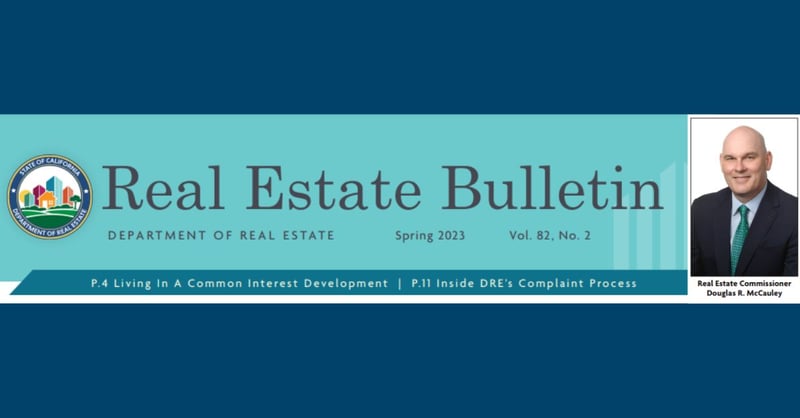
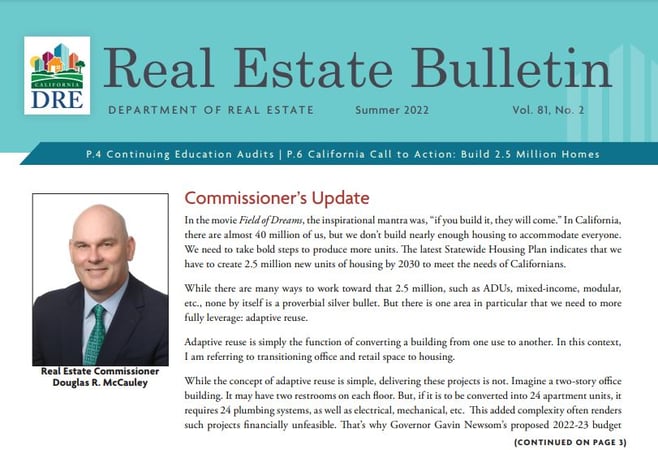
Fall 2025 bulletin highlights (Released December 19th)

The Fall 2025 Real Estate Bulletin provides a comprehensive look at the DRE's activities over the past fiscal year.

Notable statistics from the report include:

  • Audit findings: The DRE closed 347 audits, uncovering trust fund shortages totaling more than $15 million. Property management activities accounted for 89% of these shortages.
    +2
  • Enforcement actions: The department received 5,542 complaints and referred 909 cases for legal action. During this period, the DRE revoked 206 licenses and suspended 78 others.
    +2
  • Licensing trends: The total license population now stands at 424,188, a slight 2% decrease from the previous year.
  • Consumer recovery: The Consumer Recovery Account paid out $379,495 to victims of real estate fraud.

Read Bulletin Here


Urgent advisory: vacant land scams

On December 30, 2025, the DRE issued a serious warning regarding bad actors posing as owners of vacant land. These scammers target REALTORS® to help sell property they do not own, often using fake identification.

Red flags to watch for:

  • Requests to list property significantly below market value.
  • Requirements for "no sign" on the property. Strong preference for cash buyers and quick closings.
  • Refusal to meet in person or via video call.
  • Insistence on using a specific, outside notary.
  • How to protect yourself and your members: Verify the owner's identity by requesting a recent tax or utility bill.
  • Conduct independent online searches to find the owner's contact information and send listing documents to the address of record via certified mail.

Read the full advisory here


2026 Real Estate Law update

The 2026 edition of the Real Estate Law is now live on the DRE website. This update incorporates all legislative changes effective as of January 1, 2026. We encourage all members to download the latest version to ensure full compliance with new regulations, including those involving buyer-broker agreements and digital image disclosures.

Stay vigilant and continue to provide the professional service our community expects from a REALTOR®.

See the updated Real Estate Law Information Here


California Department of Real Estate Takes Disciplinary Action Against Lance McHarg and Real Estate Education Provider Real Estate Trainers, Inc.


Topics: Brokers/Managers, Industry

PSAR MEMBERS presented with C.A.R. Honorary Member-for-Life

Posted by Rick Griffin on Nov 6, 2025 9:56:44 AM

California Association of REALTORS®            Pacific Southwest Association of REALTORS®

Honorary Member-for-Life


PSAR is proud to recognize 36 members who have been honored as Honorary Members for Life by both the Pacific Southwest Association of REALTORS® and the California Association of REALTORS® (C.A.R.).

These distinguished members have each demonstrated over 25 years of dedication, integrity, and professionalism in real estate and have reached the age of 75 or older.

The 36 members include:

Violeta Barcas Greg Hall Hector Padilla
Rodger Barwick Young Hall Kathie Pelletier
Elba Beas Rick Hoffman Alfredo Perez
Rita Blackwood Jose King Sang Pham
Bob Carlseen Bonnie Kipperman Andrew Pheasant
Kenneth Colwell Christopher Lewis Pat Russiano
Mitchell Compton Randy Lipsey, Sr. Marilyn Schweer
Joseph Garzanelli Carlos Lopez Robert Smith
Lorenza Gastelum Manuel Lopez Carol Snyder
Alberto Gonzalez Mark Mendillo Gary Stous
Barbara Hahn Dale Nicholas Martin Weinstein
Paul Hahn Josefina Ortiz Gail Wilson

Congratulations to our honored members for their long-term commitment to excellence and their outstanding service to clients and the community.

As part of this recognition, the 2025 group of new honorary members will receive a waiver of PSAR and C.A.R. dues beginning in 2026. This waiver will continue for as long as they remain eligible REALTOR® members or until retirement from the profession.

Members who believe they may qualify for this honor are encouraged to contact PSAR. Please ensure your correct birthdate is entered in your membership record. An accurate birthdate is the trigger used to identify future receipients.

Applications are available on the C.A.R.website and using THIS FORM

For additional information, send an email to hmfl@car.org.

_______________________________________

PSAR's mission is to empower Realtors.

Since 1928, the Pacific Southwest Association of REALTORS® has played a significant role in shaping the history, growth, and development of the Real Estate industry in San Diego County. 

Topics: Education, Brokers/Managers, Leadership, Government Affairs, Market Information, Industry

DRE Warns Californians of Real Estate and Mortgage Scams

Posted by PSAR Communication on Nov 3, 2025 4:09:08 PM

California’s Department of Real Estate (DRE) is urging consumers to stay alert for an increase in real estate and mortgage scams targeting homebuyers, homeowners, and investors across the state.


Criminals are using increasingly sophisticated tactics, including email hacks, forged deeds, and mortgage fraud, to exploit the complexity of real estate transactions and California’s high property values. Even honest individuals can unknowingly become involved in these crimes if they fail to recognize warning signs.

The DRE outlines nine of the most common scams and provides clear steps to help consumers protect themselves. Homebuyers and property owners are encouraged to verify credentials, stay cautious during transactions, and report suspicious activity immediately.

San Diego County residents can also take an extra step to safeguard their property. The County Assessor/Recorder/County Clerk provides a free Owner Alert program that notifies property owners of any changes to property records.  It is an effective way to detect potential deed or title fraud early. Learn more and register here: Owner Alert

Read the full article from the DRE to learn how to protect yourself and your clients: Link to California DRE article


DRE  real estate fraud


Topics: Announcements, Brokers/Managers, Government Affairs, Industry

Navigating: AB 723 - New Photo Disclosure Rules

Posted by Communications on Oct 20, 2025 5:23:21 PM

A new law, Assembly Bill 723 (AB 723),  will soon change how real estate professionals advertise properties using digitally altered images. This bill, which adds Section 10140.8 to the Business and Professions Code, was a key focus for C.A.R. (Best Practices Here)

From the start, the California Association of Realtors (CAR) was deeply engaged on this issue. CAR opposed the initial bill, arguing that it was duplicative of existing false advertising laws and created "unnecessary liability and risks unintended consequences" for members.

CAR's advocacy focused on two key problem areas:

  1. Vague Definitions: The initial language risked penalizing agents for "routine, good-faith edits" like decluttering or minor corrections, which are standard industry practices. CAR pushed for a clear definition that targeted only material changes.

  2. Third-Party Liability: The bill could have made licensees liable for images scraped by or posted on third-party websites that they do not control.

CAR's voice was partially agreed with. The final version of the bill includes amendments that "attempt to address opposition concerns". Specifically, the law now clearly exempts common photo-editing techniques and limits an agent's compliance burden to websites they directly control.

Here is a clear breakdown of the new law as passed best practices for compliance.

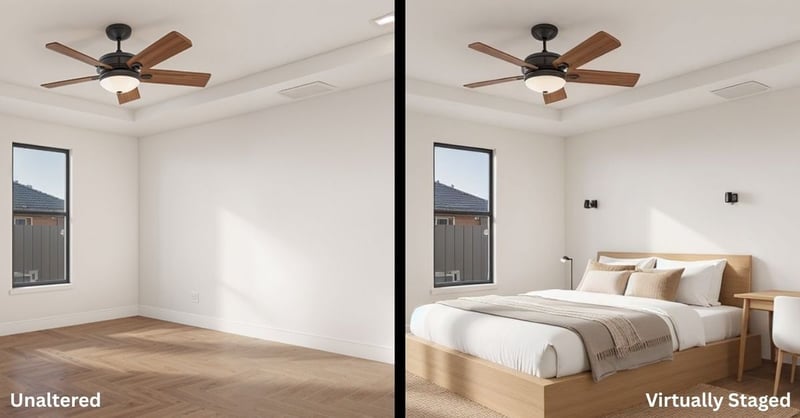
Photo - Virtually Unaltered   Photo - Virtually Staged

The Heart of the Law: What's "Altered" and What Isn't?

This law is not intended to penalize professional photography. Its goal is to stop deceptive alterations that mislead consumers about the physical reality of a property. The law itself, in BPC § 10140.8, creates a, two-part definition:

1. What IS an "Altered Image" (Disclosure Required)

A disclosure is required if an image is "altered through the use of photo editing software or artificial intelligence to add, remove, or change elements" of the real property.

This includes, but is not limited to, changes to:

  • Furniture, appliances, flooring, and walls

  • Fixtures, paint color, hardscape, and landscape

  • Elements "outside of, or visible from, the property," such as streetlights, utility poles, views through windows, and neighboring properties

  • This also includes "virtual staging" where furniture or other physical attributes are digitally added to a room.

2. What IS NOT an "Altered Image" (NO Disclosure Needed)

This is the key clarification CAR successfully lobbied for. You do not need a disclosure for "common photo editing adjustments" that "do not change the condition" or "representation" of the real property.

The law explicitly exempts:

  • Lighting

  • Sharpening

  • White balance

  • Color correction

  • Angle

  • Straightening

  • Cropping

  • Exposure

The Rule: You can make the photo look better (brighter, crisper, more true-to-life). You cannot make the property look different (new grass, no power lines, different-colored cabinets).

Disclosure Duties: How to Comply

If you use an image that meets the definition of "digitally altered," you must do the following:

1. For ALL Advertising (Print or Online): You must include a "reasonably conspicuous statement" on or next to the image disclosing that it has been altered.

2. For PRINT Advertising (Flyers, Mailers, etc.): In addition to the disclosure statement, you must also provide:

  • "a link to a publicly accessible internet website, URL, or QR code that includes, and clearly identifies, the original, unaltered image".

3. For ONLINE Advertising (MLS, Website, etc.): The law provides a more direct compliance path for websites "over which the real estate broker or salesperson... has control". You have two options:

  • Option A: Follow the print rule (disclosure statement + link/QR code).

  • Option B: Simply "include the unaltered version of the picture" in the posting itself.


Best Practices for Easy Compliance (Check with your Broker for Broker Specific Guidance)  CRMLS is currently evaluating this new law.

This law goes into effect on January 1st, 2026

Here is a straightforward action plan (Check with your Broker, for Broker specific rules:)

  • For Print Ads:

    • Create a single, public webpage or photo gallery (like on a brokerage site or a cloud service) with all the original photos for that listing.

    • Generate a single QR code that links to that gallery.

    • On any altered photo in a flyer, add the text: "Image has been digitally altered. Scan QR code for original photos."

  • For Online Ads (The Easiest Way):

    • When uploading to the MLS or a website that yor firm has control over, simply upload both versions of the photo.

    • Use the photo caption to label them clearly. This satisfies all requirements.

    • Altered Photo Caption: "Virtually Staged" or "Digitally Altered"

    • Original Photo Caption: "Original Photo - Unaltered"

By posting both labeled photos in the same gallery, you are being "reasonably conspicuous" and are "includ[ing] the unaltered version", placing you in full compliance.

Did you know?  PSAR MLS subscribers receive 30 FREE photo edits per month with REimagineHome.  Communicate your vision and bring more value to your listing. Watch a quick video overview, or get started with this helpful guide.


Why this was pushed for: Trust and Transparency

The Consumer Federation of California pushed for this law to protect consumers from being "misled" and to give them a "true picture" of the property.

They said "Today, with the advancement of technology these tricks are easier than ever. But consumers are far too often misled by such images, only to waste their valuable time and effort when they actually see the property in person. To many consumers this feels like a bait and switch tactic, and we would argue that in some cases this is an unfair business practice."

Find C.A.R. information regarding new laws for 2026 here.

Here are the topic headings listed on the “2026 New Laws” chart by California Association of REALTORS®. You can view full descriptions and links here: 

  • Advertising: Digitally-Altered Images

  • Closed-loop payment system: Broker-provided form of payment accepted by vendor or referral source

  • Data-broker: Broker prohibition on selling consumer personal information

  • Energy: Building decarbonization: Prepaid charge disclosure

  • Energy: Solar: Fire-resistant building materials; residential roofing permits

  • Fire safety: Detached accessory dwelling units: Home hardening & defensible space requirement

  • Housing element: Back-of-the-bill sale of certain homes built after wildfires — contractor disclosures and licensing

  • Liquefied petroleum gas (LPG): Ventura County ordinance: Required LPG leak-event inspector

  • Manufactured housing: Factory-built home network connection disclosure

  • Nudity: Sexually-explicit or pornographic images on rental listings prohibited

  • Privacy: Tenant property owner access agreements: Keys/pads access disclosure; use of biometric or facial recognition prohibited

  • Private works construction: Claim resolution process for contracts with owner by contractor/subcontractor

  • Real property transactions: County of Los Angeles – Wildfires: Unsolicited offers of purchase following disaster-declared homes

  • Real property transactions: Preapproved plans for single-family and multifamily housing — local agency program

  • Real-estate brokerage: Broker online advertising: Language preference for consumers; certain disclosures

  • Renters: Rent caps and anti-demolition protections for specified units in transit-oriented and housing-forward jurisdictions

  • Tax credits: Fire Safe Home Tax Credits Act (for home-hardening & vegetation management)


Disclaimer: This blog post provides general information about AB 723 and is not intended as legal advice. For specific legal guidance regarding your obligations under Business and Professions Code Section 10140.8, please consult with your brokerage's legal counsel.

Topics: Education, Brokers/Managers, Government Affairs, Technology, Industry

Announcing: PSAR’s Education Employee Insurance Grant: Practical Assistance from REALTORS®

Posted by Communications on Oct 3, 2025 9:53:39 AM

free insurance for 1st time buyers

The Issue

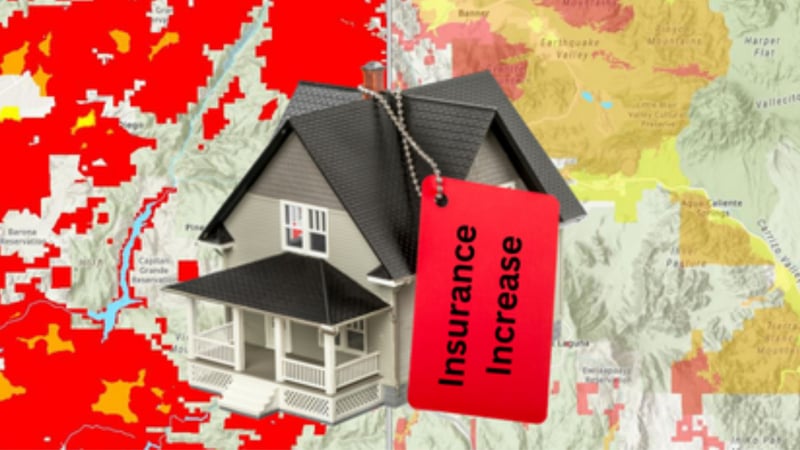
Homeowners' insurance costs in California are climbing. In San Diego, many buyers are seeing double-digit renewal increases. For first-time buyers, these added costs can derail closings or, at a minimum, strain budgets. The impact is particularly acute for local education employees, whose salaries often lag the region’s cost of living.

FAQ at the bottom of this page.

     Grant Application    

The Solution

The Education Employee Insurance Grant provides up to $2,500 per eligible first-time homebuyer employed as an education employee in San Diego County. Funds offset homeowners' insurance during the first two years of ownership, reducing a key barrier to closing and early retention.

Why This Matters to REALTORS®

  • A reason to initiate new conversations within the education community
  • Addresses a real affordability hurdle that stalls transactions
  • Highlights the insurance crisis in California
  • An opportunity to build long-term loyalty by supporting clients beyond closing
  • Demonstrates REALTOR® leadership in mitigating a pain point for local homebuyers

How REALTORS® and Education Employees Participate

  • Who applies: California REALTOR® submits on the buyer’s behalf.  Only transactions with a California REALTOR® are eligible. 
  • Who Benefits: Education Employees include K–12 public school teachers, school administrators, classified employees, and staff of public charter, district, or county schools. 
  • When: Applications accepted for homes that closed on or after November 1st on November 1, 2025 – October 31, 2026, or until funds are fully dispersed
  • What’s needed: Closing statement, proof of education-employee employment, insurance declarations, and a first-time homebuyer affidavit.
  • Process: Submit the complete package to grants@psar.org. PSAR reviews within 10 business days and notifies the REALTOR® & Buyer of the decision. Checks will be mailed to the buyer's address as listed on the application.
  • REALTORS® are limited to two approved grants.

Helping education employees into homeownership strengthens ties with schools, families, and neighborhoods. This grant gives REALTORS® a clear, service-driven way to remove a rising cost barrier and deepen community connections.
                      

Flyer for clients

PDF Download Icon w flyer-2

Reel to market to clients

Reel to market to REALTORS


A portion of this program is funded by the C.A.R. Housing Affordability Fund.  To learn more about this fund,   or to donate, follow this link100% of your donation goes directly into solving the housing crisis in California. REALTORS are also encouraged to contribute during dues billing.

2014-HAF-Logo

Frequently asked questions

What is the Educator Insurance Grant?
Who qualifies as an “educator”?
Who can apply for the grant?
Who reviews and approves the applications?
Who can REALTORS® contact with questions?

Who can homebuyers contact with questions?
When is the application period?
When must the home have been sold?
What are the buyer’s eligibility requirements?
How much assistance is available?
 How does the process work?
How many grants can a REALTOR® submit?
How does this empower REALTORS®?
What documentation is required?
Why did PSAR choose to focus this grant program on educators?

More Information

REALTORS® For questions, visit www.psar.org/grants or email grants@psar.org.
Media inquiries: ceo@psar.org (copy support@psar.org)
Buyers, please ask your REALTOR®


Topics: Brokers/Managers, Government Affairs, Marketing, PSAR Benefits, Industry

5 Reasons REALTORS® Shouldn’t Skip the DRE Summer 2025 Bulletin

Posted by Communications on Sep 4, 2025 7:53:52 PM

The California Department of Real Estate (DRE) has released its Summer 2025 Bulletin, and it’s packed with updates that every REALTOR® should see firsthand. If you think you can skip it, here are five reasons why opening the Bulletin is worth your time.
1. Mentorship Opportunities That Build Careers

The Bulletin highlights how mentorship is changing the way new agents enter the business. Want to know how a Sacramento mentorship program helps students close their first deal within months? The details are in the Bulletin.

2. Compliance Citations You Can’t Afford to Ignore

Minor mistakes—like a missing license disclosure or failing to report an address change—can now lead to fines of up to $2,500. The Bulletin explains exactly what triggers a citation and how to avoid one.

5 Reasons REALTORS® Shouldn’t Skip the DRE Summer 2025 Bulletin” Compliance • Mentorship • Trust Funds • Reporting • Enforcement

3. Trust Fund Account Rules Clarified

Who can sign on a trust account? Can property owners be added? The Bulletin clears up common misunderstandings that could expose brokers to liability.

4. Mortgage Loan Reporting Deadlines

If you handle mortgage loans, the DRE has new reminders on how and when to file your Business Activity Report. The Bulletin also explains how to troubleshoot filing issues.

5. A New Voice in Enforcement

Meet Shannan West, the new Assistant Commissioner for Enforcement. She lays out her vision for compliance and what REALTORS® can expect moving forward.


Why You Should Read the Full Bulletin

This blog only scratches the surface. The full Summer 2025 DRE Bulletin includes compliance guidance, reminders, and updates directly from the Commissioner’s desk. Reading it now could help you:

  • Avoid costly fines and violations

  • Protect your license and your business

  • Stay ahead of industry changes that affect REALTORS® every day

Read the full Summer 2025 DRE Bulletin here.

Don’t wait until a citation or compliance issue forces you to catch up. Stay informed, stay compliant, and stay ahead by reading the Bulletin today.

Topics: Education, Announcements, Brokers/Managers, Industry

Rayse: Aligning client expectations with agent expertise  (FREE*)

Posted by PSAR Communication on Aug 29, 2025 2:42:33 PM

blog banner_Rayse

TODAY: A Powerful New Productivity Tool for All CRMLS Agents (FREE for Subscribers!)

By popular demand, Rayse, the leading app for tracking all the value you bring to your clients’ real estate journeys, is now available for all CRMLS users to use at no additional cost.

Providing your clients with a comprehensive overview of everything you do for them, big or small, is an effective way to communicate the diverse value you deliver. From the initial meeting all the way through close, every action taken is logged in real time, Rayse generates agendas, timelines, and records to demystify the representation process, driving a new, more transparent level of client relations.

And that’s just the tip of the Rayse iceberg!  It also has tools for creating presentations, collaboration, and more.

Access Rayse via your REcore dashboard.


How to access Rayse:

Step 1

STEP 1

Login to your REcore dashboard and select the "Manage Apps" button on the right.

Step 2

STEP 2

Navigate to the "Core Products" section, then select the "Rayse" tile.


Step 3

STEP 3

From there, you’ll be directed to the Rayse registration page.


* Free for PSAR subscribers of CRMLS

Topics: Industry

Stay Informed: DRE Highlights Common Real Estate Violations

Posted by PSAR Communication on Aug 28, 2025 9:38:48 AM

DRE Highlights Common Real Estate Violations

The California Department of Real Estate (DRE) recently released a Consumer Alert outlining the most common enforcement violations and how to prevent them. These reminders are critical for REALTORS® to protect their clients, their businesses, and their licenses.

The DRE identified six key areas where violations most often occur:

  • Trust Fund Handling & Record Keeping – Commingling funds or failing to reconcile accounts can lead to serious penalties.
  • Failure to Supervise – Brokers must ensure proper oversight of all licensed and unlicensed activities.
  • Unlicensed Activity – Only properly credentialed individuals may perform licensed real estate activities.
  • Misrepresentation – Failing to disclose or providing inaccurate information puts both consumers and licenses at risk.
  • Criminal Convictions – Licensees must report certain convictions or disciplinary actions within 30 days.
  • Advertising & Team Names – Ads must include proper disclosures, license numbers, and broker association.

What this means for REALTORS®:
Maintaining compliance requires diligence in record-keeping, transparency in communications, strong supervision practices, and careful attention to advertising rules.

PSAR encourages all members to read the full DRE Consumer Alert to stay current and avoid costly mistakes.

Read the full alert here: DRE Consumer Alert – August 26, 2025

Topics: Industry

California Buyer-Broker Agreements: DRE Bulletin Adds to the Maze

Posted by Richard D'Ascoli on Nov 15, 2024 4:38:12 PM

California Buyer-Broker Agreements: DRE Bulletin Adds to the Maze

The real estate industry is facing significant changes to buyer-representation, and PSAR members need to stay informed. With the recent Sitzer-Burnett settlement, the passage of California’s AB 2992, and NOW a newly released California Department of Real Estate (DRE) bulletin, REALTORS® are navigating uncharted territory. These updates reflect an ongoing evolution in the industry, but inconsistencies between them may create challenges for REALTORS® working to remain compliant.

C.A.R. Legal is currently reviewing these documents in detail and will likely reach out to the DRE for clarification regarding the bulletin. REALTORS® can expect further guidance as these details are analyzed more thoroughly.

This blog is a first look at how these changes align—or don’t. While this is not a definitive legal analysis, it highlights important areas to consider.


Key Inconsistencies REALTORS® Need to Understand

1. Timing of Agreement Execution

  • Choose: Sitzer-Burnett Settlement: REALTORS® and MLS subscribers must secure a signed buyer-broker agreement before touring properties.

  • AB 2992: Allows the agreement to be signed as late as the execution of a purchase offer.

  • DRE Bulletin: Reflects AB 2992’s timing, which is less stringent than the settlement.
    Impact: REALTORS® may face conflicting guidance depending on whether they are complying with AB 2992, the settlement, or MLS rules.

2. Agreement Expiration

  • Choose: AB 2992: Limits agreements to a maximum of three months.

  • Sitzer-Burnett Settlement: Does not specify a duration but requires clear terms.

  • DRE Bulletin: Does not mention expiration limits.
    Impact: REALTORS® could face compliance issues if agreements extend beyond three months under California law, even if not restricted under the settlement.

3. Compensation Negotiation and Disclosure

  • Choose: Sitzer-Burnett Settlement: Caps compensation at the agreed amount and prohibits exceeding it from any source.

  • AB 2992: Allows buyers to negotiate seller concessions to cover agent fees but does not impose a cap.

  • DRE Bulletin: Discusses compensation but lacks clarity on handling caps or seller concessions.
    Impact: REALTORS® may inadvertently violate settlement terms by exceeding the agreed-upon compensation if following only state law or the bulletin.

4. Scope of Applicability

  • Choose: Sitzer-Burnett Settlement: Applies to all REALTORS® and covered MLS participants.

  • AB 2992: Broadens applicability to all California buyer’s agents, regardless of MLS or REALTOR® status.

  • DRE Bulletin: Suggests universal applicability but does not distinguish between REALTORS® and non-REALTORS®.
    Impact: REALTORS® operating outside MLS systems may face uncertainty about compliance standards.

5. Content of Agreements

  • Choose: AB 2992: Mandates detailed agreements specifying services, compensation, payment timing, and an expiration date.

  • Sitzer-Burnett Settlement: Requires clear compensation disclosure but does not specify other elements.

  • DRE Bulletin: Mentions transparency but omits critical details about mandatory agreement elements.
    Impact: REALTORS® risk non-compliance if agreements lack required elements under AB 2992.


First Look Recommendations for REALTORS®

  1. All Association members who are REALTORS(s) and all MLS members must abide by the terms of the settlement, even if AB2992 is less restrictive. Consult Your Broker: Brokers are a key resource in clarifying compliance with these changes

  2. Utilize the C.A.R. Legal Hotline: REALTORS® should seek professional guidance on navigating the complexities of overlapping requirements.

  3. Adopt a Conservative Approach:

    • Execute agreements before property tours, consistent with the settlement.

    • Ensure agreements meet AB 2992’s requirements, including the three-month expiration limit.

    • Disclose compensation clearly and avoid exceeding agreed-upon amounts.


What’s Next?

The DRE bulletin is brand new, and this is PSAR’s first analysis of its potential implications. While C.A.R. attorneys will undoubtedly provide a more detailed review, it’s critical for REALTORS® to begin understanding these changes now. Taking a proactive and cautious approach will help REALTORS® avoid missteps and serve clients effectively during this transitional period.

PSAR is here to support its members through these changes. Stay tuned for updates and additional resources as more information becomes available.

Topics: Brokers/Managers, Industry

PSAR Flood Relief Grants Aid Families After January 2024 San Diego Floods

Posted by Communications on Sep 3, 2024 12:00:00 AM

When devastating floods struck San Diego County in January 2024, hundreds of families were displaced, and many faced the uncertainty of how to cover their housing expenses. In response, the Pacific Southwest Association of REALTORS® (PSAR), in partnership with the REALTORS® Relief Foundation, launched the Flood Relief Grant Program to provide direct financial support to affected households.

Through this program, PSAR was able to distribute $190,000 in housing assistance grants, helping nearly 100 households with critical expenses such as mortgage, rent, and temporary housing. Each qualified applicant received up to $2,900 in assistance, offering much-needed stability during a time of crisis.

Community Impact

The grant program brought national disaster relief dollars directly into San Diego County. While the floods caused more than $30 million in damage and displaced more than 1,200 residents, PSAR’s program served as an immediate bridge to help families cover urgent housing costs while they awaited insurance claims, government relief, or other recovery assistance.

Families across impacted neighborhoods expressed gratitude for the program’s fast response. By easing financial pressure, the grants allowed many to remain in their homes or secure safe housing after losing so much to floodwaters.

Collaboration for Recovery

The success of this effort was made possible through collaboration:

  • The REALTORS® Relief Foundation provided more than $1 million in funding.

  • PSAR and local REALTOR® leaders facilitated outreach, application review, and disbursement of funds.

  • Community partners and media outlets helped spread the word, ensuring residents were aware of the application deadline and eligibility requirements.

This combined effort highlighted the REALTOR® community’s commitment to supporting housing stability and serving as trusted advocates beyond real estate transactions.

Lessons Learned and Next Steps

While PSAR is proud of the impact of the Flood Relief Grants, the need in our community remains far greater than any one program can solve. The experience underscored the importance of:

  • Fast mobilization of resources when disaster strikes.

  • Strong community partnerships to reach underserved neighborhoods.

  • Transparent reporting on outcomes, so members and residents understand the difference REALTORS® make locally.

A Record of Resilience

The Flood Relief Grant Program reflects PSAR’s mission: Empowering Real Estate Professionals and supporting the communities where REALTORS® live and work. Nearly 100 families received tangible help at a time when they needed it most.

As San Diego County continues its recovery, PSAR remains committed to advocating for housing stability, building stronger communities, and ensuring that REALTORS® are recognized as community leaders in times of both prosperity and crisis.


This program was made possible the the National Association of REALTOR® Relief Foundation.  To donate, please click here.  

20240127_090351sm


Topics: Government Affairs, Industry, story